Boiled Bamboo Shoots with Cham Cheo: Bold Flavor from Humble Ingredients
Boiled bamboo shoots are a humble staple on the dinner tables of But Village's highland families. Once prepped and boiled, fresh shoots stay crisp, with a clean taste and a faint, characteristic bitterness. Paired with cham cheo, a fragrant, mildly spicy and well-balanced dipping sauce, the shoots take on a richer flavor.
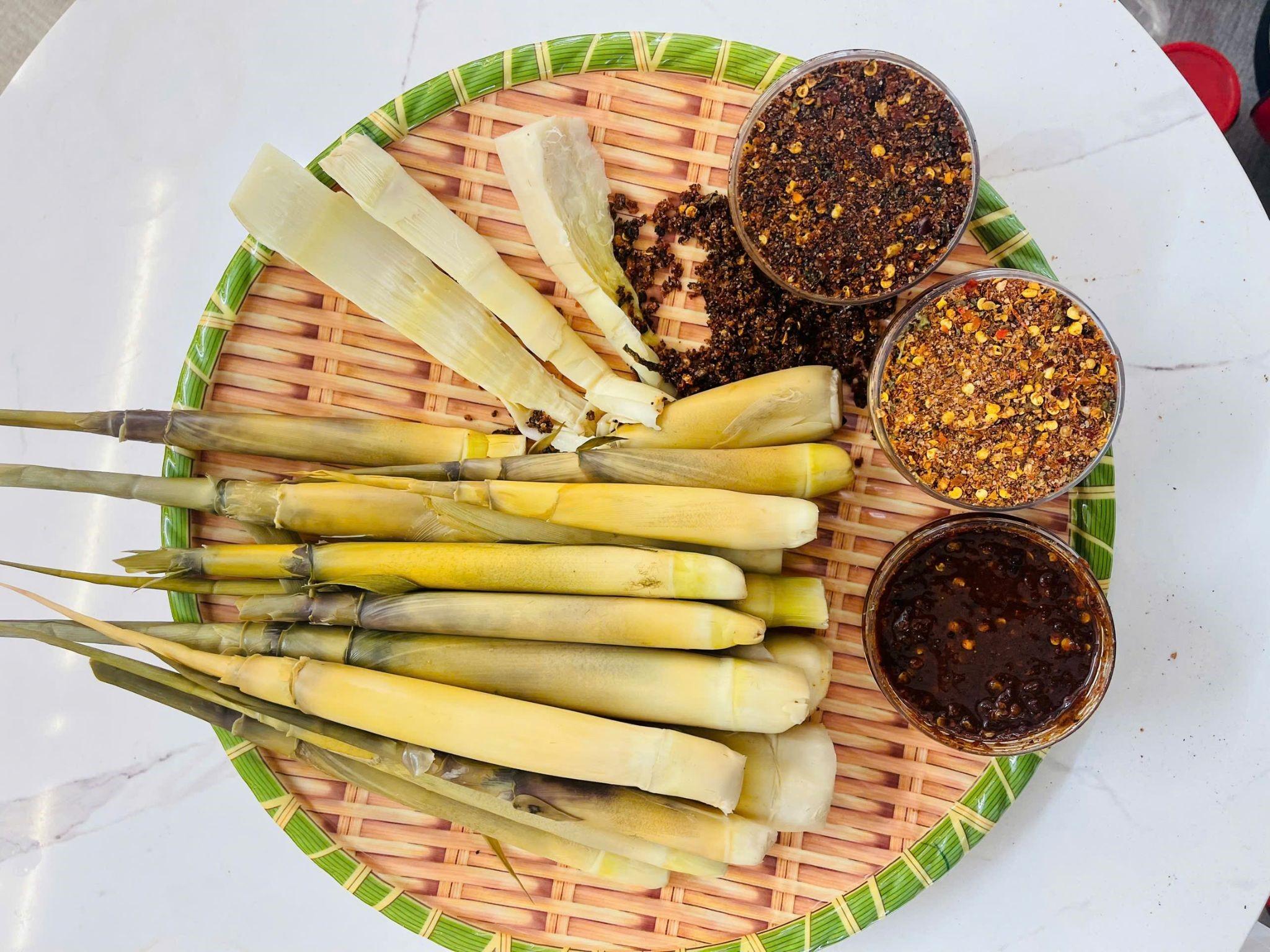
Crisp, sweet boiled bamboo shoots with savory cham cheo: a rustic dish that captures the taste of But Village's forests (Source: Thai Nguyen Newspaper)
The pairing is simple, yet the flavors work well together. The freshness and crunch of the shoots offset the boldness of the sauce, making the dish easy to enjoy without feeling heavy. It also reflects the unpretentious spirit of But Village cuisine, where familiar ingredients are prepared simply to preserve their natural taste.
Cham cheo is the signature dipping sauce of Thai communities in northwestern and northern Vietnam. It is typically built from chili, garlic, salt, fresh herbs, and mac khen, a mountain spice from the Zanthoxylum family often called “mountain pepper.” Recipes vary from household to household, and each family has its own balance of heat, tingle, and herbal freshness. Many versions are pounded by hand, giving a coarse, aromatic texture rather than a smooth paste.
Grilled village pork with Mac Khen: Aromatic and smoky over an open fire
Grilled village pork with mac khen is one of the dishes that best represent the highland flavors of But Village. The pork is firm with a naturally sweet taste, and it is usually marinated before being grilled over a wood fire. When done, the outside is lightly charred and fragrant with the aroma of meat and spices.
Village-raised pork is generally firmer and leaner than intensively farmed pork, with a naturally sweet taste and a chewier bite. That firmness helps it hold up to grilling without drying out, and it carries marinade well. Mac khen is the defining spice: citrusy, woody, and slightly numbing on the tongue.
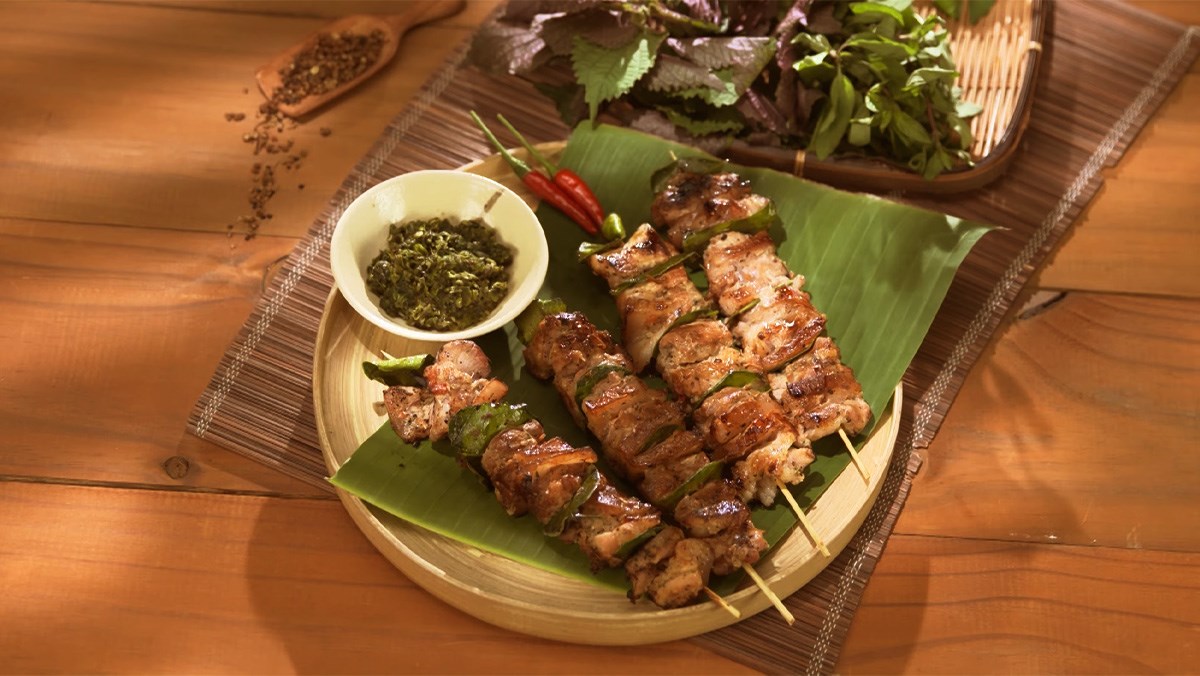
Grilled village pork with mac khen: charred at the edges, aromatic, and carrying the signature mild tingle of Northwestern spices (Source: Dien May Xanh)
Mac khen, a mountain pepper-like spice, gives the dish its signature aroma and a gentle numbing sensation. It deepens the flavor of the meat without masking the pork's natural sweetness. The dish is best eaten hot, ideally beside the fire and around a local family meal.
Speaking about the highland dining experience, Nguyen Dinh Thang notes that cooking and eating alongside local people by the fire helps visitors better appreciate the flavors of the mountains and the traditional Thai way of preparing food. This is part of what makes these rustic grilled dishes so appealing in But Village cuisine.
Read more: Bamboo Dance in Vietnam: Inside the nhay sap Tradition of Mai Chau
Five-Color sticky rice: A burst of color on the ut Village table
Five-color sticky rice catches the eye right away, with white, red, yellow, green, and purple portions arranged side by side on the tray. White comes from the natural color of glutinous rice, while the others are typically derived from plants such as gac fruit, turmeric, pandan leaves, magenta leaves, or ginger leaves, depending on the local recipe.
After coloring, each batch of rice is soaked separately and then steamed to preserve its color, chewy texture, and signature aroma. Each color is soaked separately so the dyes do not bleed, then steamed. This is what keeps the colors vivid and the grains glossy. The exact plants differ by household.
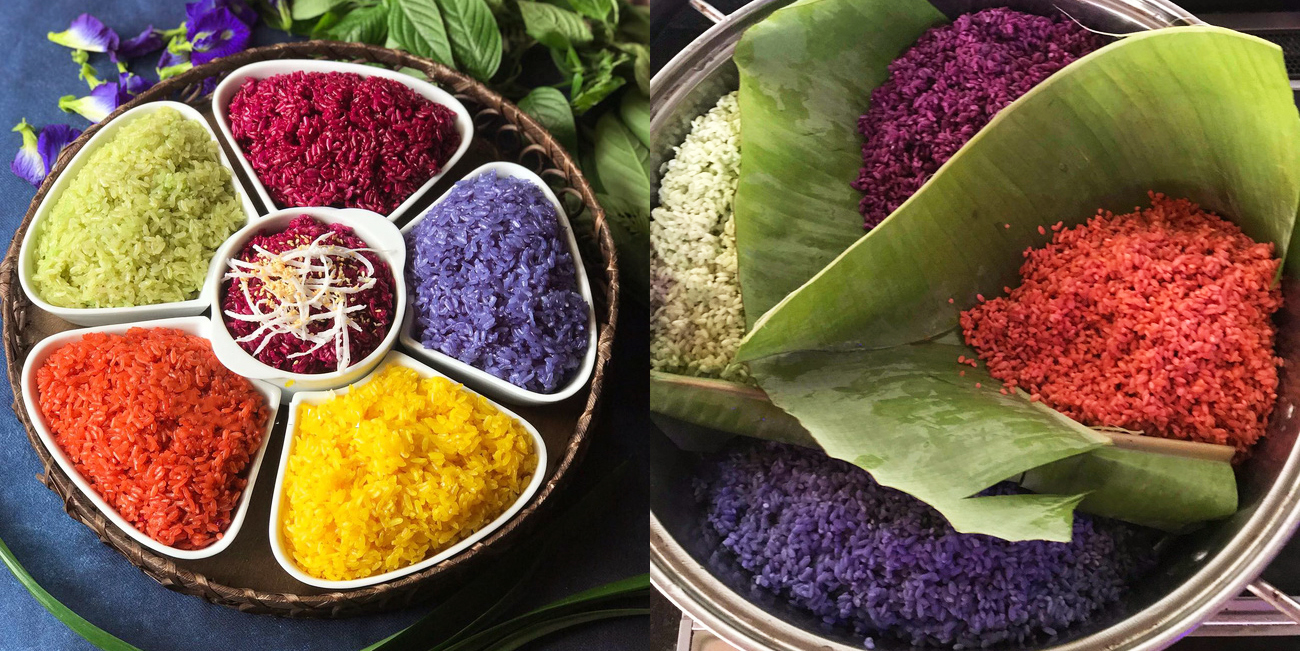
Fragrant, chewy five-color sticky rice in vivid colors: a dish symbolizing luck and abundance (Source: Vietnam Government Portal)
Beyond its looks, five-color sticky rice carries cultural meaning for the Thai people, often associated with harmony, good fortune, and prosperity. With its mild flavor and soft, chewy texture, it is usually served alongside savory dishes, from grilled meats to stream fish. That makes it equally enjoyable on its own or paired with the bolder flavors on the table.
Co Lung Duck: The specialty that sets But Village cuisine apart
Among the signature dishes of Ba Thuoc, Co Lung duck is a name many visitors look for. These ducks are raised in natural conditions on locally available feed, producing firm, lean meat with a distinctive sweetness. Once cooked, the meat is never overly fatty, yet stays tender and aromatic, which gives the local cuisine its own character.
Locals prepare this duck in many ways, including boiled, steamed, grilled, or roasted. Each method brings out a different flavor, but all aim to preserve the meat's natural sweetness and firmness. The duck is usually served with fresh herbs, spices, or a bold dipping sauce, which balances the dish and highlights the distinctive taste of Co Lung duck.
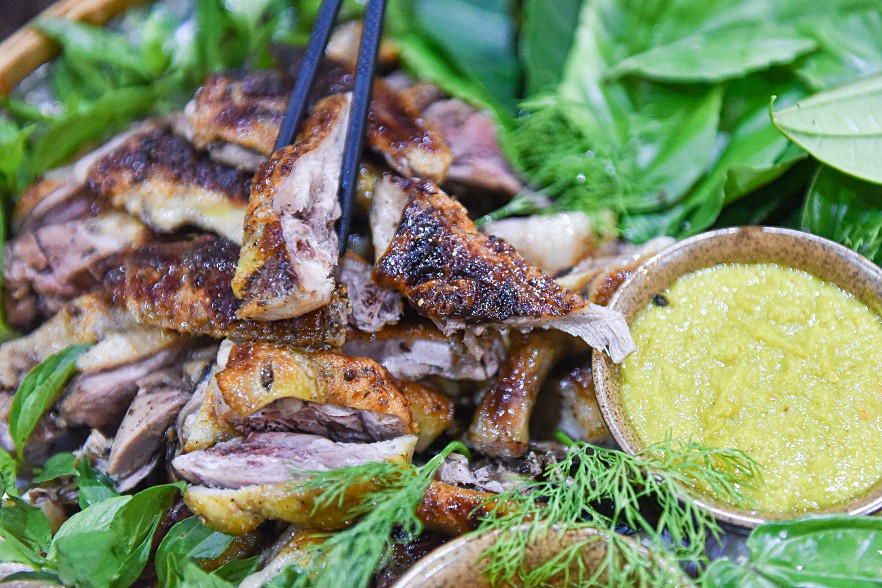
Co Lung duck, a famous Ba Thuoc specialty, with firm, sweet, tender meat that never feels greasy (Source: VietnamNet)
Visitors' impressions confirm these qualities. Linh Anh, a traveler from Hanoi, said that although she has eaten duck in many places, Co Lung duck still stood out, with meat that was "thick, tender, never tough, and free of any gamey smell or fishy taste." She described the flavor as "fragrant and rich," leaving a feeling of "one taste you'll remember forever."
Read more: Who are the major ethnic groups in Vietnam you can experience in Mai Chau?
Grilled Stream Fish: Fragrant and full of Mountain Flavor
Grilled stream fish is among the dishes most often mentioned by those exploring But Village cuisine. Its aroma, from fish grilled over glowing charcoal with pre-marinated spices, is instantly appealing. The fish is cleaned, lightly marinated, and grilled until the skin turns golden and crisp, while the flesh inside stays tender and sweet.
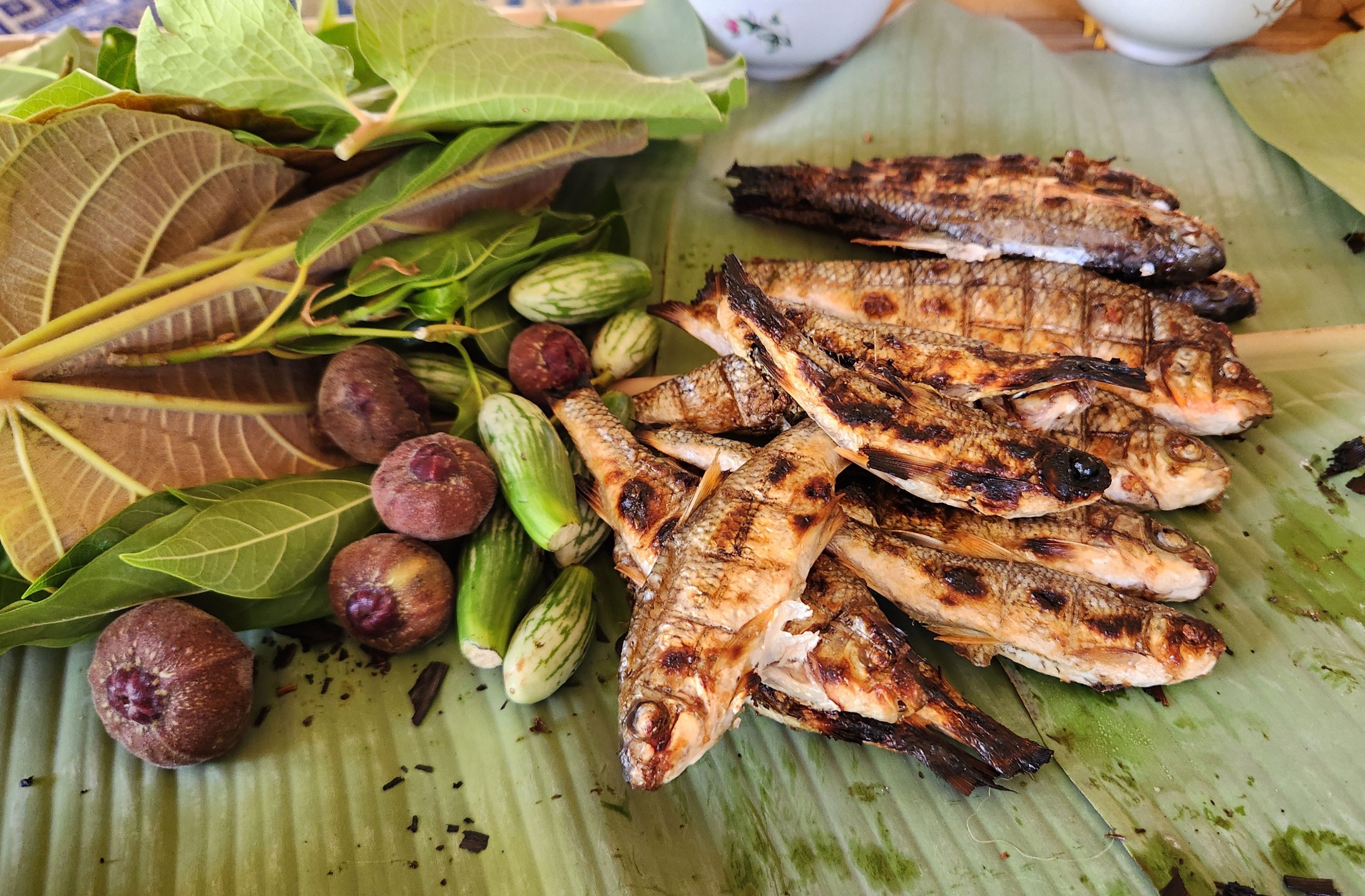
Charcoal-grilled stream fish with golden, crisp skin and naturally sweet, tender flesh (Source: Tuoi Tre Newspaper)
The appeal of grilled stream fish lies in its simplicity combined with a rich taste. The flesh is firm with a delicate sweetness, and the fragrant grilled skin adds to the enjoyment when eaten hot. Visitors can pair the fish with cheo sauce, chili salt, or other local dipping sauces to enhance the flavor and balance the fish's mild taste.
Grilled stream fish also appears beyond traditional family meals, adding to a dining experience that feels close to the everyday life of the Thai people in But Village. Dishes such as grilled stream fish, five-color sticky rice, steamed fish, and free-range pork are preserved by the community and showcased in its community-based tourism activities.
Leaf-yeast sticky rice wine: A warm touch of spirit at the table
Alongside the rustic dishes, leaf-yeast sticky rice wine helps set the mood at highland meals. It is made from glutinous rice fermented with leaf-based yeast, with the gentle fragrance of rice blending into the distinctive aroma of the yeast. On the first sip, the wine has a clear warmth, but the finish is smooth, and the slower you drink, the more you notice the aroma of the ingredients.
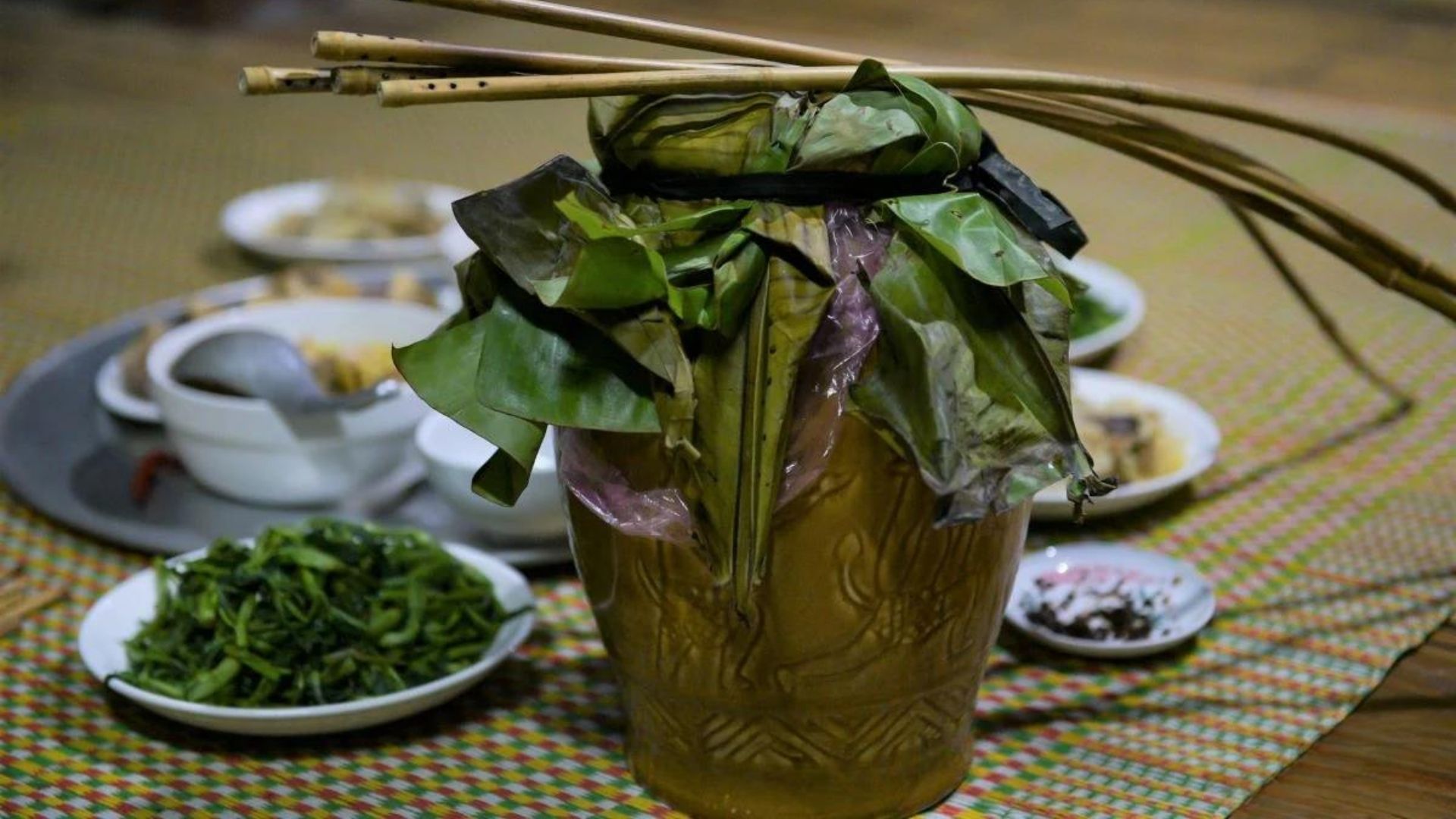
Traditional Ba Thuoc leaf-yeast rice wine with a warm, spicy kick and a sweet, smooth finish (Source: Thanh Hoa Newspaper)
Describing the traditional leaf-yeast wine of Ba Thuoc, local winemaker Vi Van Bang says it has a "fiery start but a sweet finish." According to him, many people who try it find it "smooth and easy to drink," which hints at the character of wine brewed from local glutinous rice and leaf yeast.
At the table, the wine is usually enjoyed with grilled meats, stream fish, or other bold-flavored dishes. A small cup adds warmth to the meal and reflects the hospitality and friendly manner of the locals. For visitors, sipping leaf-yeast wine is another way to experience the food culture of the mountains, rather than stopping at just tasting the dishes.
Enjoy But Village cuisine and unwind at Mai Chau Hideaway Lake Resort
After sampling But Village cuisine, visitors can extend the trip with a stay at Mai Chau Hideaway Lake Resort, set beside Hoa Binh Lake amid peaceful mountain scenery. The resort offers guest rooms, the Bamboo Restaurant serving local cuisine, and an infinity pool. Guests can also try cycling, kayaking, bamboo raft rides, and fishing to enjoy the lake and the surrounding mountains.

A panoramic view of the tranquil Mai Chau Hideaway Lake Resort beside Hoa Binh Lake
Beyond outdoor activities, guests can join Xoe dance performances, cooking classes, and other cultural experiences at the resort. After a day of exploring, the spa, yoga, and lakeside setting make for a relaxing retreat. Pairing a taste of But Village specialties with a stay at Mai Chau Hideaway Lake Resort makes for a well-balanced trip of food, mountain culture, and rest.
Frequently Asked Questions
Which But Village dishes suit people who can't eat spicy food?
Visitors can choose five-color sticky rice, grilled stream fish, or village pork, and ask for less chili.
When is the best time of year to try But Village cuisine?
You can enjoy it year-round, but dry weather makes getting around and sightseeing more convenient.
Can I buy But Village specialties as gifts?
Visitors can buy farm produce, dried goods, and a few local products, depending on the season.
Are there vegetarian dishes in But Village?
Visitors should let the homestay know in advance so suitable vegetarian dishes can be prepared.
Where can I try But Village specialties?
You can dine at homestays, community-tourism households, or eateries within the village.
Do I need to book ahead for But Village specialty meals?
Booking ahead is recommended, especially for larger groups or if you want to order many dishes.
Is But Village cuisine suitable for children?
Children can enjoy mild, soft, easy-to-eat dishes, but check fish carefully for bones.
What does a typical But Village meal include?
A shared tray may include five-color sticky rice, boiled bamboo shoots with cheo sauce, grilled stream fish, village pork, and local greens.