For the Red Dao people, bathing in forest herbal leaves is a traditional remedy believed to improve overall health. Few people know that the seemingly simple bath contains dozens of medicinal leaves with remarkable therapeutic and restorative properties. So what exactly are Red Dao herbal bath leaves made of, and what makes this traditional remedy known as the “spa of the mountains”?
Benefits of Red Dao Herbal Baths
Red Dao herbal bath leaves are a traditional remedy preserved through many generations of the Red Dao community. They believe that after a long day of working in the fields or when the body feels exhausted, bathing in forest herbs not only cleanses dirt and sweat but also “washes away illness.”
.png "Lá tắm người Dao Đỏ gồm những gì")
The medicinal leaves are hand-harvested by the Red Dao people deep in the forest, often early in the morning when dew still clings to the leaves (Source: Collected)
To prepare a complete herbal bath, the Red Dao typically use anywhere from 20 to more than 100 different medicinal plants. All of these herbs are gathered directly from the forest, rich in therapeutic properties and largely valued for their healing effects. Elderly people in the village are considered the true “keepers of the remedies.” They know exactly which leaves to use for specific ailments, how to boil them properly, and the ideal timing for bathing to achieve the best results.
Today, this herbal bathing method is no longer just a part of daily life for the Red Dao people. It has also become a unique form of cultural and wellness tourism in many northern mountainous provinces of Vietnam.
Below are some of the most notable benefits of Red Dao herbal baths, trusted not only by local communities but also increasingly recognized by visitors and health experts:
- Relieves colds and warms the body
- Reduces muscle aches and helps restore physical strength
- Cleanses the skin, provides antibacterial effects, and soothes itching
- Relaxes the nervous system and improves sleep quality
- Detoxifies the body and supports natural cleansing processes
What are Red Dao herbal bath leaves made of?
Red Dao herbal bath leaves are not just a few common forest plants, but a carefully combined traditional remedy made up of 20 to more than 100 different medicinal herbs. Depending on the purpose of use, each group of leaves plays a specific role in the overall treatment.
Cleansing, antibacterial, and skin-nourishing herbs
.png "Kim ngân hoa (nguồn: Beautier)")
Honeysuckle Flower (Lonicera japonica) (Source: Beautier)
This is a fundamental group of herbs that cannot be omitted, acting as a “path opener” that helps other medicinal compounds absorb more effectively. Leaves such as voi leaves, starfruit leaves, green tea leaves, honeysuckle, camphor, and southern cork tree bark (Phellodendron) have deep-cleansing and natural antibacterial properties, while also soothing minor skin irritations. People who frequently suffer from itching, atopic dermatitis, or mild skin sensitivities often notice clear improvements after just a few baths.
Herbs that warm the body, relieve colds, and relax muscles and tendons
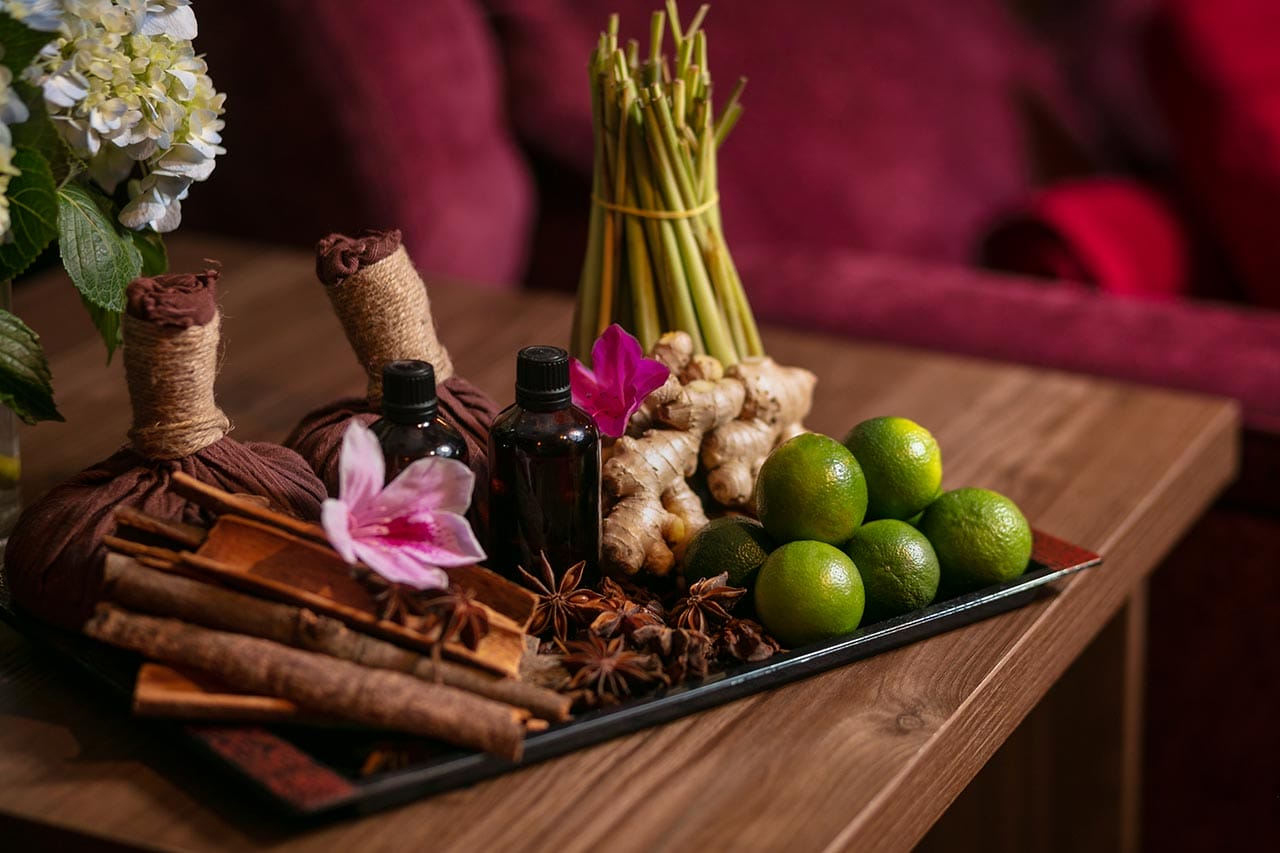
With their warming nature, this group of leaves helps stimulate blood circulation, warm the body, and effectively relieve colds. Herbs such as lemongrass, ginger, wild cinnamon, star anise, and sweet flag (Acorus) release a strong, aromatic fragrance when boiled, gently inducing perspiration and helping the body eliminate toxins. After bathing, a comforting warmth gradually spreads from the chest to the limbs, leaving the body feeling noticeably healthier and deeply relaxed.
Herbs that help relieve joint pain and muscle fatigue
This group is especially beneficial for manual laborers, the elderly, and postpartum women. Medicinal plants such as Homalomena (thien nien kien), mugwort, wild betel leaves, gam root, and Smilax glabra (tho phuc linh) are known for their ability to dispel wind and dampness, quickly easing aches, pains, and physical fatigue after a long day of activity. After soaking for about 20 minutes, users often feel a soothing sensation spreading throughout the body, as if their joints can “breathe” again.
Herbs that calm the mind, relax the spirit, and improve sleep quality
.png "Màng tang (nguồn: sưu tầm)")
Mang tang leaves (Source: collected)
For those who often feel stressed or have difficulty sleeping, this group of herbs is indispensable. Plants such as huong nhu (Vietnamese balm), mint, osmanthus, mang tang leaves, and several fragrant forest flowers release gentle, soothing aromas that act directly on the nervous system. After bathing, users tend to fall into a deeper, more natural sleep, without restlessness or waking up feeling tired.
Herbs that detoxify the body and strengthen immunity
Although not particularly prominent in aroma or taste, this group plays a quiet yet essential role in physical recovery and immune enhancement. Herbs such as dinh lang, cordyline leaves (huyet du), elderberry, sophora root (kho sam), and centella asiatica (gotu kola) help cool the liver, support detoxification, and nourish blood and vital energy. These leaves are often added to boost the overall effectiveness of the herbal bath.
Preparation process and how to use Red Dao herbal baths
To create an authentic Red Dao herbal bath, the selection and preparation of the leaves are crucial. The Red Dao people usually harvest the herbs early in the morning, when they are freshest and richest in essential oils. On average, each bath pot uses anywhere from 20 to more than 100 different types of leaves, including aromatic herbs, warming herbs, and those used to relieve aches and pains. After being thoroughly washed, the leaves are gently crushed, pounded, or lightly wilted before being boiled.
Red Dao herbal bath (Source: collected)
The herbs are boiled with fresh spring water in a large pot and gently simmered for about 1–2 hours until the water turns dark and releases a distinctive herbal aroma. The Red Dao people do not bathe in boiling water; instead, the decoction is diluted and kept warm in a wooden tub or bamboo barrel, where bathers soak for about 15–20 minutes. During the bath, perspiration occurs naturally, the body relaxes, and the medicinal properties gradually penetrate through the skin.
After bathing, there is no need to rinse off with cold water. It is best to let the body dry naturally and rest for about 30 minutes. This allows the body to absorb the herbal essence to the fullest and achieve optimal recovery effects. Although packaged dried herbs are commonly used today, if you have the chance, experiencing a fresh-leaf herbal bath directly in a Dao village offers the best results.
Without having to travel all the way to Ta Phin or Ban Khoang, you can also enjoy a Red Dao herbal foot soak right at Mai Chau Hideaway Lake Resort, a refined relaxation therapy inspired by the mountains and forests. The medicinal leaves are carefully selected and prepared according to traditional methods, providing a warm, soothing sensation and supporting overall well-being.
Read more: Northwest Vietnam culinary travel – A journey to discover the flavors of the mountains
For generations, the Red Dao people have known how to harness the rich herbal resources around them to nurture health in a sustainable way. Understanding what Red Dao herbal bath leaves include not only builds trust in the value of this traditional remedy, but also opens the door to experiencing a simple yet remarkably effective healing therapy.