The Rain-Praying Festival is a cultural event deeply rooted in the traditions of the Thai ethnic community, where spirituality harmonizes with nature. Are you curious about what makes the Rain-Praying Festival in Mai Chau so special? Let’s explore the fascinating elements hidden within the sacred atmosphere of this festival in the article below.
General introduction to the rain-praying festival
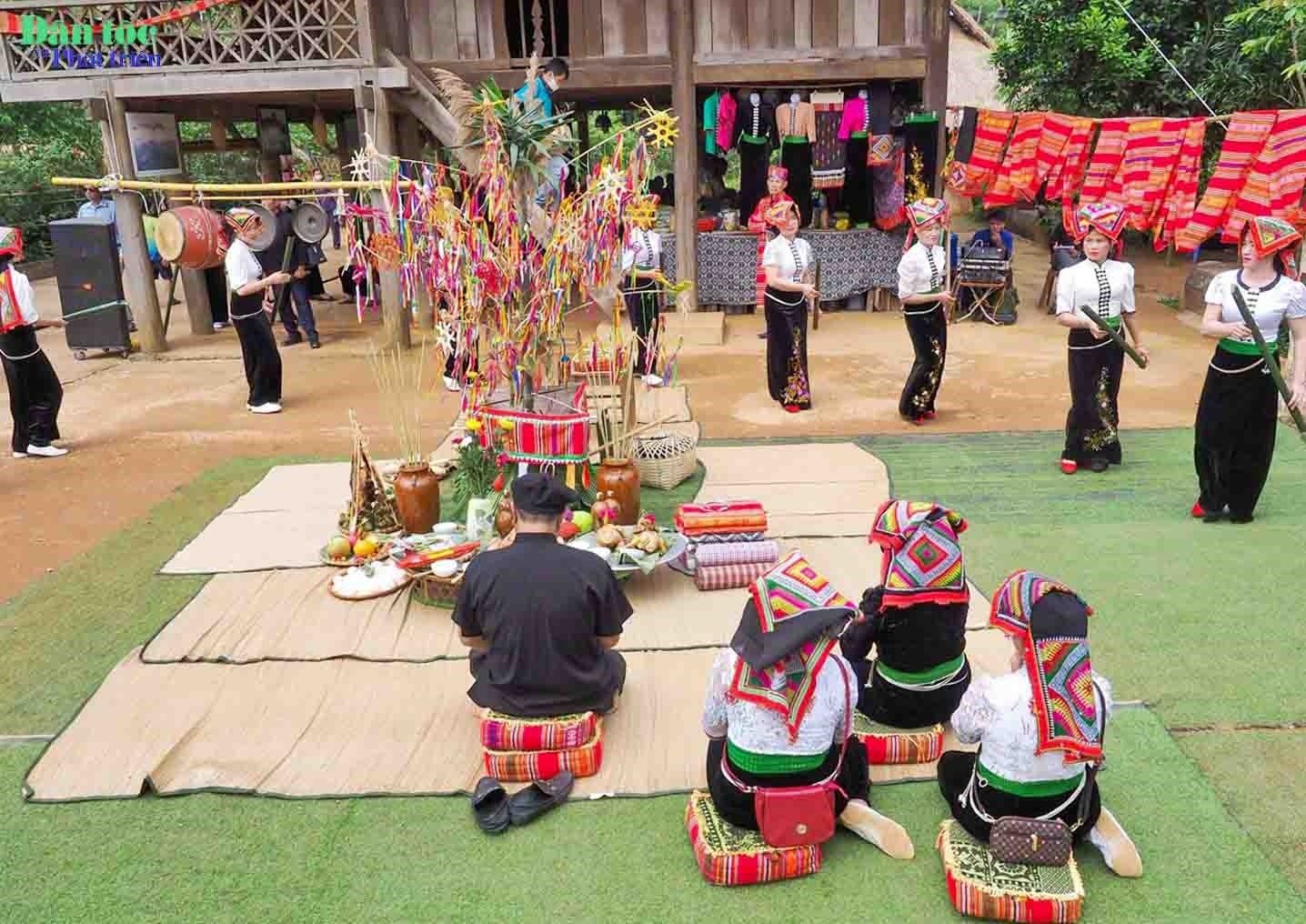
General introduction to the rain-praying festival (Source: Ethnic and Development Newspaper)
The Rain-Praying Festival, also known as Xen Xo Phon Festival, is an indispensable part of the cultural life of the Thai ethnic people in Mai Chau, Hoa Binh Province. This festival is deeply spiritual and rooted in traditional beliefs, expressing gratitude to heaven and earth and the hope for abundant harvests, favorable rain, and gentle winds. Through the festival, the Thai people demonstrate their love for nature, their close bond with the land, and their wish for a more united and sustainable community.
The Rain-Praying Festival is usually held from the 1st to the 28th day of the fourth lunar month each year. A distinctive feature of the festival is that it takes place on nights when the moon appears with a red or yellow halo. According to folk wisdom - “a haloed moon brings drought, a scattered moon brings rain”, this phenomenon is considered a sign of severe drought. Through solemn and unique rituals, the festival is not only an occasion to pray for rain but also an opportunity to preserve and promote the distinctive cultural values of the Thai people.
Read more: Experience the Muong Khai Ha festival in spring
The meaning of the Rain-Praying Festival
The Rain-Praying Festival of the Thai people is not merely a ritual to ask for rain; it also embodies profound beliefs about nature, society, and spirituality. According to Thai beliefs, deities govern rain and wind, and drought occurs when the gods are angered by human wrongdoing. More specifically, the Thai people believe that the gods pity children born without fathers and punish the community with drought. Therefore, unmarried pregnant women were once considered the cause of drought and held responsible before the gods. Through the Rain-Praying Festival, the Thai people express their wish for forgiveness from the deities and pray for timely rain and favorable weather.
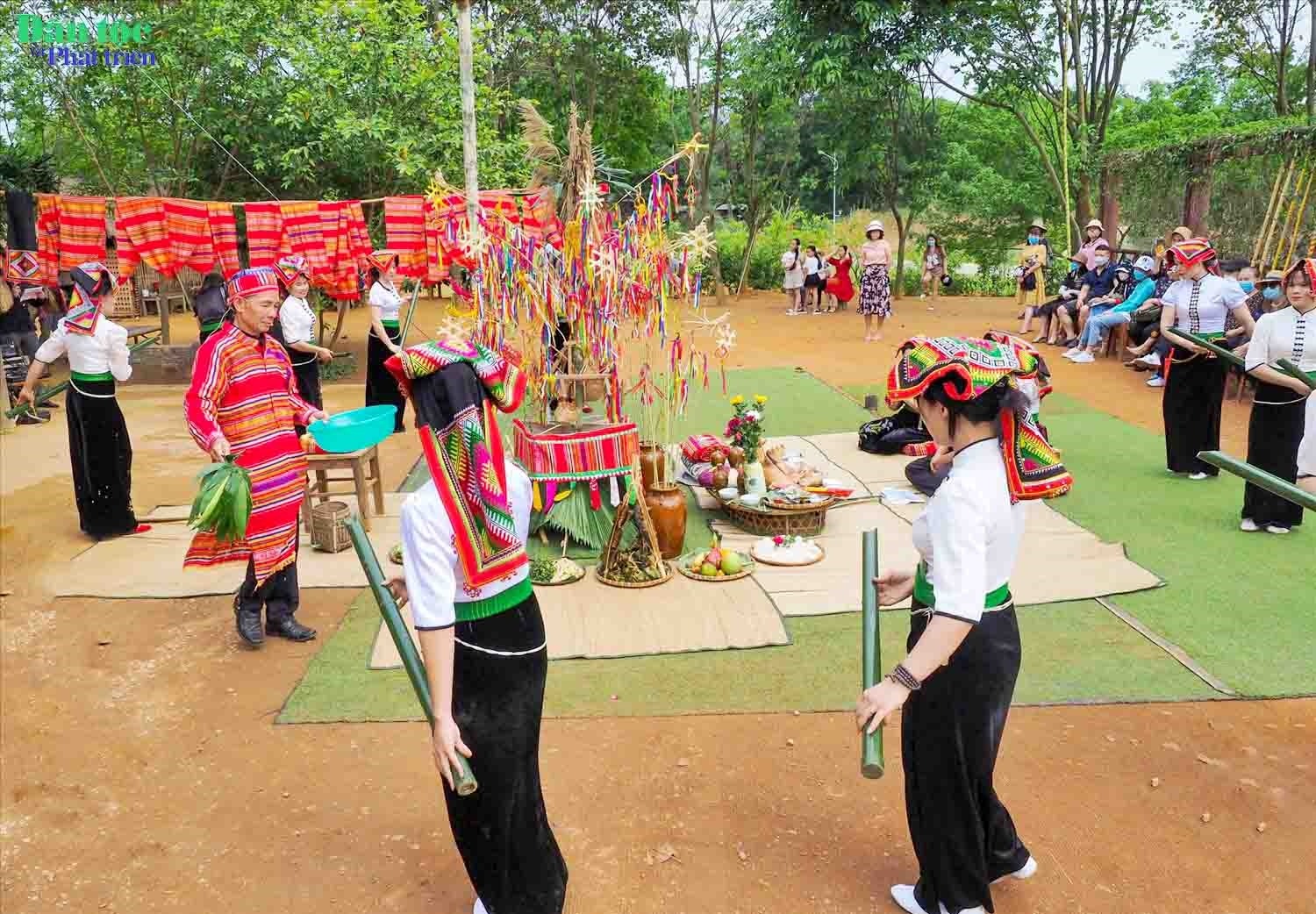
The meaning of the Rain-Praying Festival (Source: Ethnic and Development Newspaper)
In addition, the Thai believe that the fourth lunar month marks the “season of awakening thunder,” when crops have already been planted but still need rain to grow. If rainfall does not come, they must hold the Rain-Praying Festival to invite the gods to grant rain, ensuring abundant harvests and a prosperous, happy life.
The Rain-Praying Festival holds not only spiritual significance but is also closely linked to agricultural life. Through the festival, the Thai people show respect for nature and their desire to live in harmony with it. At the same time, the festival provides an opportunity for community gathering, strengthening bonds and helping preserve and promote traditional cultural values.
How the Thai Rain-Praying Festival in Mai Chau takes place?
With the wish for favorable rain and wind, the Rain-Praying Festival of the Thai people in Mai Chau is conducted solemnly through the following activities:
Preparations before the festival
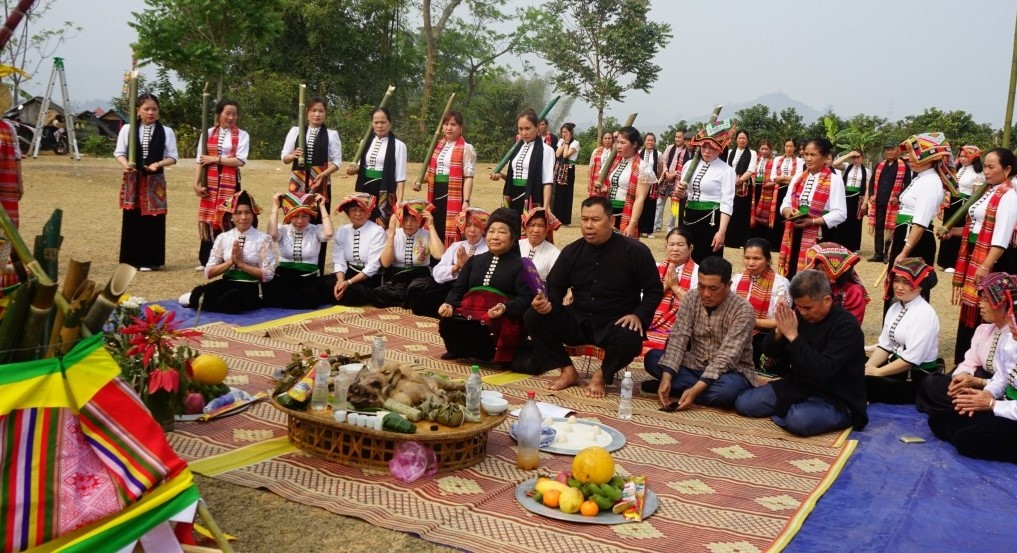
Preparations before the festival (Source: VOV)
Before the festival day, Thai villagers carefully prepare traditional offerings rich in symbolic meaning and cultural identity. Items such as buckets of water, ladles, and bamboo sticks are meticulously arranged. The bucket of water symbolizes precious water resources, the ladle is used to splash water toward the sky as a prayer for rain, representing the connection between heaven and earth, while the bamboo stick is used to poke toward the sky to “awaken” the deities and water spirits.
Additionally, three essential offering trays are prepared: the destiny tray of the shaman, the ceremonial tray of the Muong community, and the heaven-and-earth tray offered to the gods. Typical offerings include a carefully prepared rooster, believed to dwell near water sources and awaken mountain spirits, as well as dishes made from pork such as steamed meat, pomelo sausage, grilled skewers, stuffed intestines, sticky rice, rice wine, fruits, votive paper, and brocade fabrics. These offerings symbolize harmony between humans, deities, and nature.
The worship ritual
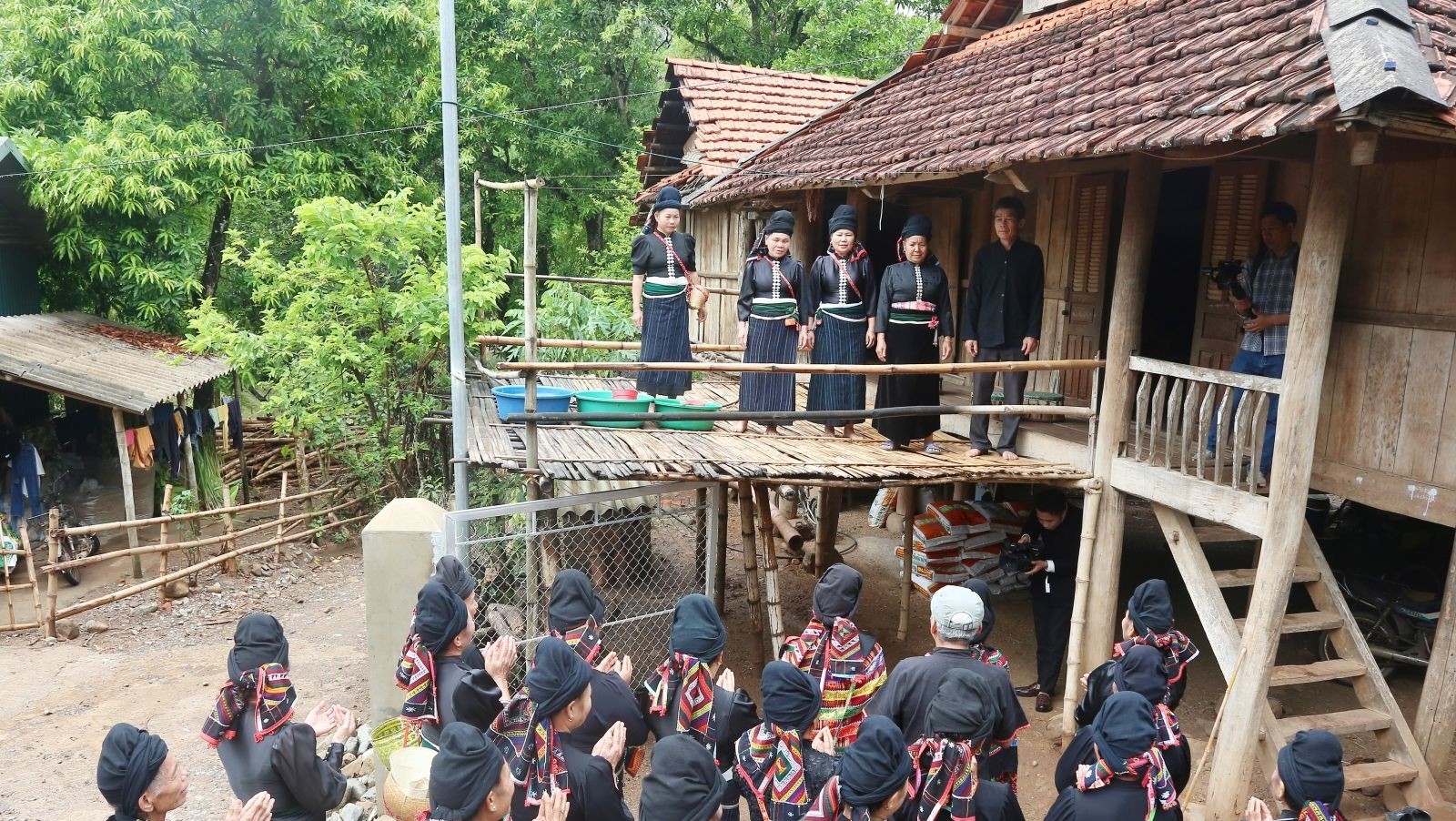
The worship ritual (Source: VOV)
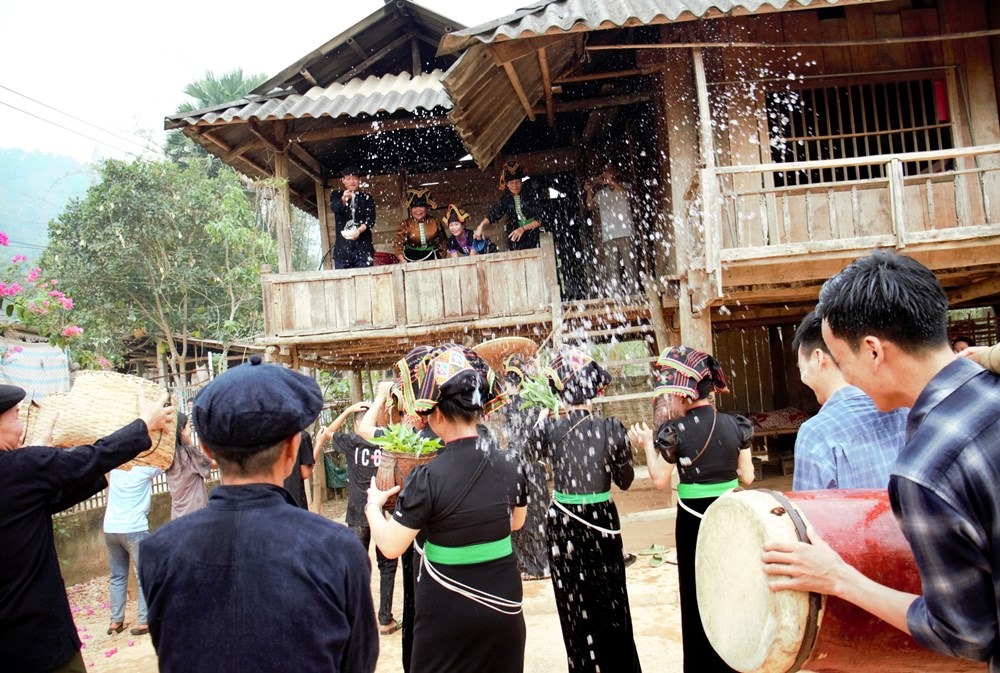
The worship ritual is conducted solemnly and preserves strong traditional elements. Groups of approximately fifty to sixty young men and women prepare hats, caps, and raincoats before gathering in an open area. They form lines and begin singing rain-praying songs. When they reach the house of the eldest elderly woman in the village, the group enters the yard, and the lead singer invites her to the staircase to conduct the rain-praying ritual.
The “blessing of rain” ritual is performed at the staircase, where bowls of water have been prepared. Wearing traditional attire, the elderly woman dips her fingers into the water and sprinkles it over the singing group below while offering blessings. The group then sings a rain-praying song to thank her. Afterward, they move to another house, but from the second house onward, the water-blessing ritual is no longer mandatory; hosts only need to offer sticky rice and salt.
The festive activities
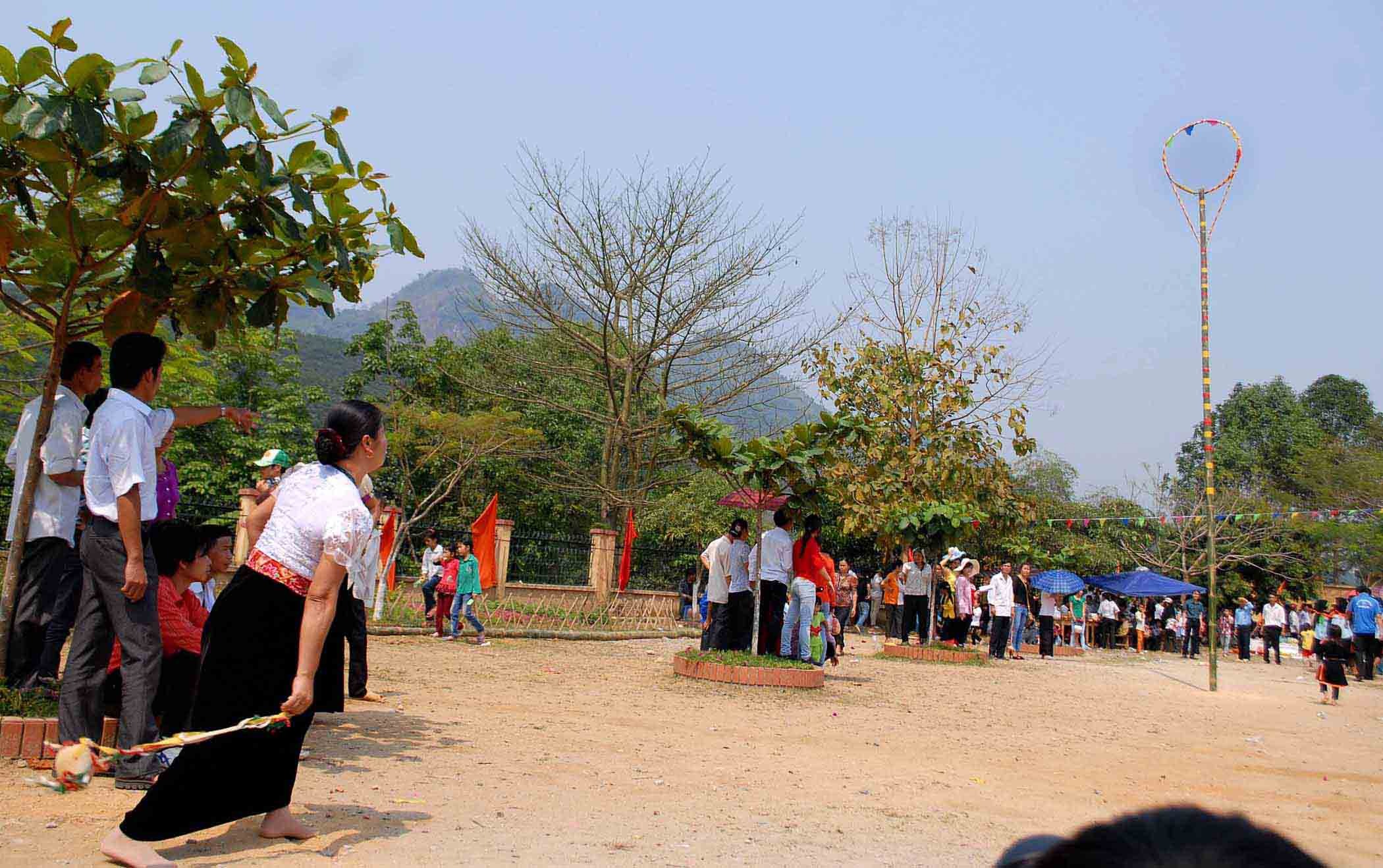
The festive activities (Source: Lai Chau Tourism)
The festive portion is the most lively and anticipated part of the Rain-Praying Festival, preserving the unique cultural essence of the community. After the solemn rituals, joyful collective activities take place in open village areas, attracting enthusiastic participation. Traditional games such as tug of war, con throwing, pao ball tossing, and stick pushing create a vibrant atmosphere.
Beyond games, the festival also features simple yet refined artistic performances. The sounds of the khen and pi instruments blend with graceful xoe dances, vividly recreating the rustic, authentic daily life of the Thai people.
Unique experiences when joining the Rain-Praying Festival in Mai Chau
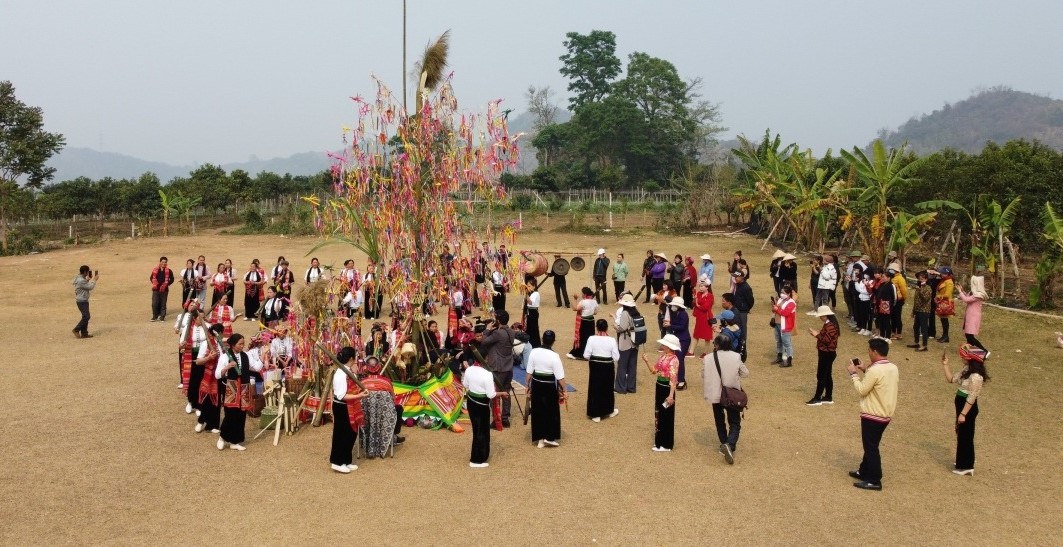
Unique experiences when joining the Rain-Praying Festival in Mai Chau (Source: Vietnam.vn)
Participating in the Rain-Praying Festival in Mai Chau is undoubtedly a memorable experience. Below are unique highlights you should not miss:
- Witnessing unique rituals: Visitors have the chance to observe distinctive rituals deeply rooted in Thai cultural identity, gaining a clearer understanding of local beliefs and traditions.
- Joining traditional folk games: Games such as tug of war, stick pushing, and con throwing allow visitors to immerse themselves in festive joy, strengthen physical fitness, and understand the cultural meanings behind each activity.
- Enjoying local cuisine: Visitors can savor Thai specialties such as sticky rice, native pork, and grilled stream fish, all made from fresh local ingredients with distinctive flavors.
- Interacting with local residents: The festival offers opportunities to converse with locals, learn about their history, customs, and daily life, fostering meaningful cultural exchange.
Read more: Exploring Pom Coong Village Mai Chau: Traditional Thai Village and unique experiences
Notes when participating in the Rain-Praying Festival
Notes when participating in the Rain-Praying Festival (Source: Culture Newspaper)
To ensure a fulfilling and respectful experience, visitors should note the following:
- Respect local culture: Learn about behavioral rules and appropriate attire; avoid insensitive actions such as mocking traditions.
- Prepare suitable clothing: Wear comfortable, breathable clothing suitable for outdoor activities; bring hats, sun protection, and appropriate footwear.
- Participate safely: Follow local guidance during folk games and avoid risky activities.
- Research beforehand: Learn about the festival schedule, locations, activities, and important guidelines in advance.
After experiencing the Rain-Praying Festival, visitors can relax at Mai Chau Hideaway Lake Resort, tận enjoying peaceful surroundings by the scenic lake. For reservations and further information, please contact hotline 0987.536.787 or 0963.406.366.