Gong music is often associated with Vietnam’s Central Highlands, but Hoa Binh has its own distinct Muong ethnic gong tradition. Closely connected to local rituals, festivals, and community life, Muong gongs remain an important part of the cultural heritage of the Muong people in northern Vietnam.
What makes the Muong ethnic gong tradition different?
The Muong ethnic gong, known locally as “cong chieng Muong”, is a traditional form of gong music preserved by Muong communities in Hoa Binh. The tradition is closely connected with local customs, ceremonies, and community life, particularly in areas such as Muong Bi. For the Muong people, gongs are more than musical instruments; they are part of a cultural heritage passed down through generations.
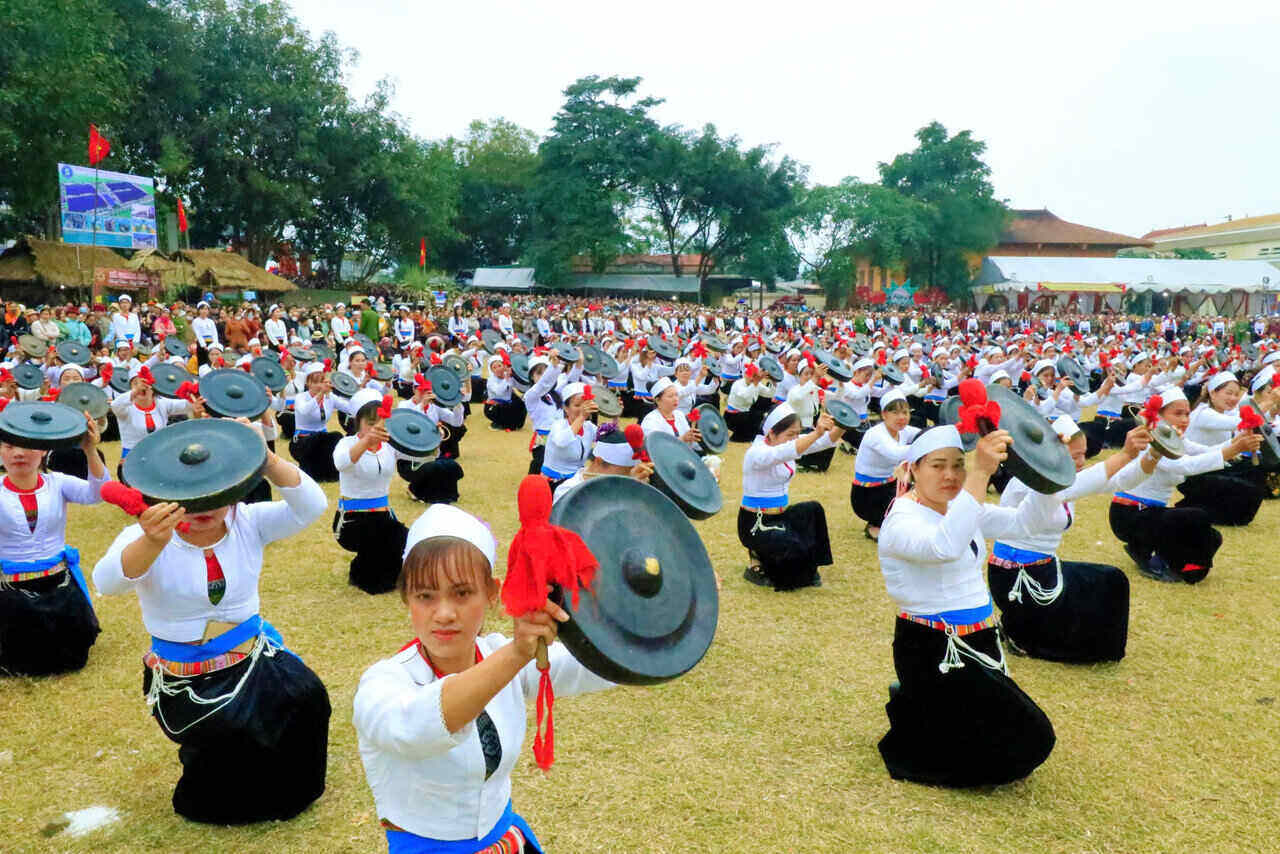
A Muong gong ensemble performing during a local cultural gathering in Hoa Binh (Source: Lao dong newspaper)
Muong gongs are also different from the gong tradition of Vietnam’s Central Highlands, which was recognized by UNESCO in 2005. Although both traditions use bronze gongs, they belong to different cultural communities and developed in different regions. Muong ensembles combine different types and sizes of gongs to create layered sounds, with each instrument contributing to the overall melody.
Another distinctive feature is the variety of roles gongs have within Muong society. They can accompany festivals and agricultural ceremonies, while traditions such as Sac Bua use gong music as part of New Year blessings. These different uses show how deeply the ethnic gong is woven into everyday customs and important moments in Muong community life.
The origin and cultural meaning of Muong ethnic gong
According to oral traditions passed down by Muong elders in Tan Lac, the earliest gong sounds were inspired by mysterious echoes heard inside limestone caves. People are said to have struck stalactites and heard resonant tones, gradually recreating these sounds with bronze gongs. This story gives the instrument a special place in Muong cultural memory, linking its sound with the natural landscape where the community has lived for generations.
Because of this connection, gongs are not treated simply as musical instruments. Their sounds have traditionally been associated with important ceremonies and community occasions, giving them a deeper cultural and spiritual meaning. In Muong Bi, this sense of reverence remains particularly strong, with local elders continuing to pass the origin story and related knowledge to younger generations.
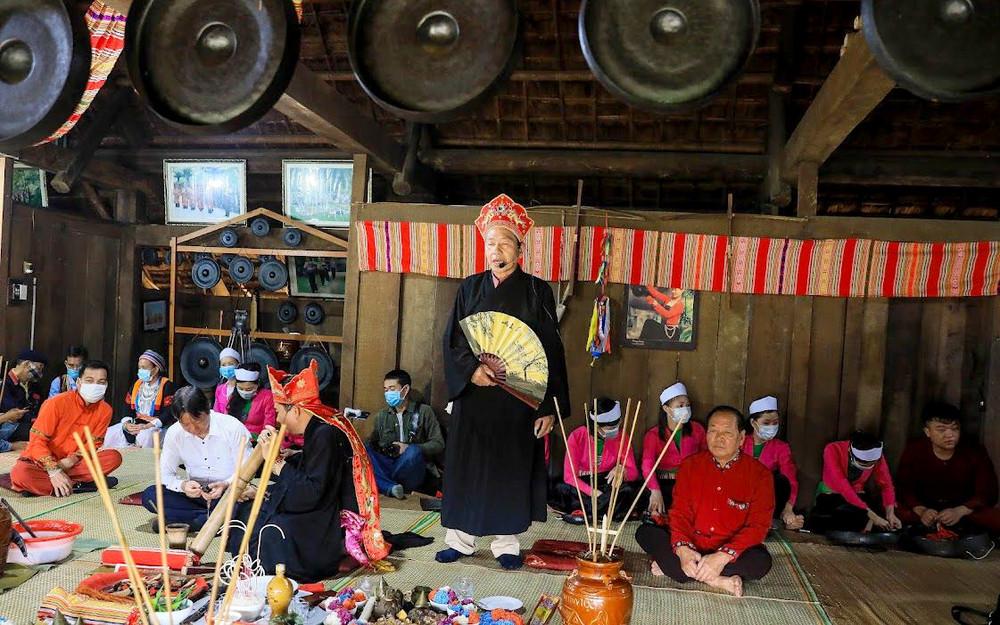
A traditional ritual inside a stilt house highlighting the cultural reverence for Muong gongs (Source: Nhan dan newspaper)
The knowledge of tuning is also an important part of this heritage. A traditional set of twelve gongs can produce twelve distinct tones that come together to create a characteristic Muong sound. This skill is passed down within families and communities, and the loss of tuning knowledge can mean losing the unique sound of an individual gong ensemble, even when the physical instruments themselves remain.
When Muong ethnic gong is performed today
Muong ethnic gong music continues to appear in festivals, ceremonies, and important community occasions in Hoa Binh. Some are deeply connected to traditional rituals and remain private, while larger festivals offer visitors a chance to hear the music in a public setting.
Sac Bua and the sound of gongs during Tet
Sac Bua is a traditional Muong New Year custom, usually held during Tet when groups of local people visit homes to sing wishes for health, good fortune, a good harvest, and a peaceful year. The group plays gongs while moving from house to house, creating a lively sound that marks the beginning of the new year.
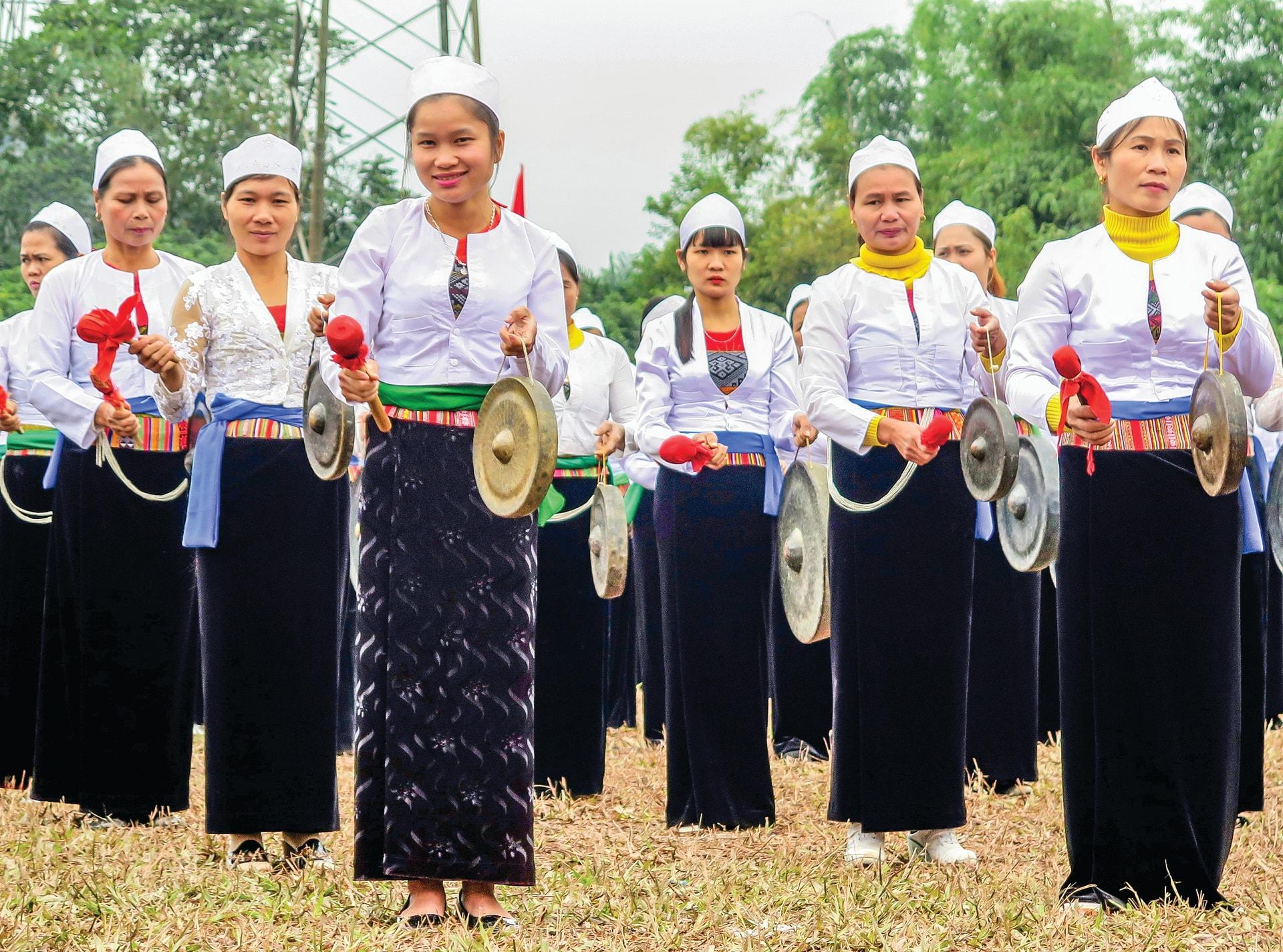
Muong women carrying gongs while performing Sac Bua during Tet (Source: cong thuong newspaper)
A Sac Bua group traditionally includes people who are familiar with Muong gong melodies and folk songs. The performance can involve different songs for greeting the host, asking permission to enter the house, offering New Year wishes, and saying goodbye. In some communities, the singing also takes the form of an exchange between the performers and the host, making each visit more interactive.
The gongs are an essential part of Sắc Bùa rather than simply background music. Traditional Muong gong sets can include 12 gongs, with women often taking the role of gong players in Sac Bua groups. For travelers visiting Hoa Binh during Tet, seeing Sắc Bùa offers a chance to experience Muong ethnic gong in its original community setting rather than as a staged cultural show.
Gong performances during the Khai Ha Festival
The Khai Ha Festival is held in early spring to mark the beginning of the agricultural season and is one of the most important occasions for hearing Muong gong music. Gong dances are performed as part of the festival alongside traditional rituals and community activities. The festival was recognized as a National Intangible Cultural Heritage in 2022.
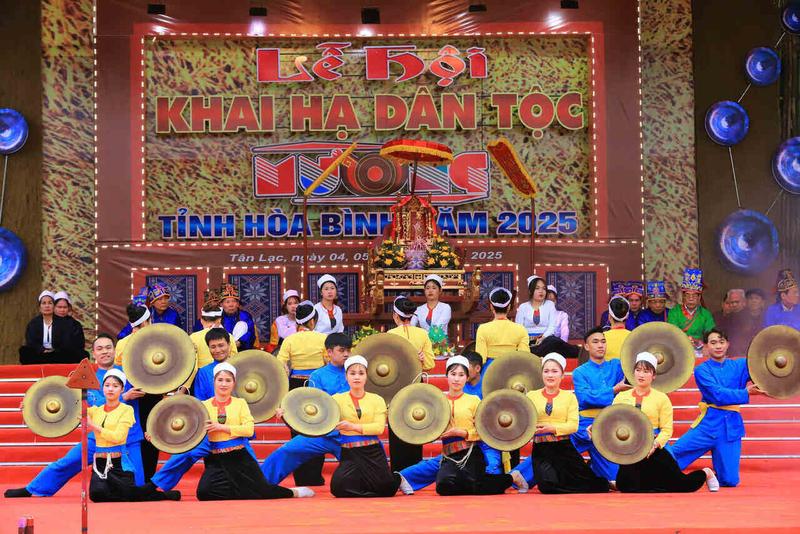
Gong performances during the Khai Ha Festival mark the beginning of the spring agricultural season (Source: lao dong newspaper)
The performances take place under the guidance of a Mo shaman, connecting the music with traditional beliefs and agricultural rituals. For travelers, Khai Ha is one of the best opportunities to hear ethnic gong music in a public community setting.
Gong performances at regional cultural festivals
Muong gong music is also used at other traditional festivals in Hoa Binh. The annual Lo Son Fishing Festival, for example, is among the Muong festivals associated with gong music. The Keo Si Festival and New Rice Festival are also listed among the traditional occasions where Muong gongs are played. These events connect gong music with agricultural life, community activities, and long-standing local customs.
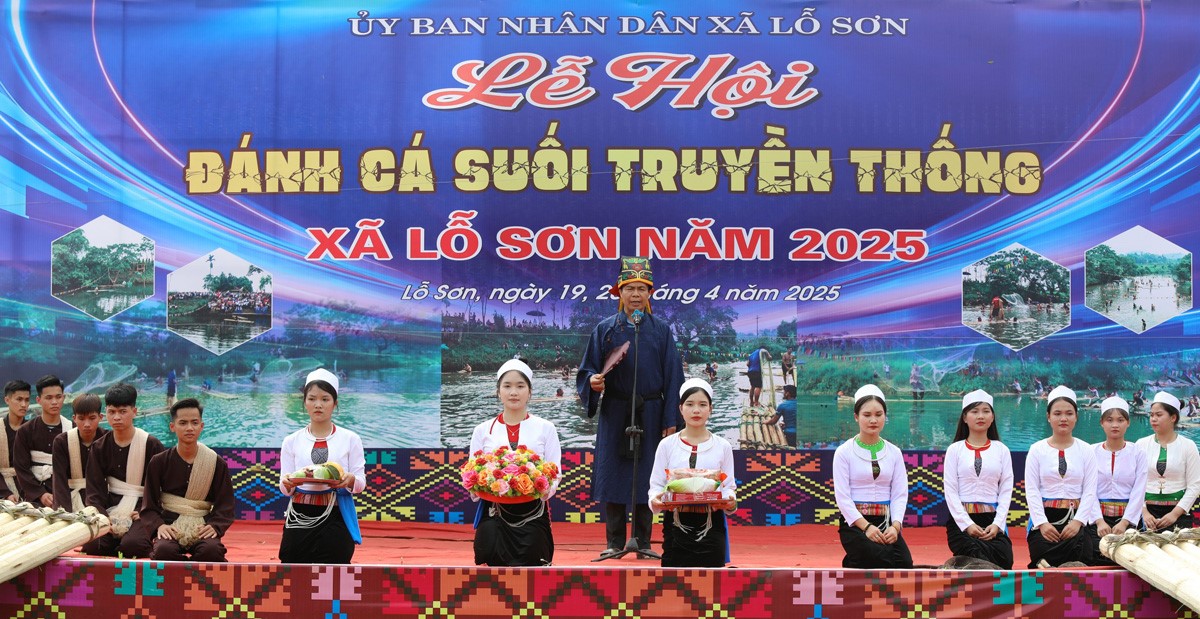
Regional cultural events like the Lo Son Fishing Festival integrate gong music into community celebrations (Source: danviet newspaper)
Unlike a staged cultural show, gong music at these festivals forms part of the wider community celebration. Depending on the event, visitors may see gong ensembles alongside traditional singing, dances, folk games, and other activities. For travelers interested in Muong ethnic gong, these festivals offer another opportunity to hear the instruments in their cultural setting, although the scale and accessibility of each event can vary from one locality to another.
Read more: Experience the Muong Khai Ha festival in spring
The structure and sound of a Muong gong ensemble
A Muong gong ensemble is made up of different gongs that work together rather than being played as individual instruments. The gongs vary in shape, size, and tone, with cong and chieng forming the main types used in the ensemble. When these instruments are played together, their different tones create the layered sound that characterizes Muong ethnic gong music.
|
Part of the ensemble
|
Key characteristics
|
Role in the ensemble
|
|
Cong
|
Gong with a raised center boss
|
Produces a distinct tone as part of the overall ensemble
|
|
Chieng
|
Flatter gong with wider tonal variation
|
Adds different tones and expands the range of sounds
|
|
Traditional set
|
Usually around 12 gongs, with each gong producing a distinct tone
|
Allows multiple tones to be combined into one coordinated sound
|
|
Size and material
|
Bronze alloy; roughly 20 - 120 cm in diameter
|
Different sizes contribute to the variety of tones within the ensemble
|
|
Playing method
|
Wooden mallets, cloth-covered sticks, or hands
|
Different striking methods produce and control the sounds of individual gongs
|
|
Overall sound
|
Multiple distinct tones played together
|
Creates the layered and characteristic sound of Muong ethnic gong music
|
Where travelers can experience Muong ethnic gong in Hoa Binh
Tan Lac is one of the best areas to look for Muong ethnic gong in Hoa Binh, particularly around Muong Bi. Gong music is still associated with festivals and community activities in Muong villages, so visitors are more likely to hear a traditional ensemble during a local event than as part of a fixed daily performance.
For an introduction to the instruments themselves, the Muong Cultural Space Museum near Hoa Binh City is worth visiting. The museum displays traditional Muong gongs along with other objects related to local culture. It is a useful stop at any time of year, including when no festival or live gong performance is taking place.
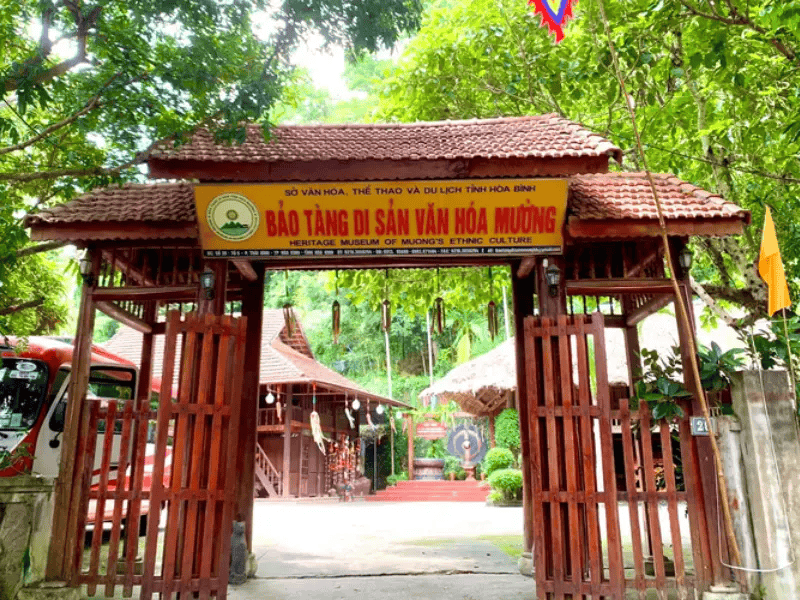
The Muong Cultural Space Museum near Hoa Binh City displays traditional gongs and cultural artifacts (Source: Collected)
If your trip coincides with a local festival, combining a museum visit with a live performance can give you a better understanding of how Muong gongs are used. Because these performances are usually tied to particular festivals or community events, it is a good idea to ask a local guide or your accommodation about upcoming cultural activities before visiting.
Read more: Discover the Muong Cultural Space Museum – A place preserving the essence of Muong culture in Hoa Binh
How Muong Bi communities are preserving their ethnic gong heritage
Muong Bi in Tan Lac is one of the areas where Muong gong traditions are still being preserved. In previous decades, the tradition declined as fewer community events required full gong ensembles, while younger people had fewer opportunities to learn from older gong players. In some communities, the gongs themselves were still kept, but knowledge of how to tune and play them was becoming less common.
Local authorities and community leaders have responded by documenting the gongs that remain and supporting efforts to restore traditional playing and tuning practices. Surveys have recorded several hundred individual gongs across the district. Cultural festivals and community events have also created more opportunities for gong groups to perform again. These activities focus on preserving both the instruments and the knowledge needed to use them.
Tourism can provide additional support when it is connected to genuine community activities. Visitors can attend traditional festivals, learn about Muong gong culture, and support local guides and cultural sites. Choosing community-based cultural experiences rather than staged performances can help maintain interest in the tradition and provide income for people involved in preserving it.
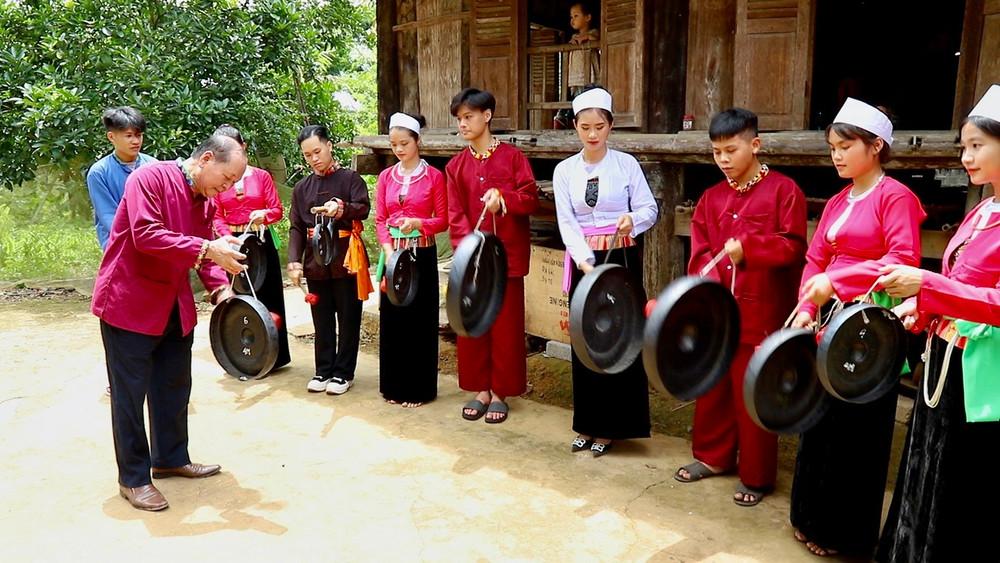
Preservation efforts focus on passing gong tuning and playing techniques down to younger generations (Source: nhan dan newspaper)
Practical tips for seeing Muong ethnic gong in Hoa Binh
The timing of your trip can affect your chances of seeing Muong ethnic gong. During Tet, visitors may come across Sac Bua performances, while Khai Ha takes place in early spring. Outside the main festival periods, the Muong Cultural Space Museum and other local cultural events are good options for learning more about the tradition.
From Hanoi, the journey to Hoa Binh and nearby Muong areas usually takes around 1.5 to 3 hours, depending on where you are staying. If you want to explore the Muong communities around Mai Chau, Mai Chau Hideaway Lake Resort is one accommodation option to consider. Its location also makes it convenient to combine a stay in Mai Chau with other cultural and nature experiences in the area.
A Muong gong experience can also be combined with other local activities, such as visiting traditional stilt houses, learning about Muong customs, or exploring traditional crafts and music. You can also combine the visit with traditional stilt houses, local customs, crafts, or other forms of Muong music
Read more: Visiting Mai Chau to discover the customs and traditions of the Muong People
Muong culture is best understood through the places where local traditions are still part of community life. A stay at Mai Chau Hideaway Lake Resort gives you a comfortable base for exploring the valley, visiting traditional villages and stilt houses, and discovering more of the local culture at your own pace.
FAQs
Can visitors join a Muong gong performance?
→ Yes, if the organizers or local community invite them to participate.
Are Muong gongs played by both men and women?
→ Yes. Both men and women can play Muong gongs, although women are especially associated with Sac Bua.
How many gongs are in a traditional Muong ensemble?
→ A traditional ensemble usually has 12 gongs, each producing a different tone.
Are Muong gong performances available all year round?
→ No. Most performances take place during festivals, ceremonies, and community events.
Can I buy a traditional Muong gong in Hoa Binh?
→ Muong gongs are not commonly sold as tourist souvenirs. Ask a local cultural expert if you are looking for an authentic instrument.
What can I ask a Muong gong artisan?
→ Ask about gong tuning, playing techniques, and when the gongs are used in Muong community life.
How much does it cost to see a Muong gong performance?
→ There is no fixed entrance fee for traditional community performances. Costs depend on the festival, cultural program, or tour you join.
How much is the entrance fee to the Muong Cultural Space Museum?
→ The entrance fee is around 50,000 VND for adults and 25,000 VND for students.