Amid the vast forests of the Northwest, the Muong people preserve their cultural identity not only through songs and chants, but also through their traditional folk dances. Muong traditional dance is more than a performing art, it is a living cultural pulse infused with the spiritual essence of the mountains. By tracing these dance forms, one can feel the serene, primeval beauty of an ancient culture that has endured through time.
Origins and cultural roles of Muong traditional dance
Deep in the mountainous Northwest, Muong traditional dance emerged from the intersection of agricultural life and communal beliefs. According to various sources, these dances have existed since ancient times, closely linked with rituals, harvests, village festivals, and communal gatherings such as welcoming guests, celebrating new rice, weddings, or funerary rites. In traditional funerals, the mo (ritual specialist) performs sword dances or fan dances to guide the spirit of the deceased and ward off malevolent entities, practices that gradually evolved into diverse forms of folk performance.
In folk festivals such as the Khai Ha Festival, the Forest-Opening Ceremony, or the “Khuong Mua” festival, performances like gong dance, Möi dance, Sênh Tiền dance, and drumming rituals are showcased to pray for abundant crops, celebrate the new harvest, strengthen community bonds, and reflect the agricultural heritage of wet-rice civilization.
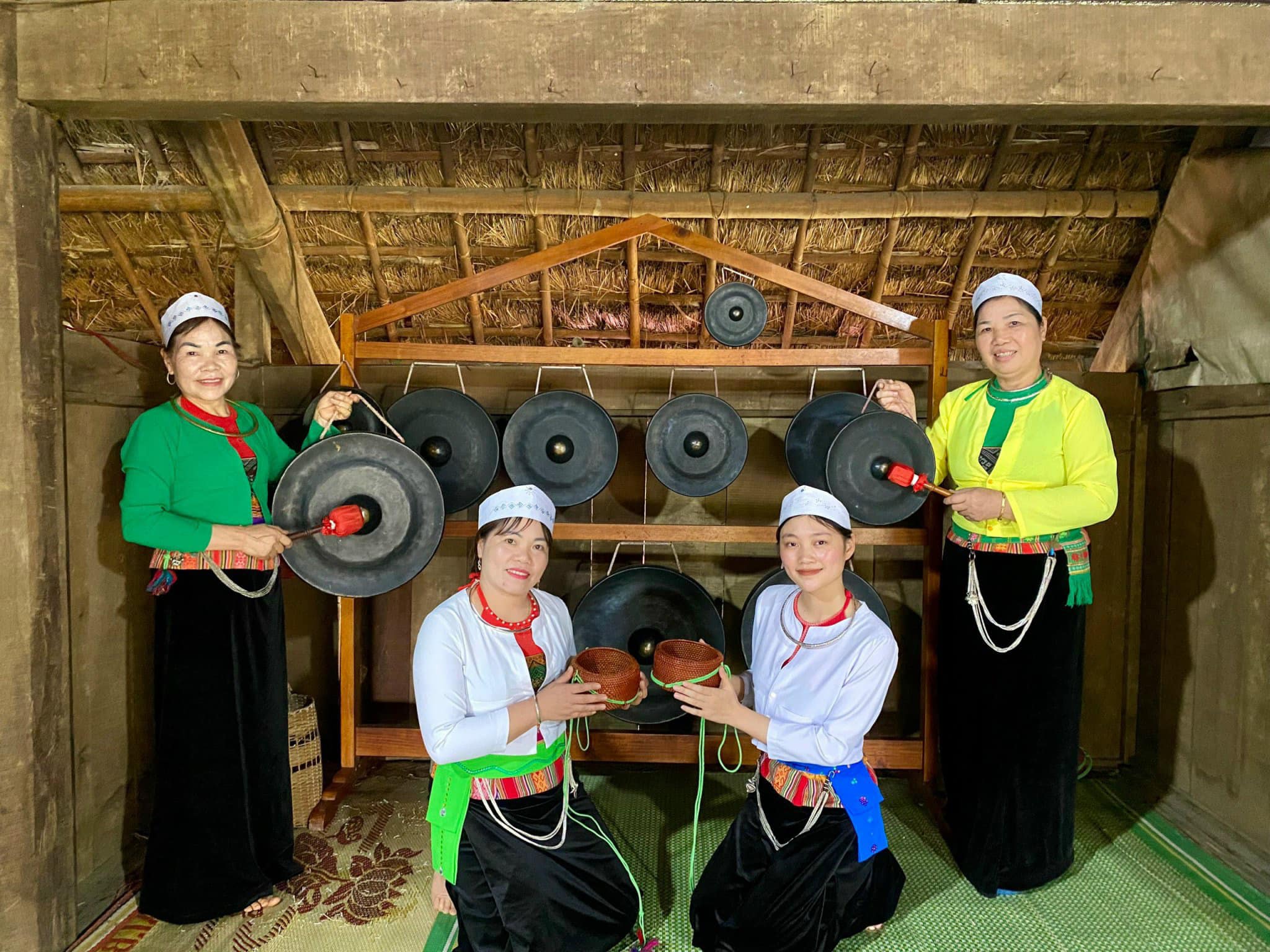
Exploring the origins and cultural roles of Muong traditional dance (Source: Ethnic News)
Every movement in Muong traditional dance reflects scenes from daily life, such as clearing the forest, carrying rice, offering wine, or guiding a soul to the afterlife. For instance, the Đu drum dance originated from the story of a father who beat the drum to console his child after the mother’s passing and later used the same drum to bid farewell to his own father on his final journey. Over time, it became a profound symbol of filial devotion in Muong culture.
More than mere entertainment or performance, Muong traditional dance acts as a cultural vessel through which the Muong people preserve their roots and narrate their collective story. Within each gesture lies a spirit of unity and a rustic yet deeply meaningful form of expression, one that teaches younger generations about gratitude, community bonds, and the seemingly humble yet invaluable ethnic identity of their people.
Read more: Discover the beauty of Mother Goddess worship through a unique cultural journey
Representative dances of the Muong people
Muong traditional dance plays a vital role in religious rituals, communal festivals, and cultural activities. Among them, four ancient dances stand out: Moi dance, Senh Tien dance, Đu drum dance, and Tro Ma dance. Each carries a distinct meaning tied to the spiritual and communal life of the Muong since ancient times.
Moi Dance - inviting ancestors and deities
The Moi dance is considered one of the oldest forms of Muong traditional dance, often performed during ancestral rites, spring festivals, or ceremonies celebrating the new rice harvest. In the Muong language, Moi means “to invite”, inviting ancestors to join the New Year celebration, inviting deities to witness devotion, and inviting blessings upon the community. The Muong believe that the Moi dance creates a sacred bridge between humans, ancestors, and spiritual forces, praying for prosperous crops and peaceful villages.
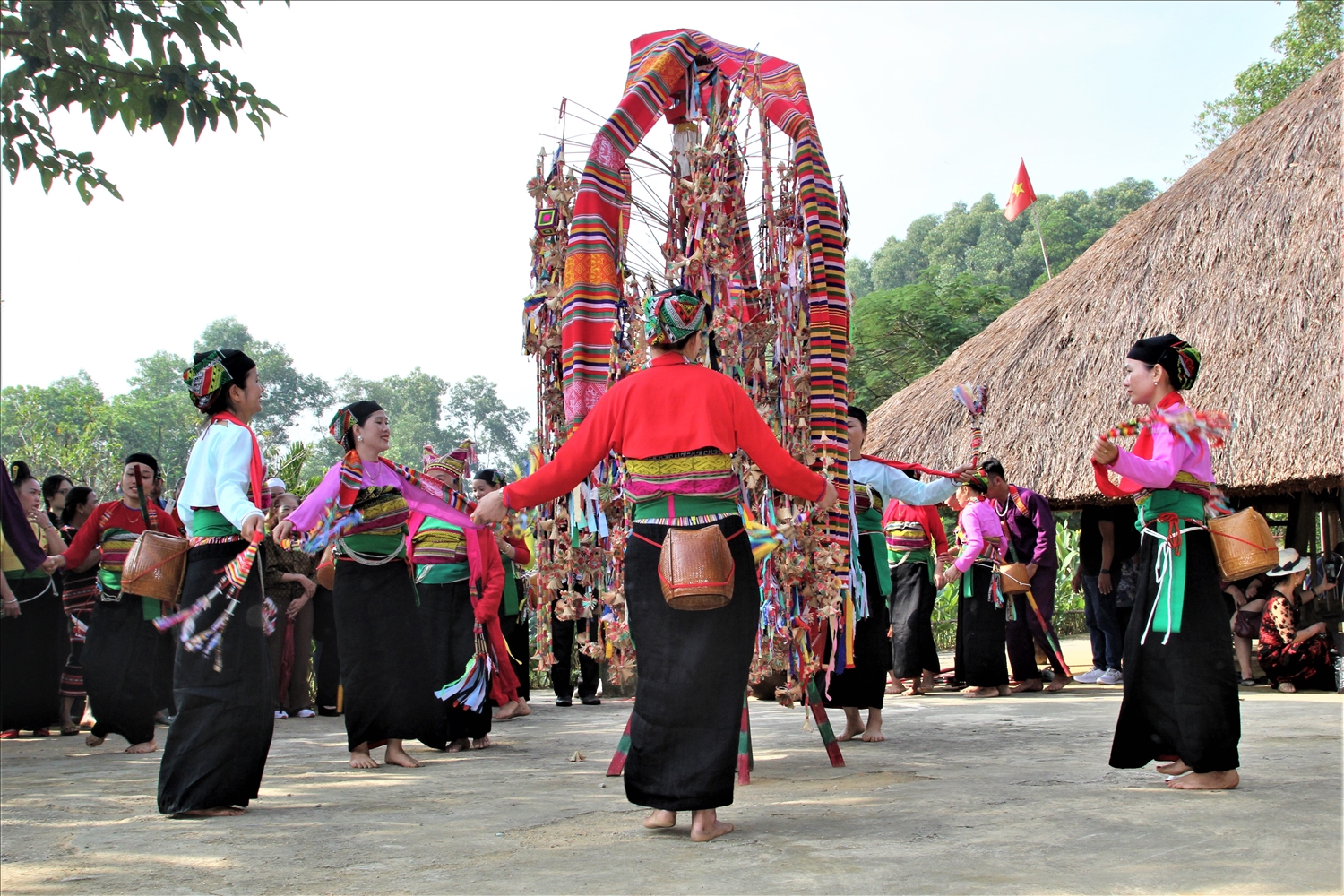
Moi Dance (Source: Ethnic News)
The movements of the Moi dance are gentle and fluid, imitating women offering ceremonial gifts or men raising gongs to invite sacred spirits. Dancers often perform with soft, graceful motions while holding props such as fans, scarves, or bamboo sticks. The dance is accompanied by Moi chanting along with drums and gongs, creating a solemn, spiritual atmosphere.
Senh Tien dance - festive rhythms in folk celebrations
Senh Tien is a distinctive musical instrument consisting of bamboo pieces and coins that rattle against one another to produce shimmering metallic sounds. In the Senh Tien dance, performers use the instrument to create rhythm while moving swiftly and energetically to the beat of drums and vocals.
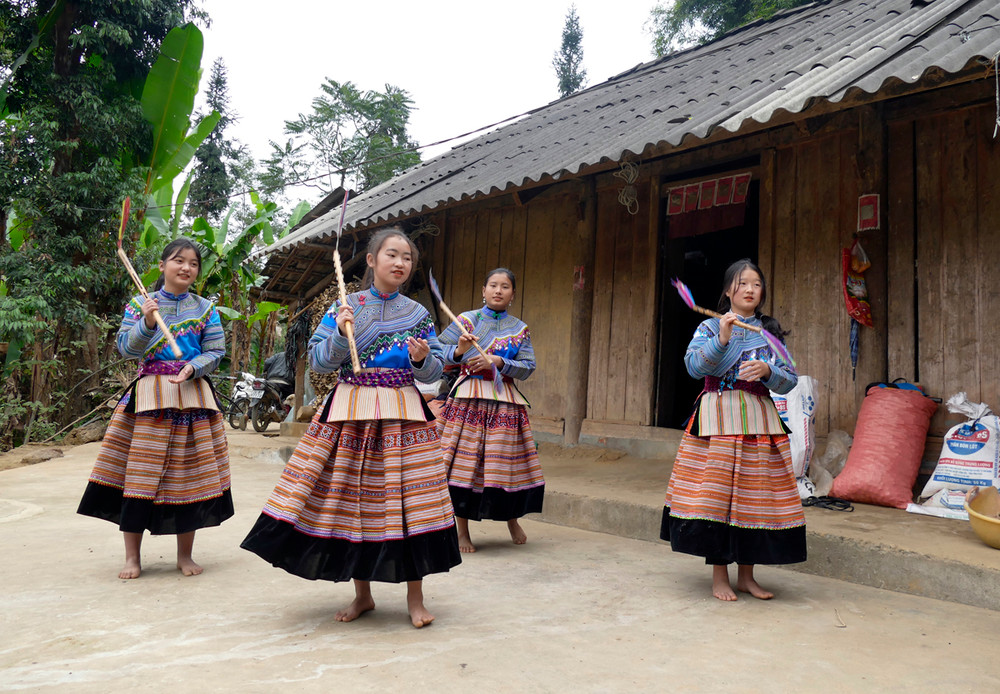
Senh Tien dance (Source: Ethnic News)
This dance embodies joy, unity, and faith in a prosperous harvest. It is commonly performed during spring festivals, love celebrations, and weddings as a blessing for good fortune and auspicious beginnings in the new year.
Đu drum dance - sacred and dynamic in harvest rituals
The Đu drum dance is closely associated with the Đu Drum Festival - a major folk celebration of the Muong people, typically held at the beginning of the year in Muong Bi, Hoa Binh. The Đu drum is not merely a musical instrument, but a sacred object symbolizing vitality and yang energy.
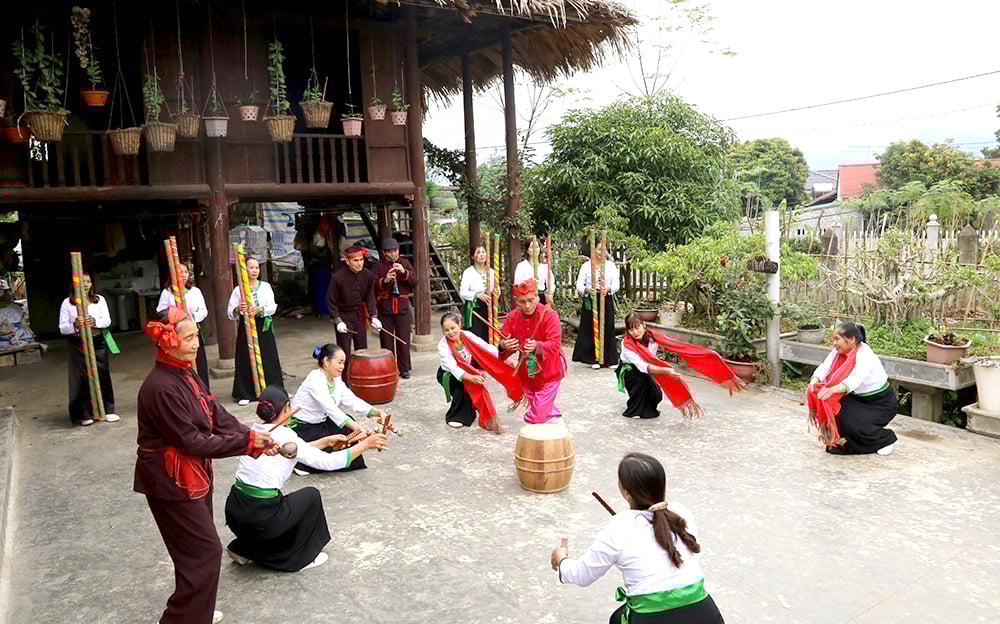
Đu drum dance (Source: Ethnic News)
In this dance, muscular young men carry drums and perform vigorous movements around a tall ceremonial pole, accompanied by powerful shouts and rapid drum rhythms, as if calling upon heaven and earth to grant favorable weather and abundant rains. The Đu drum dance expresses desires for fertility, prosperous crops, and renewal of life, while warding off evil spirits and bringing luck to the community. Today, it is one of the most carefully preserved and revitalized folk dance traditions of the Muong people.
Tro Ma dance - a distinctive ritual performance of the Muong
The Tro Ma dance (also known as ceremonial performance in major traditional Muong funerals) is a form of ritual dance that combines chanting, epic storytelling, and folk dramatization. In traditional funerary rites, the Tro Ma dance guides the soul of the deceased back to the ancestors, helps descendants dispel misfortune, and reenacts the spiritual world as perceived by the Muong.
Performers typically wear masks and costumes representing deities, ancestors, or animals, and execute unusual movements that portray interactions between the realms of the living and the dead. The Trò Ma dance stands among the most unique ritual expressions of Muong traditional dance, embodying profound reflections on life and death alongside deep ancestral reverence. It is both a form of theatrical performance and a spiritual practice rooted in indigenous beliefs.
Distinctive features of Muong traditional dance
Unlike modern stage-oriented dance forms, Muong traditional dance remains closely intertwined with communal life and folk spirituality. Costumes, props, spaces, and performance timing together form a rustic yet emotional cultural whole rich in local identity.
Costumes and props in Muong traditional dance
Costumes in Muong traditional dance are not only visually appealing but also symbolically meaningful. Women typically wear fitted blouses with long black skirts and vibrant waistbands, complemented by headscarves and silver or beaded jewelry. The attire is simple yet elegant, highlighting feminine grace and modesty. Men wear traditional long robes and wrapped headcloths, conveying strength and solemnity.
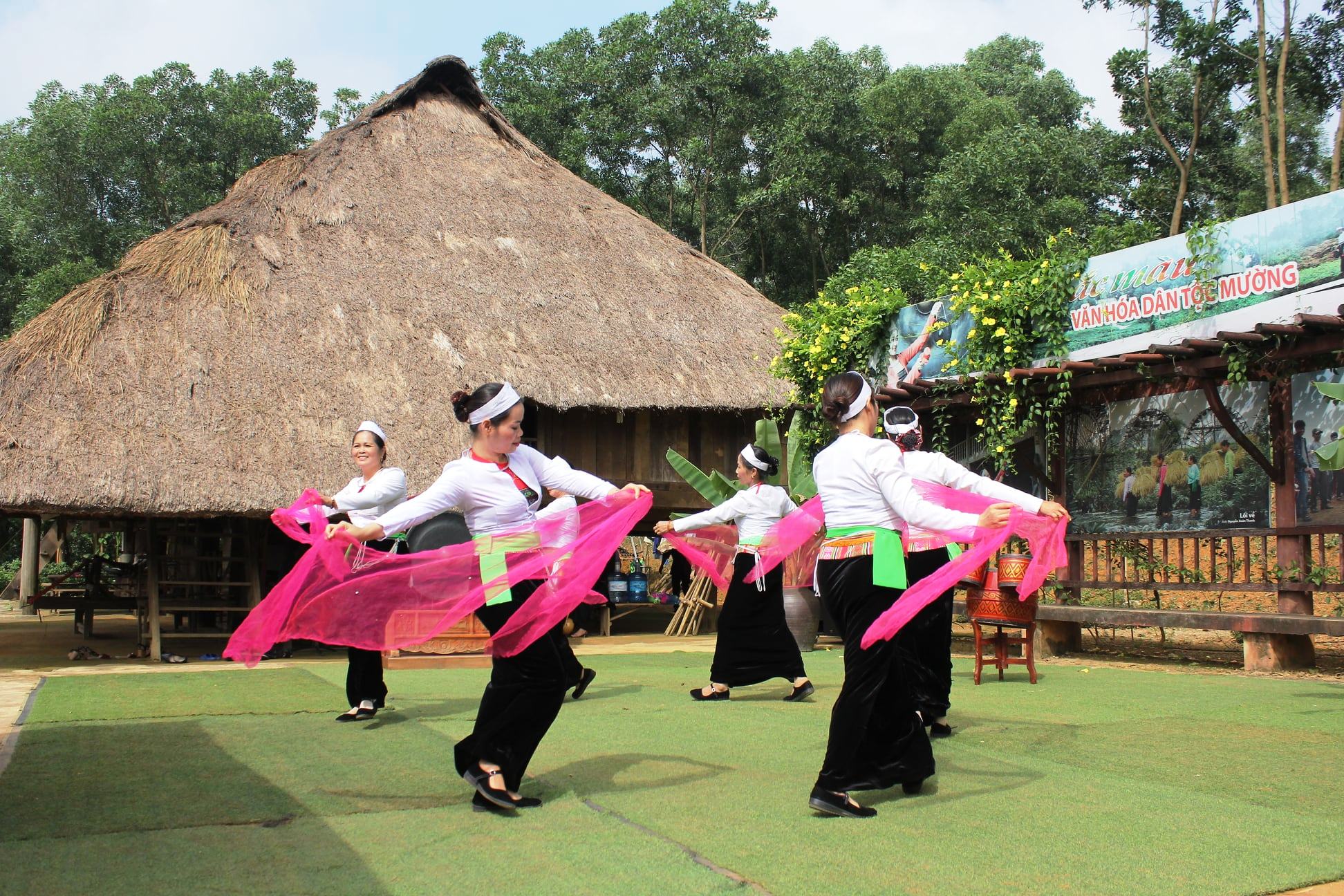
Costumes and ritual props in Muong traditional dance (Source: Ethnic News)
Props used in Muong traditional dance are highly diverse and deeply rooted in local culture, including Senh Tien rattles, fans, Đu drums, wooden masks, swords, parasols, and more. Beyond assisting the performance, these props serve as symbolic “languages” that communicate the content of the dance: fans embody feminine grace and softness; the Đu drum symbolizes fertility and vigorous growth; while the Sênh Tiền produces cheerful rhythms that evoke festive atmosphere.
Performance spaces of Muong traditional dance
The performance spaces of Muong traditional dance are closely tied to communal environments such as village courtyards, stilt-house yards, central village grounds, water wharfs, or sacred forests. Dances are often performed around ceremonial poles, ancestral altars, or large bonfires, all of which are considered sacred elements in Muong spiritual life.
Unlike stage-bound modern performances, the dance environment remains open and intertwined with nature and human presence. Performers and spectators may merge into a single collective body, creating an atmosphere of connection, reverence, and intimacy. This fusion of ritual and daily life is a defining feature of Muong traditional dance, where sacred expression coexists with communal vitality..
Occasions for Muong traditional dance
Traditional dances of the Muong are never performed arbitrarily; they are closely associated with festivals, significant communal events, and the human life cycle. Notable occasions include:
- The Khai Hạ spring festival (praying for harvest and celebrating the new year)
- House-warming ceremonies and new rice celebrations
- Weddings and funerals (including the Tro Ma dance)
- Soul-summoning rites, ancestral worship, and first-plowing ceremonies
- The Đu Drum Festival - a symbol of fertility rites and filial devotion
In every occasion, the dance acts not only as entertainment but as a sacred ritual of blessing, gratitude, and communication between the spiritual and earthly worlds. Whether in solemn ceremonies or joyous festivities, Muong traditional dance remains inseparable from communal rhythms, serving as a cultural medium for expressing emotions, beliefs, and ancestral ties.
Read more: Mai Chau Tet travel guide for a peaceful spring escape
Tracing Muong traditional dance in Mai Chau - Hoa Binh
When visiting Mai Chau, travelers are drawn not only to its majestic mountains but also to the vibrant cultural heritage of the Muong people. During warm, communal bonfire nights in Lac Village or Pom Coong Village, cultural performances unfold naturally, offering intimate encounters with local traditions and identity.
Mai Chau becomes even more festive during the first spring festivals of the year. Elder artisans and young women in striking brocade attire reenact the Moi dance and the Trong Du drum dance, creating an atmosphere that is simultaneously festive and sacred. Each rhythmic step, graceful gesture, and enchanted gaze narrates stories of ancestors, villages, and lives intertwined with forests, rice fields, and mountains.
For the Muong, dance is not merely a performing art, it is a spiritual language and a cultural lifeline passed from generation to generation. Every movement, every Senh Tien rattle, and every costume recounts an ancient tale that reinforces communal bonds and guides visitors back to the roots of Muong heritage.
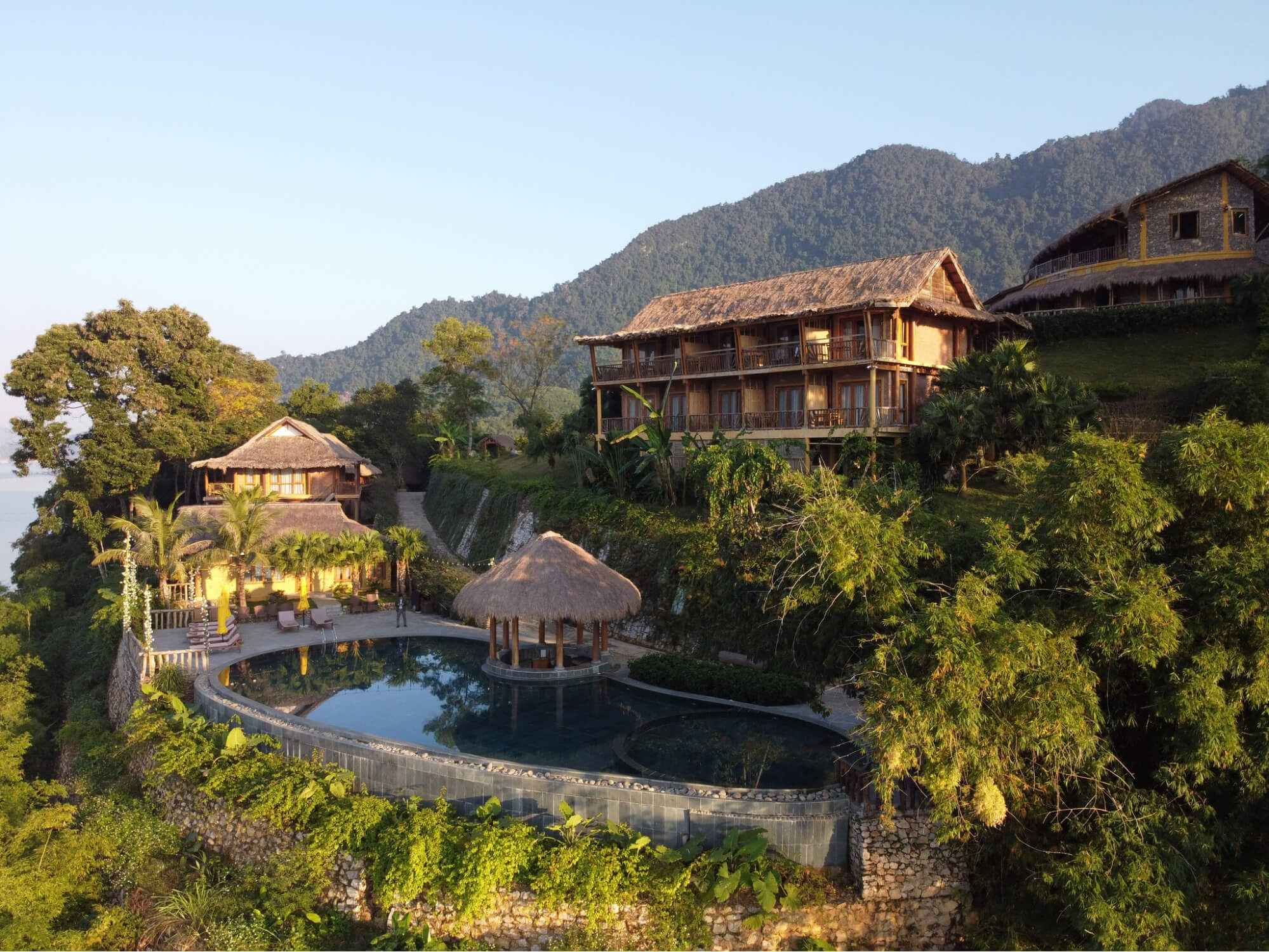
Mai Chau Hideaway Lake Resort
If you wish to experience a Mai Chau that is not only breathtaking in landscape but also profound in cultural depth, Mai Chau Hideaway Lake Resort is an ideal place to stay. Nestled along the emerald waters of Hoa Binh Lake, the resort offers more than a tranquil retreat in nature, it opens a doorway into the authentic cultural world of the Muong community.
Amid the resonant drums and graceful movements of Muong traditional dance, visitors encounter both traditional beauty and the enduring cultural pride of the local people. Mai Chau - Hoa Binh does not overwhelm with noise or extravagance, instead, its simplicity and sincerity linger long in the memory.
When the chance comes, sit by the hearth of a stilt house, watch the Muong dance, and feel life ease into the gentle rhythm of the Northwest mountains. It is there, in the warmth of shared spaces and age-old stories, that Mai Chau reveals itself most beautifully.