Exploring the major ethnic groups in Vietnam through Mai Chau gave me a closer look at three unique cultures: Thai, Muong, and Hmong. I was impressed by the Thai community spirit, moved by the Muong’s deep cultural traditions, and fascinated by the Hmong’s strong identity and craftsmanship. Together, these experiences showed me the living cultural diversity that makes Mai Chau so special.
Thai culture in Mai Chau, the heart of the valley
The Thai people are the group most visitors picture when they imagine Mai Chau. Their stilt houses line the valley floor in villages like Ban Lac and Pom Coong, raised on wooden posts with woven bamboo walls and thatched or tiled roofs a design suited to the region's wet-rice farming and monsoon rains. Walk through either village and you'll see looms set up on open porches, where women weave brocade textiles (tho cam) with geometric patterns passed down through generations, often for sale directly from the household that made them.
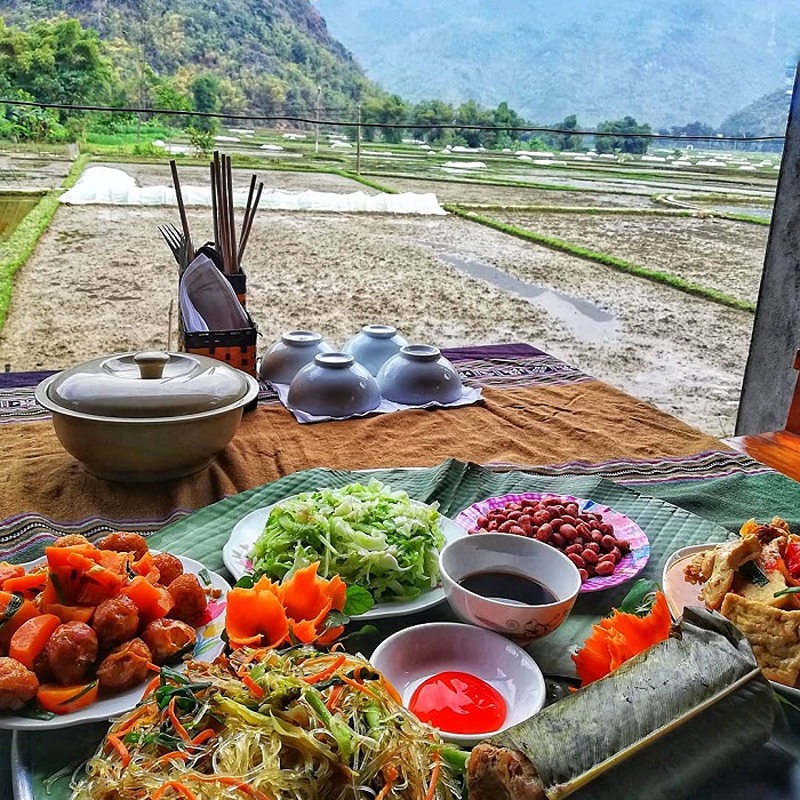
Pom Coong Village - Experiencing Thai culture and cuisine (Source: Vietnam Tourism)
Music and dance are central to Thai identity here. In the evenings, communities perform mua xoe, a circular dance where dancers link hands or hold silk scarves, moving in a slow, unified rhythm meant to represent unity and gratitude, it was recognized by UNESCO as an Intangible Cultural Heritage of Humanity in 2021. Visitors are often invited to join, making it one of the more participatory cultural experiences available in the valley rather than a performance watched from a distance.
Thai cuisine in Mai Chau reflects the same close relationship with the land: sticky rice steamed in bamboo tubes (com lam), grilled river fish, and bamboo-shoot dishes flavored with mắc khén, a Northwest Vietnamese pepper unique to the region. Staying overnight in a Thai stilt-house homestay remains the most direct way to experience daily village life, from morning rice preparation to the evening's shared meal.
Read more: Lac Village, Mai Chau: Immerse yourself in Thai culture, nature & cuisine
Muong culture in Mai Chau gongs, the Mo Epic, and ancestral belief
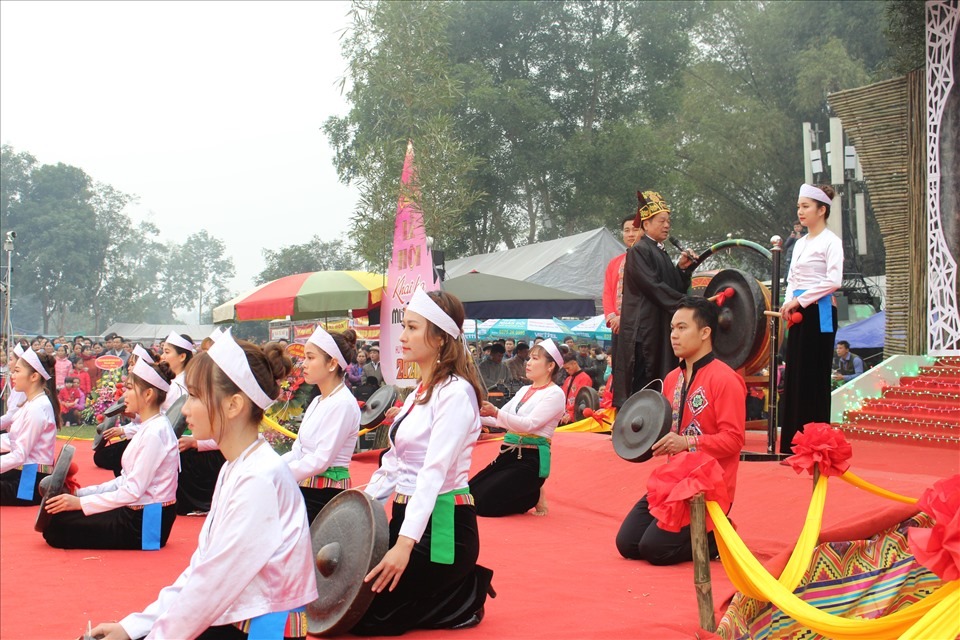
Cong chieng - A unique cultural feature of the Muong ethnic group (Source: Lao Dong Newspaper)
The Muong are Vietnam's third-largest ethnic minority nationally, however, in the former Hoa Binh province (now part of Phu Tho following a merger), the province Mai Chau belongs to they are the dominant group, accounting for roughly 64% of the province's population according to the 2019 census. Linguistically, Muong is part of the Viet-Muong branch, making it more closely related to Vietnamese than to Thai, and Muong communities are found throughout Hoa Binh, often in villages set back from the main valley road.
Two traditions strongly shape Muong cultural identity: Cong chieng, bronze gongs played at weddings, festivals, and funerals, and Mo Muong, oral epic poetry recited by a thầy mo during funerals and major life events. Centered in Hoa Binh Province, Muong communities preserve these traditions through stories of their origins, ancestry, and spiritual beliefs. UNESCO has recognized Mo Muong as a national intangible heritage under consideration for international listing, making it one of northern Vietnam’s most significant oral traditions.
Muong stilt houses are typically simpler in decoration than Thai stilt houses, with an ancestral altar placed at the center of the main living space. This reflects the strong role of ancestor worship in Muong culture and offers a glimpse into the group’s traditional family life.
Read more: Muong culture: a journey through traditions and heritage
Hmong Culture in Mai Chau: Life in Hang Kia and Pa Co
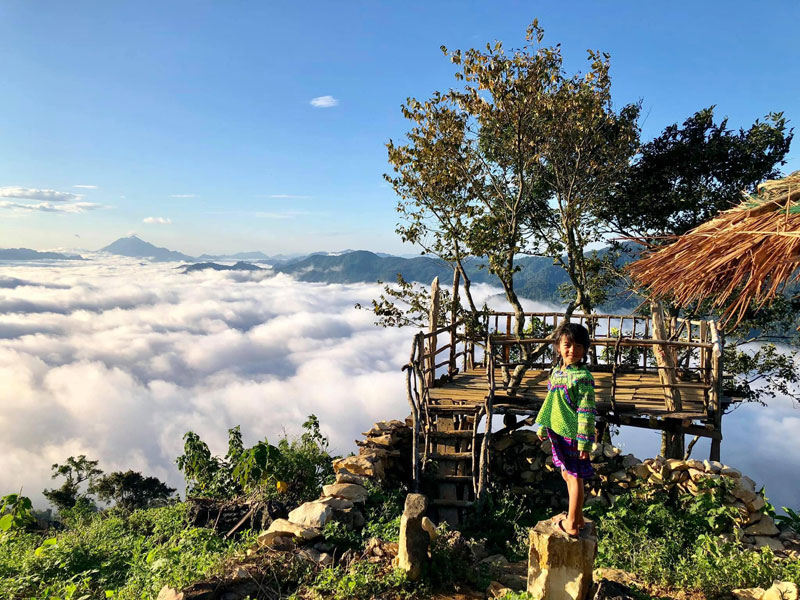
Hang Kia - Pa Co: A cloud-hunting paradise in the heart of Hoa Binh (Source: Tin Tuc Newspaper)
Higher in the mountains surrounding Mai Chau, in the communes of Hang Kia and Pa Co, I was impressed by the distinctive culture of the Hmong people. Their indigo-dyed hemp clothing, hand-embroidered with wax-resist batik patterns unique to each family lineage, immediately caught my attention. Unlike the Thai and Muong, who settled the valley floor, the Hmong traditionally farm steep terraced slopes, growing corn, hemp, and plums at elevations often above 1,000 meters.
One of the experiences I found most interesting was visiting the Pa Co market, where families come down from surrounding hamlets each week to trade produce, textiles, and livestock. Hearing the H'Mong language, part of the separate Hmong-Mien linguistic family and unrelated to both Thai and Muong, made the experience feel even more authentic. The drive along the mountain pass connecting Mai Chau to Pa Co was also part of the journey, offering some of the most scenic views in the region.
What stayed with me most was how strongly geography shapes Hmong life in Hang Kia and Pa Co. At these higher, cooler elevations, plum and peach trees blossom each spring, attracting travelers during the bloom season. For me, seeing the mountains, farms, markets, and seasonal blossoms together made it clear that Hmong culture is shaped not only by ethnicity and tradition, but also by the landscape they call home.
Read more: Where can you find Black Hmong in Northern Vietnam?
Three cultures, one journey - Insights gained from Mai Chau
.jpg "Three cultures, one journey - Insights gained from Mai Chau")
Three cultures, one journey - Insights gained from Mai Chau (Source: Department of Propaganda and Mass Mobilization)
What stayed with me most after exploring the major ethnic groups in Vietnam was how different Thai, Muong, and Hmong cultures could feel despite being relatively close to one another. My journey began in the valley, where Thai stilt houses, brocade weaving, and village life gave me a first impression of Mai Chau's cultural identity. From there, discovering Muong traditions and traveling higher into the mountains to Hang Kia and Pa Co showed me three distinct ways of living shaped by different landscapes.
I also noticed that each culture offered a different kind of experience. Thai villages such as Ban Lac and Pom Coong felt easy to explore by bicycle, while learning about Muong culture gave me a deeper appreciation of gong music and the Mo Muong oral tradition. The trip to Hang Kia and Pa Co felt more adventurous, with mountain roads, Hmong markets, indigo textiles, and a way of life closely connected to the highlands.
|
Ethnic Group
|
Language Family
|
Where I Experienced It
|
Cultural Highlight
|
|
Thai
|
Tay-Thai
|
Ban Lac, Pom Coong and the valley
|
Xoe dance, brocade weaving
|
|
Muong
|
Viet-Muong
|
Villages across Hoa Binh Province
|
Gong music, Mo Muong epic
|
|
Hmong
|
Hmong-Mien
|
Hang Kia, Pa Co and the mountains
|
Indigo batik, weekly market
|
Looking back, I found that trying to experience all three cultures in one day would have felt too rushed. Giving myself two or three days allowed more time to slow down, travel between the valley and mountains, and appreciate the differences between each community. More than simply seeing different ethnic groups, the journey helped me understand how Mai Chau's landscapes, traditions, and everyday life are deeply connected.
How are local people preserving and promoting Mai Chau's ethnic cultures?
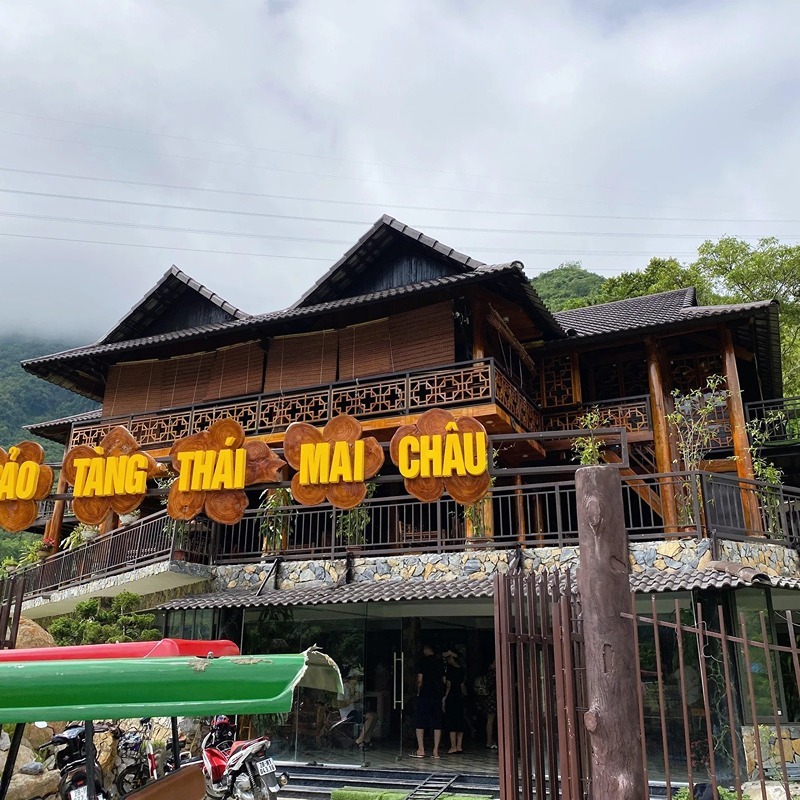
Thai Mai Chau museum - Preserving highland cultural heritage
Local communities play an important role in preserving Mai Chau's ethnic cultures while turning traditional heritage into meaningful tourism experiences. Their daily activities, crafts, performances, and community-based tourism help visitors experience local culture while creating income for residents.
- Sharing local culture: Local families introduce visitors to traditional food, clothing, music, dance, architecture, and everyday village life, making cultural experiences more authentic and personal.
- Developing community-based tourism: Homestays, cycling tours, village visits, and local activities allow residents to welcome travelers directly and earn income from tourism.
- Promoting traditional crafts: Thai brocade weaving and Hmong batik remain important cultural skills while also creating products that visitors can purchase and take home.
- Passing traditions to younger generations: Elders continue teaching traditional music, dance, gong culture, handicrafts, and other cultural knowledge, helping younger people stay connected to their heritage.
- Supporting cultural performances: Traditional music and dance events create opportunities for local performers, especially younger generations, to practice their skills and share them with visitors.
- Creating sustainable livelihoods: Income from homestays, handicrafts, food, and cultural activities gives local families a practical reason to maintain traditional practices while benefiting from tourism.
- Promoting Mai Chau's cultural identity: By sharing their living traditions with travelers, local communities help showcase the diversity of Thai, Muong, and Hmong cultures and strengthen Mai Chau's position as a cultural tourism destination.
Experience Mai Chau's living culture with Mai Chau Hideaway Lake Resort
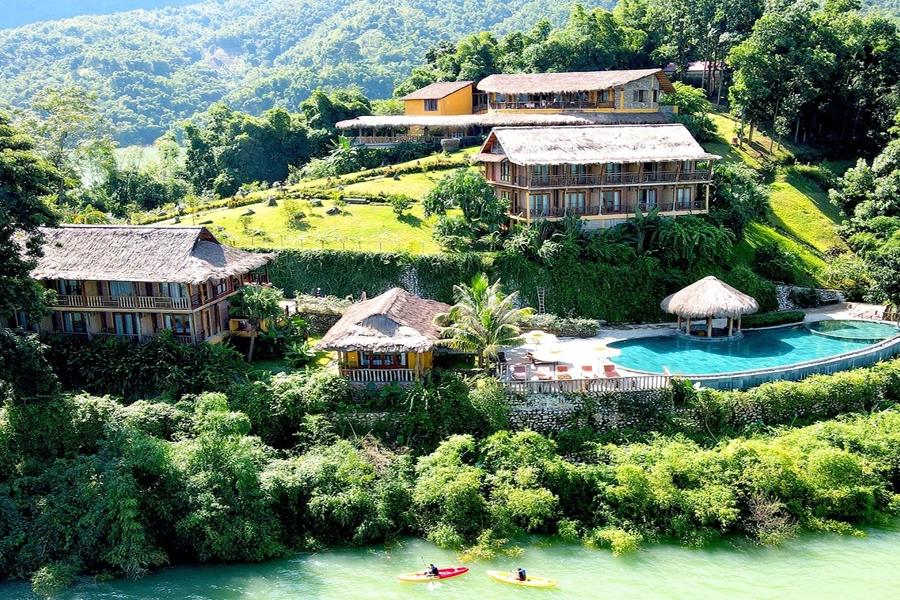
Experience Mai Chau Hideaway Lake Resort
Mai Chau Hideaway Lake Resort is a peaceful base for discovering the major ethnic groups in Vietnam while enjoying the natural beauty of Mai Chau. Set on a private peninsula on Hoa Binh Lake, the resort offers a relaxing stay surrounded by mountains, forests, and the calm waters of the lake. It is also a convenient starting point for travelers who want to combine cultural exploration with outdoor activities during their Mai Chau journey.
One of the best ways to discover the local landscape and village life is by cycling through ethnic villages, rice fields, and quiet countryside roads. Along the way, travelers can see traditional Thai and Muong villages, stilt houses, farmland, handicrafts, and the slower rhythm of everyday life. Cycling allows you to explore Mai Chau at your own pace while getting closer to the local communities and landscapes that make the valley unique.
For a different perspective, kayaking on Hoa Binh Lake offers a peaceful way to experience the region from the water. Paddling across the lake, surrounded by green hills, limestone mountains, and quiet waterways, creates a refreshing contrast to exploring the villages by bicycle. Combining kayaking, cycling, village visits, and a relaxing stay at Mai Chau Hideaway makes it possible to experience both the cultural diversity and natural beauty of Mai Chau in one memorable journey.
Frequently asked questions about ethnic groups in Vietnam
How many ethnic groups does Vietnam have?
Vietnam officially recognizes 54 ethnic groups: the Kinh majority and 53 ethnic minorities.
Which ethnic groups live in Mai Chau?
Mai Chau is mainly associated with Thai, Muong, and Hmong communities.
Are Thai and Muong the same ethnic group?
No. Thai belongs to the Tay-Thai family, while Muong belongs to the Viet-Muong branch.
Can tourists stay in ethnic minority villages?
Yes. Thai homestays in Ban Lac are a popular way to experience local life.
What is Mo Muong?
Mo Muong is an oral epic performed by a thay mo during important ceremonies and is recognized as a national intangible cultural heritage.