Nghia Linh Mountain is best known as the home of the Hung Kings Temple Complex, but if you simply visit the temples and leave, you may miss much of what makes the mountain worth exploring. So, what does the mountain really have to offer, and what can you expect from a visit? Let’s find out in the guide below.
Quick Facts: Nghia Linh Mountain at a Glance
|
Detail
|
Information
|
|
Location
|
Hy Cuong Commune, Phu Tho Province, northern Vietnam
|
|
Elevation
|
Roughly 175 meters above sea level
|
|
Terrain
|
Forested hill compared in legend to a dragon's head, with its "body" continuing into neighboring Van, Troc, and Pheo mountains
|
|
Entrance ticket (2026, typical)
|
Around 10,000 VND for adults; children generally free
|
|
Museum ticket
|
Roughly 15,000 VND for adults (Hung Vuong Museum)
|
|
Distance from Mai Chau Hideaway
|
Roughly 100-130 km, about a 3-3.5 hour drive via Hoa Binh and Thanh Son (confirm current road conditions before departure)
|
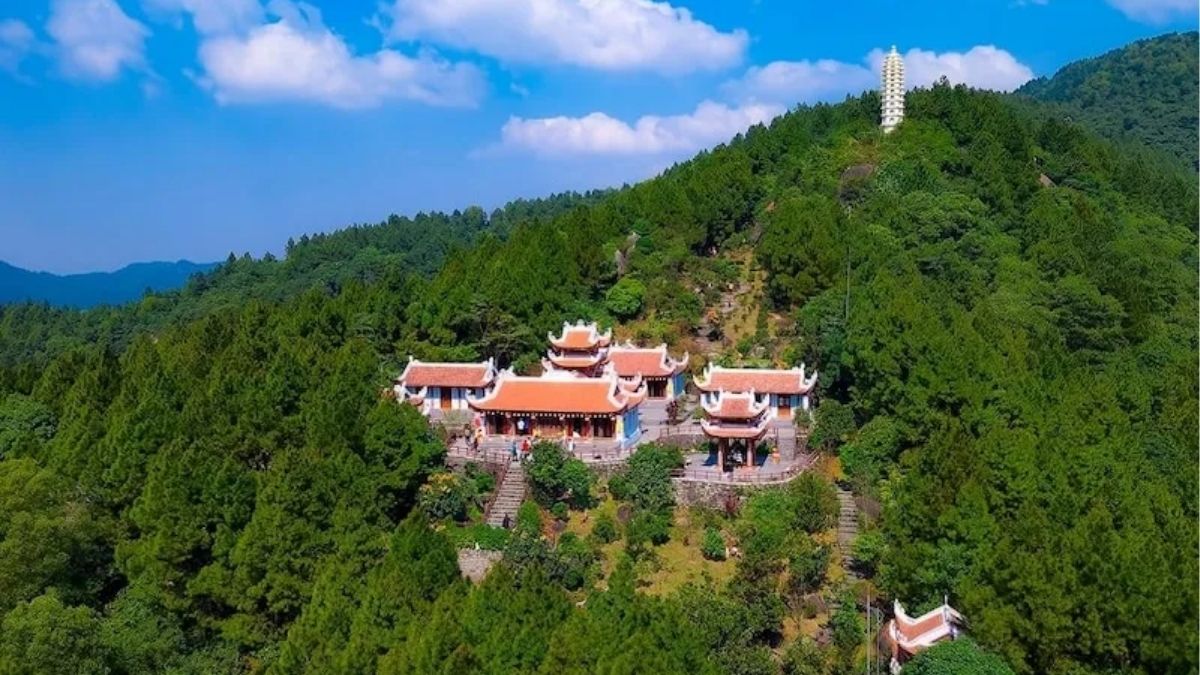
Nghia Linh Mountain and its forested temple slopes (Source: vietnam.vn)
What is Nghia Linh Mountain, and where is it located?
Nghia Linh Mountain is the main mountain of the Hung Kings Temple Historical Site, with temples, a pagoda, and the Hung Kings’ Mausoleum built along its slopes. It is now located in Hy Cuong Commune, Phu Tho Province, northern Vietnam, following Vietnam’s 2025 administrative reorganization. The mountain rises about 175 metres above sea level and is also known as Hung Mountain, Hy Son, or Ca Son.
The main sites include Ha Temple, Thien Quang Pagoda, Trung Temple, Thuong Temple, and the Hung Kings’ Mausoleum. Visitors climb around 553 stone steps along the main route, with the full visit generally taking 1-2 hours including breaks and temple visits.
Nghia Linh is also a major site of Hung Kings worship and the Hung Kings Commemoration Day (Gio To Hung Vuong), a Vietnamese cultural tradition inscribed by UNESCO on the Representative List of the Intangible Cultural Heritage of Humanity in 2012.
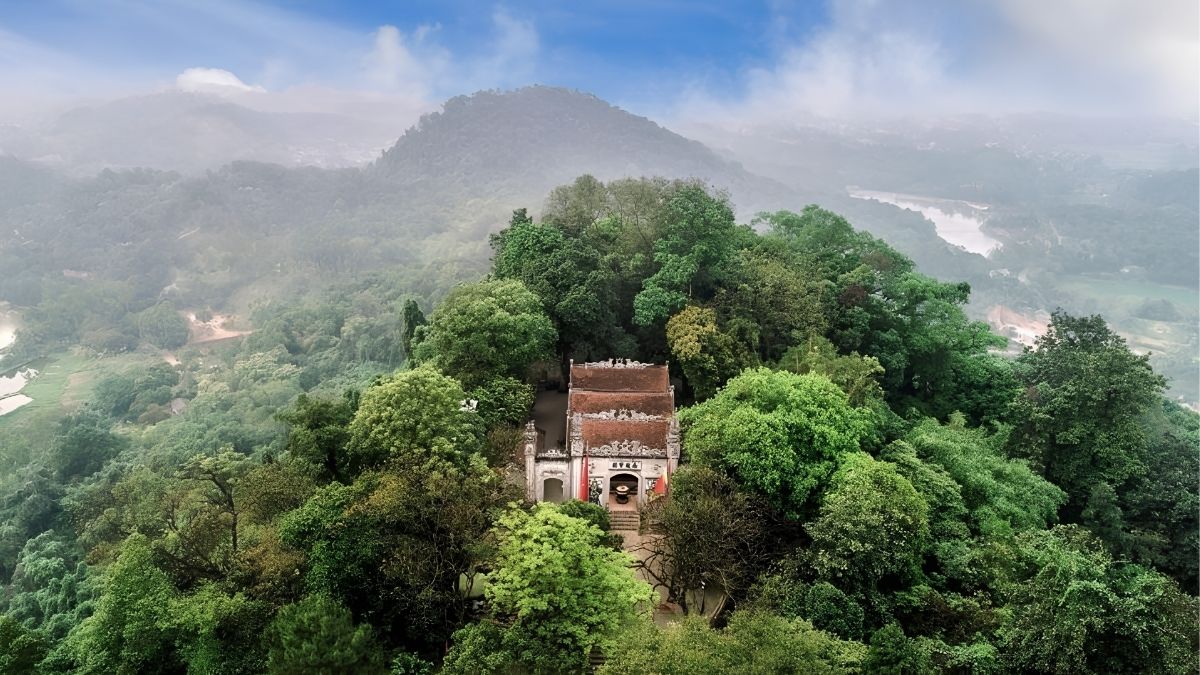
Nghia Linh Mountain is the main mountain of the Hung Kings Temple Historical Site (Source: Bao Dong Nai)
What is on Nghia Linh Mountain?
Nghia Linh Mountain combines religious sites, old-growth greenery, and scenic viewpoints, with each section of the mountain offering something slightly different to explore.
A complex of temples arranged across the mountain's tiers
The Hung Kings Temple Complex stretches across the slopes of Nghia Linh Mountain, with Ha Temple, Trung Temple, and Thuong Temple forming the main uphill route. Gieng Temple and Thien Quang Pagoda are located on the lower slopes and can be added to the wider visit.
For a more practical idea of the route, the main climb to Thuong Temple covers around 495 stone steps:
|
Route
|
Approx. steps
|
What you can see
|
|
Main gate → Ha Temple
|
225
|
Lower temple grounds and forested paths
|
|
Ha Temple → Trung Temple
|
168
|
Steeper uphill section and quieter surroundings
|
|
Trung Temple → Thuong Temple
|
102
|
Upper mountain, forest and summit area
|
|
Total
|
553
|
Main route to Thuong Temple
|
Rather than rushing to the top, allow time to stop at each level. Ha Temple marks the start, Trung Temple offers a natural break halfway up, and Thuong Temple is the highest point and main destination. The main climb can be completed in roughly 45-60 minutes, but allow 2-3 hours if you want to visit the temples at a relaxed pace and explore the wider complex.
Practical tip: Wear comfortable shoes and bring water, especially in warmer months. The forest provides shade along parts of the route, but the stone steps can still feel tiring in midday heat. After the climb, many travelers continue west for a relaxing lakeside stay beside Hoa Binh Lake.
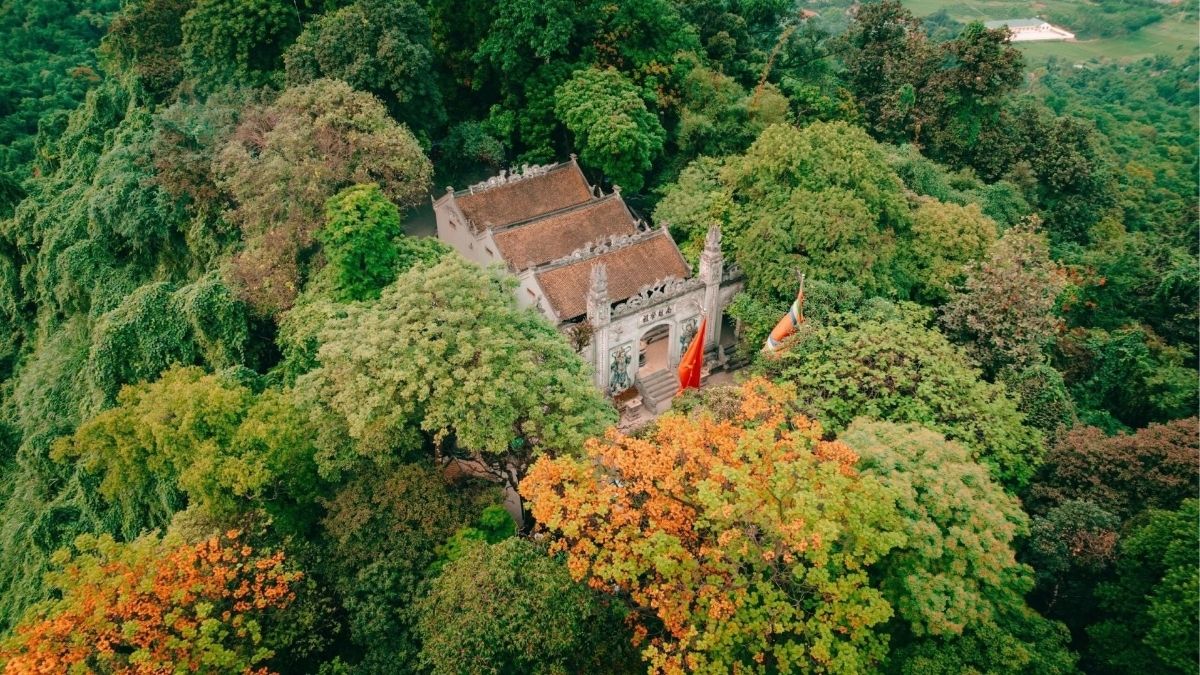
Nghia Linh Mountain blends sacred sites, ancient greenery, and scenic views (Source: VTV 8)
"Dragon-like" terrain - why the mountain is likened to a great dragon
According to traditional beliefs about geography and feng shui, Nghia Linh Mountain is likened to the head of a great dragon facing south. The mountain range extending behind it through Troc, Van, and Pheo mountains is associated with the dragon’s body, forming a continuous mountainous landscape. Nghia Linh itself rises about 175 metres, while the hills and mountains behind it stretch for roughly 10 km.
In front of Nghia Linh lies Bach Hac, where the Red, Lo, and Da Rivers converge, creating a broad landscape of rivers and plains. The traditional arrangement of mountains behind and open rivers and plains in front is considered an auspicious geographical setting in traditional beliefs.
From higher points on Nghia Linh, visitors can take in the surrounding landscape more clearly. On a clear day, the Tam Dao Range to the east and Ba Vi Range to the south may also be visible in the distance. The combination of mountains, rivers, and open plains is an important part of the distinctive landscape surrounding Nghia Linh.
Read more: Phu Tho Temple Travel Guide: How to Visit Hung Kings Temple in Vietnam
Ancient trees standing out on the mountain
The forested slopes of Nghia Linh are home to several old trees that have become notable features of the temple landscape. Rather than being attractions in their own right, these trees are part of the natural setting visitors encounter as they move between the temples.
For visitors, however, you don't need to identify hundreds of species. There are several old trees worth looking for along the main route:
|
Tree
|
Where to look
|
What makes it special
|
|
800-year-old cycad
|
Beside Thien Quang Pagoda, near Ha Temple
|
Three main crowns; over 5 m tall, with a trunk tilted about 30°
|
|
Ancient banyan trees
|
Around Thien Quang Pagoda and the upper temples
|
Several large specimens are estimated to be centuries old
|
|
Old pine
|
Near the Great Gate
|
One of the remaining old pines; earlier trees were estimated at around 300 years old
|
| Terminalia tree |
Junction near Gieng Temple |
One of the notable old trees recorded around the temple complex |
The ancient cycad tree on Nghia Linh Mountain, Hung Temple (Source: Cong dan & Khuyen hoc Magazine)
One important detail: the old trees are protected. Don't climb on their trunks, pull leaves or branches, or touch new shoots. The management board has even installed supports and a drip-irrigation system to help preserve the ancient cycad after a storm damaged one of its major branches.
View of the midlands from Nghia Linh Mountain
Continue toward Thuong Temple for the widest views from Nghia Linh Mountain. From the upper slopes, the landscape opens across Phu Tho, with several features worth looking for:
- Bach Hac river junction: Look toward the lowlands for the area where the Red, Lo and Da rivers meet. This river confluence is one of the key geographical features around Viet Tri.
- The Red River plain: The elevated position of Nghia Linh lets you see how the mountain rises above the surrounding lowland landscape.
- Tam Dao Range: On a clear day, the Tam Dao mountains can be seen in the distance to the east.
- Ba Vi Range: Look south toward the Ba Vi mountain range, another major landmark visible from the area.
- The surrounding hills: The smaller hills around Nghia Linh form the landscape traditionally described as a “dragon”, with Nghia Linh representing the head.
The view changes noticeably as you climb. Ha Temple is surrounded by more trees and buildings, while the higher area around Thuong Temple offers a more open outlook. If seeing the wider landscape is part of your visit, it is worth continuing to the top rather than turning back after the lower temples.
For the best chance of seeing the distant mountains, visit on a clear morning. Humidity and haze can obscure Tam Dao and Ba Vi even when the weather around Nghia Linh is sunny.
Preserved historical, cultural, and environmental forest
Nghia Linh is home to a forest ecosystem covering more than 18.7 hectares and is classified as a special-use forest for historical, cultural and environmental purposes. It supports 636 plant species across 429 genera and 144 families, along with around 175 animal species.
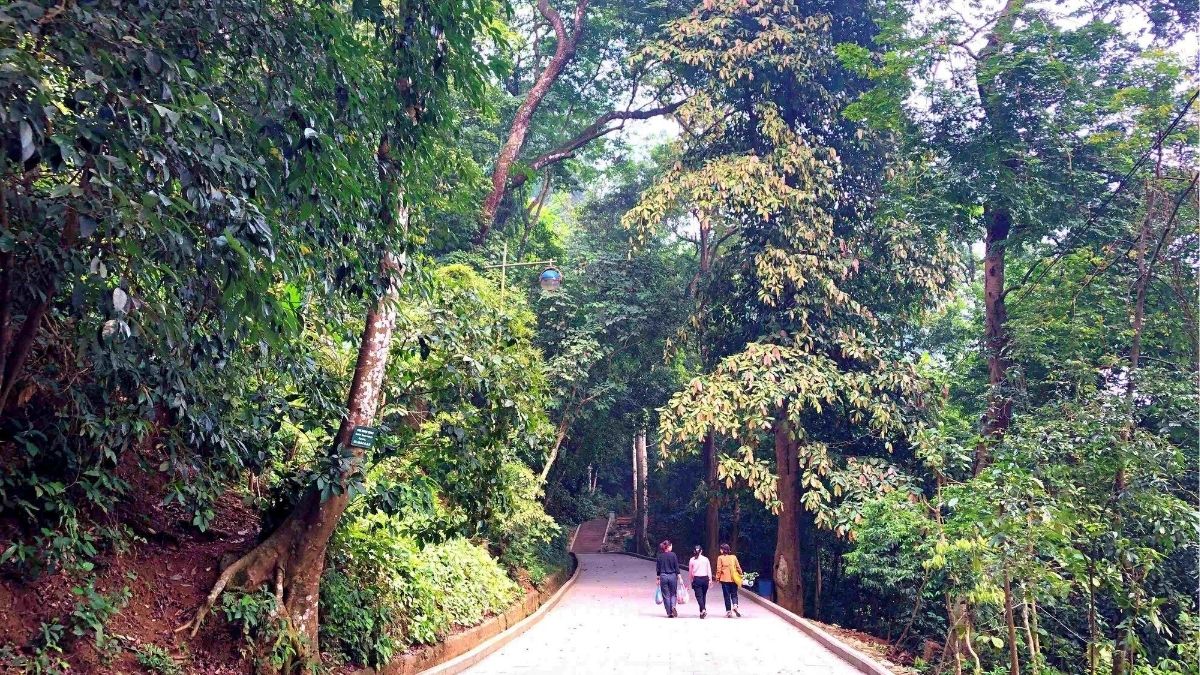
Preserved historical, cultural, and environmental forest (Source: Cong dan & Khuyen hoc Magazine)
Its relatively well-preserved condition is notable given the densely populated midland surroundings. The mountain’s long-standing sacred status and connection to Hung Kings worship have helped protect the forest from major disturbance over generations. Today, the forest remains an integral part of the site, surrounding the temples and preserving the natural character of this sacred mountain.
Read more: Thung Nai Hoa Binh: The Real Boat Gateway to Hoa Binh Lake
Visiting Nghia Linh mountain and the Hung temple complex
Visiting Nghia Linh Mountain means exploring the Hung Kings Temple Complex spread across its slopes, from the lower temples to the summit. Knowing the main route and what to expect at each stop can make your visit easier and more rewarding.
Main route and the mountain climbing experience
From the temple gate, visitors follow a stone staircase that gradually winds up Nghia Linh Mountain. The full climb is part of the experience: the lower section feels open and lively, while the higher you go, the quieter and more forested the surroundings become.
The main route at a glance:
- Ha Temple: The first major stop on the climb. It is associated with the legend of Mother Au Co and the birth of one hundred children, the origin of the Vietnamese idea of đong bao. The spacious grounds make this a common place for families to stop and offer incense.
- Thien Quang Pagoda: An ancient Mahayana Buddhist pagoda dating from the Trần Dynasty. Look for the old cycad tree, traditionally estimated to be more than 800 years old. The atmosphere here is generally quieter, making it a natural place to pause before continuing uphill.
- Trung Temple: Traditionally associated with the Hung Kings meeting their Lạc lords and generals to discuss state affairs. The site is also connected with the story of Lang Lieu and chung cake, giay cake. Its old stone table and parallel couplets give the stop a distinctly historic character.
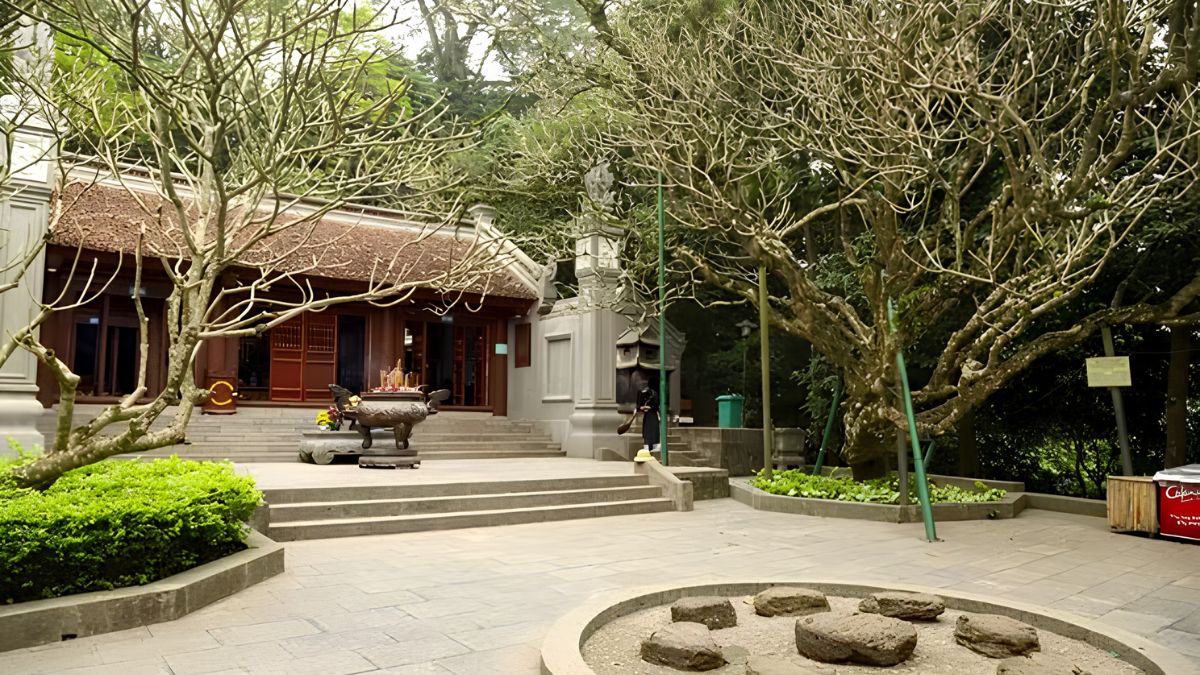
Trung Temple is associated with the legend of chung cake and giay cake dating back to the reign of the sixth Hung King (Source: VietnamPlus)
- Thuong Temple: Located at the summit and regarded as the most sacred point of the complex. This is where the Hung Kings are traditionally believed to have performed rituals to Heaven and Earth. On clear days, the higher position also opens up views across the surrounding midland landscape. The Hung Kings’ Mausoleum and Stone Oath Pillar are nearby.
- Gieng Temple - reached by a separate descending path: Dedicated to the princesses Tien Dung and Ngoc Hoa. Beside the temple is the Ngọc Well, whose water is traditionally said to remain clear year-round. Because it sits away from the main uphill route, this section tends to feel quieter and more contemplative.
Tip: You do not need to rush through the route. The changing atmosphere, old trees and shaded sections between the temples are part of what makes the climb worthwhile. After the physical effort of the stone steps, many guests appreciate switching to open water and a slower pace further west.
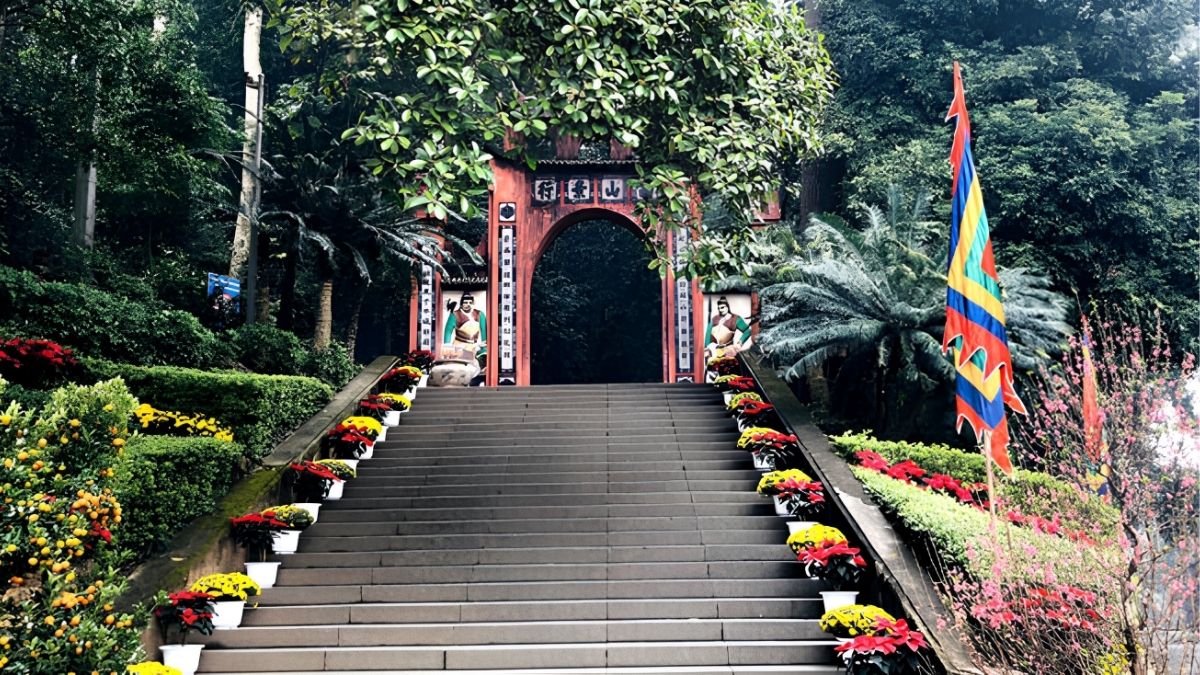
Stone steps leading visitors through the main temple route (Source: Bao Phu Tho)
Notable activities and experiences
Incense offering & pilgrimage
For most visitors, offering incense is the central experience at the complex. Simple offerings such as fruit, chung cake, giay cake and incense are commonly used. On ordinary days, the atmosphere is relatively calm; during the Hung Kings’ Death Anniversary on the 10th day of the third lunar month, the complex becomes much busier with ceremonies, processions and Xoan singing.
Night tour: “Linh Thieng Nguon Coi”
The evening experience offers a completely different atmosphere from daytime visits. The route typically runs from Ha Temple → Trung Temple → Thuong Temple → Gieng Temple, with bamboo lanterns, incense offerings, memorial candles and floating flower lanterns creating a quieter, more atmospheric setting.
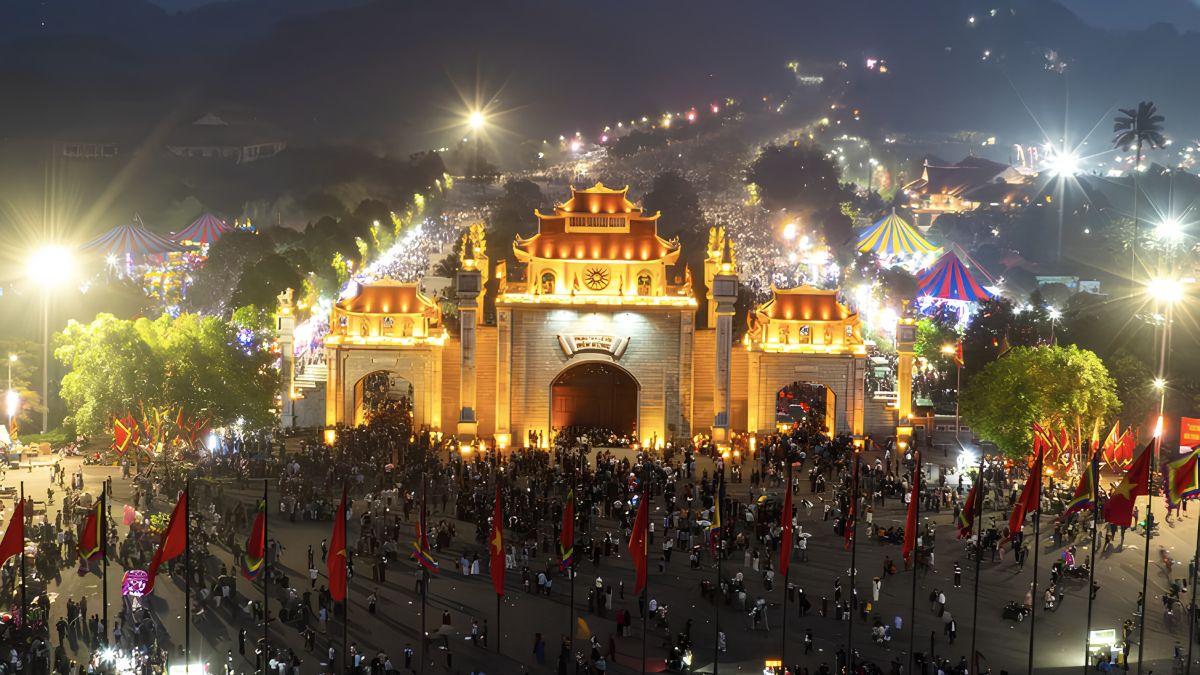
Night Tour: “Linh Thieng Nguon Coi” (Source: Nature and Environment Online Magazine)
Walking through the forest
Nghia Linh is not only a historical site but also a forested mountain environment. The complex is home to hundreds of plant species and notable ancient trees, including a cycad traditionally estimated at more than 800 years old. Walking slowly between the temples gives visitors a chance to experience the natural setting rather than simply moving from one monument to another.
Discovering the wider complex
Allow some time for places beyond the four main temples. The Hung Vuong Museum, smaller shrines and memorial sites provide additional context about the Hung Kings, Văn Lang and the long-standing tradition of ancestor worship.
Experiencing folk culture
If you visit during festival periods, you may encounter Xoan singing, bronze-drum performances, traditional games and local specialty stalls. These activities make the historical complex feel more like a living cultural site than a collection of monuments.
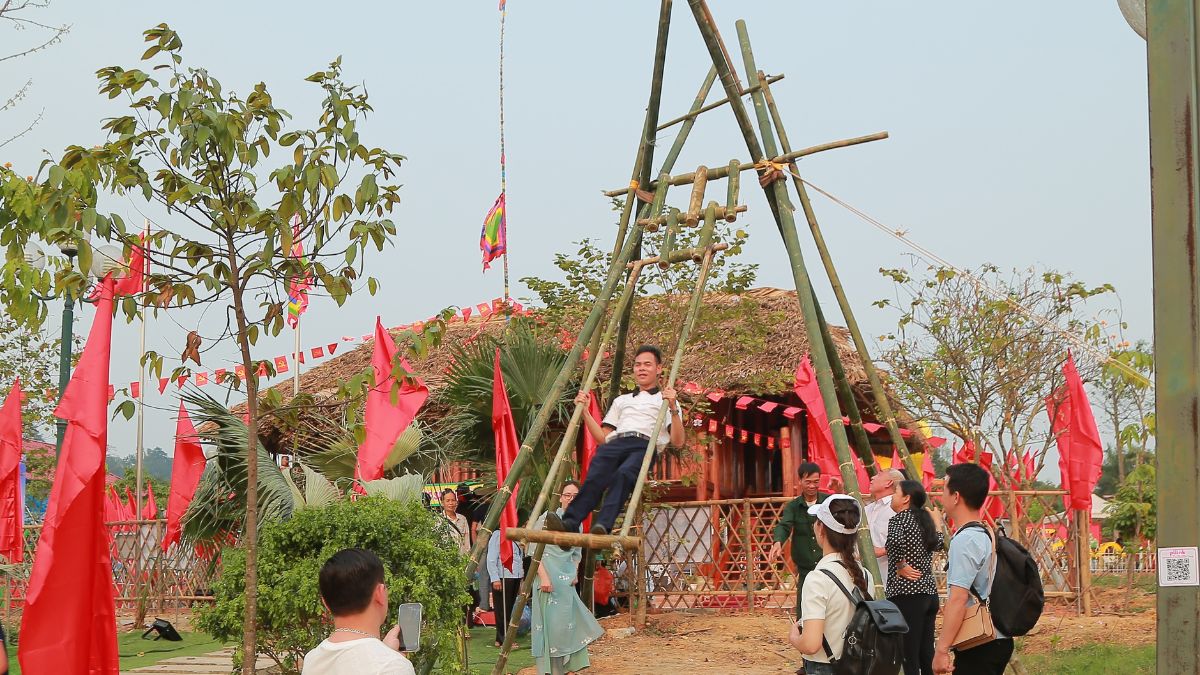
Experiencing folk culture (Source: vietnam.vn)
Tips for a fuller experience
- Take it slow: Allow around 30-60 minutes for the full climb and enjoy the changing atmosphere along the way.
- Visit early or late: Early morning or late afternoon is quieter and more comfortable; avoid major festival days if possible.
- Explore quieter areas: Thien Quang Pagoda and Gieng Temple are generally less crowded.
- Consider the electric shuttle: A convenient option for elderly visitors and young children.
- Walk if possible: The climb itself is an important part of the Đen Hung experience.
Things to know before visiting Nghia Linh Mountain
How to get to Nghia Linh mountain
- From Hanoi: Take Thang Long Bridge → Vo Van Kiet Road → National Highway 2, continuing toward Viet Tri and Phu Tho. Follow the signs for the Hung Kings Temple Historical Site. Once inside the complex, the mountain route begins from the main entrance area.
- By car: Drive to the designated parking or visitor drop-off area at the Hung Kings Temple complex, then continue on foot. During major festivals, traffic may be diverted and parking can become crowded, so arriving early is recommended.
- By motorbike: Follow National Highway 2 toward Phu Tho, then follow signs to the Hung Kings Temple complex. Motorbikes must be parked in designated areas before continuing on foot.
- From Viet Tri: The temple complex is relatively close to central Viet Tri, making a taxi, motorbike or private car a convenient option for a half-day trip to Nghia Linh Mountain.
Weather and best time to visit
Weather can significantly affect the climb because much of the route consists of outdoor stone steps. Early spring is generally more comfortable, while summer brings higher temperatures, humidity and heavier rain.
|
Period
|
Typical weather
|
What to prepare
|
|
January-February
|
Cool, sometimes humid and cloudy
|
Light jacket, grippy shoes
|
|
March-April
|
Mild and relatively comfortable
|
Breathable clothes, water, hat
|
|
May-June
|
Hot, humid, with occasional rain
|
Start early, carry water and a rain jacket
|
|
July-August
|
Hot, humid and wetter
|
Check the forecast and pack accordingly
|
|
September-October
|
Cooler and generally more pleasant
|
Walking shoes, water
|
|
November-December
|
Cooler and drier, sometimes chilly
|
Light jacket, comfortable shoes
|
For the most comfortable walking conditions, March-April and September-November are generally good choices. During hot weather, start early in the morning to avoid the strongest heat. After heavy rain, allow the steps to dry before continuing, as wet stone can become slippery.
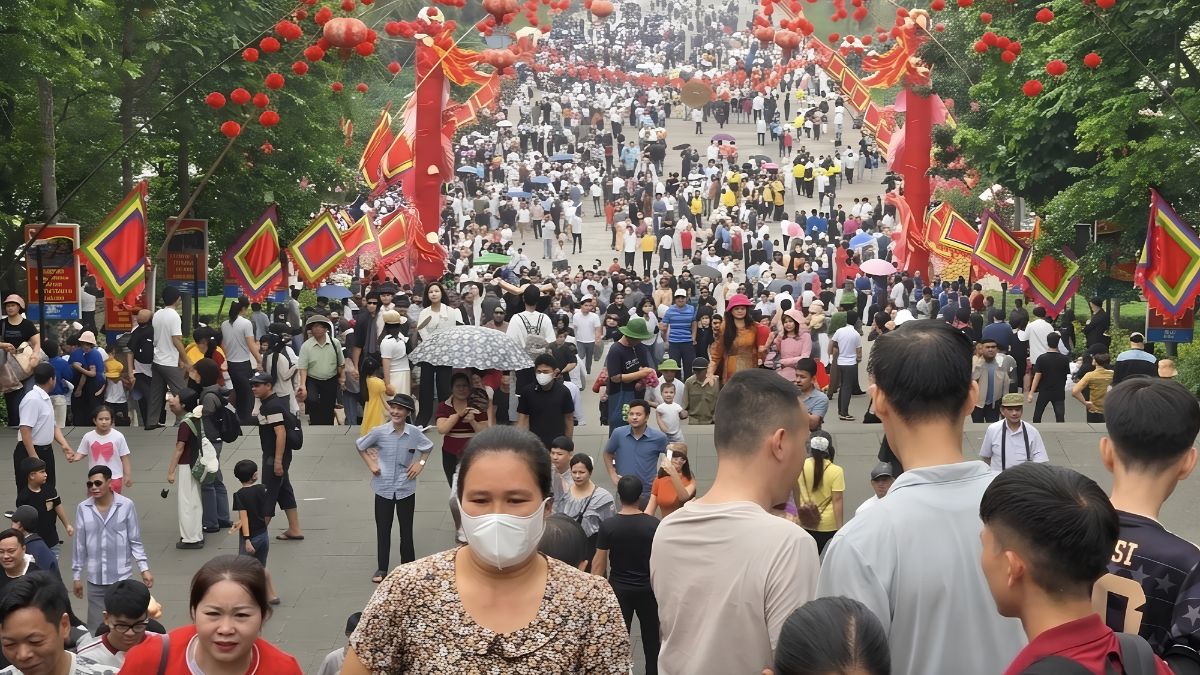
Best time to visit: March-April and September-November for cooler, more comfortable weather (Source: Bao Thanh Nien)
When to avoid the crowds
The busiest period is the Hung Kings Festival, centered around the 10th day of the third lunar month. In 2026, the festival took place from April 17-26, with the main anniversary on April 26.
This is the best time to experience the area's major cultural celebrations, but not the best choice if you want a quiet climb or relaxed photography. For a calmer visit, choose a weekday outside the festival period and arrive around 7:00-9:00 AM.
What to wear?
Choose lightweight, breathable and easy-to-move-in clothing, as the route involves continuous walking and climbing:
- Tops: T-shirts, polo shirts or lightweight long-sleeved shirts.
- Bottoms: Lightweight trousers, sports pants or knee-length shorts/skirts.
- For temple visits: Avoid tank tops, crop tops, low-cut shirts and very short shorts or skirts.
- In hot weather: Bring a hat, sunglasses, sunscreen and drinking water.
- In rainy weather: Pack a lightweight rain jacket rather than relying only on an umbrella, as having both hands free is useful on the stone steps.
- In cooler weather: Bring a light jacket, particularly for shaded areas.
A simple outfit such as a T-shirt, long trousers and comfortable trainers works well for both the climb and visits to the temples.
Combine a trip to Nghia Linh Mountain with a stay at Mai Chau Hideaway
If you are planning a longer Northern Vietnam journey, you can make Nghia Linh Mountain a cultural stop before continuing west to Mai Chau. Known for its rice fields, mountain scenery and Thai and Muong cultural heritage, Mai Chau offers a quieter contrast to the historical atmosphere of the Hung Kings Temple Complex.
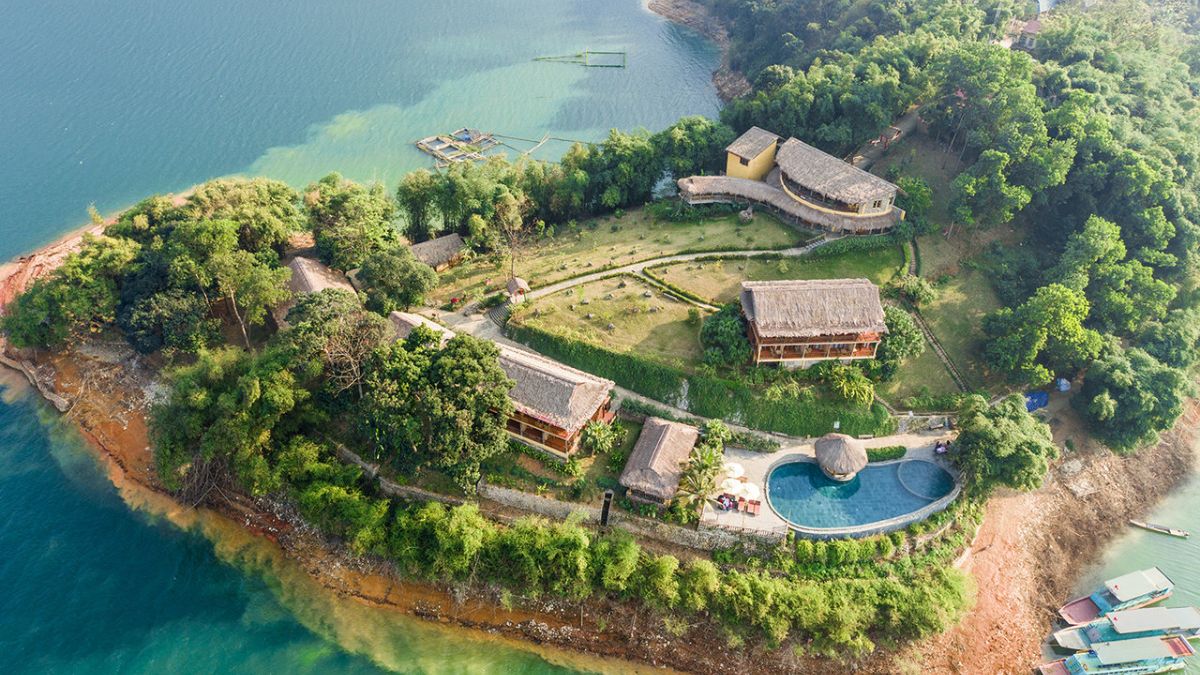
Mai Chau offers a peaceful escape with mountain scenery, rice fields, and the tranquil waters of Hoa Binh Lake
For a slower stay, Mai Chau Hideaway sits on a peninsula surrounded by the waters of Hoa Binh Lake, offering a more secluded setting away from the main town. The resort combines lake views with rustic architecture inspired by traditional stilt houses, while activities such as kayaking, swimming, cycling and local cooking make it easy to spend a couple of days without rushing between attractions.
- Day 1 - Nghia Linh Mountain: Explore the Hung Kings Temple Complex, climb the main route to Thuong Temple and take your time around the historic sites. After the visit, continue your journey west.
- Day 2 - Mai Chau Hideaway: Arrive at the resort and slow down beside Hoa Binh Lake. Spend the afternoon kayaking on the lake, trying wild swimming in safe bays, or simply relaxing by the water.
- Day 3 - Explore & unwind: Start with a cycling trip through the surrounding countryside or another lake activity, then continue to your next Northern Vietnam destination.
The combination gives your itinerary a natural change of pace: Nghia Linh for history and culture, followed by Mai Chau for nature, local experiences and a slower lakeside stay.
Ready to plan the next stop? Explore Mai Chau Hideaway's stays and experiences and add a slower lakeside break to your Northern Vietnam itinerary.
FAQs
Is Nghia Linh Mountain the same as the Hung Kings Temple complex?
→ Yes. The temple complex is built directly on Nghia Linh Mountain, with the temples and mausoleum arranged along its slopes.
How long should I plan for a visit?
→ Allow around 2.5-4 hours to walk the main route, visit all four temple tiers and explore at a comfortable pace.
What should I wear?
→ Wear modest, breathable clothing that covers your shoulders and knees, along with closed-toe shoes with good grip for the stone steps.
When is the busiest time?
→ The Hung Kings Festival, around the 10th day of the third lunar month, is the busiest period. For a quieter visit, choose a weekday morning outside the festival season.
Can I combine Nghia Linh with Mai Chau?
→ Yes, as part of a longer Northern Vietnam itinerary. Visit Nghia Linh first, then continue west to Mai Chau for a slower, nature-focused stay rather than trying to do both in one day.