Find out where Mai Chau Viewpoint is, when to visit, how to get there, what to see, and how to combine it with Ban Lac, Thung Khe Pass and Hoa Binh Lake.
Quick answer: What is the viewpoint in Mai Chau?
Mai Chau Viewpoint usually refers to Mai Chau Flagpole, a scenic stop on Thung Khe Pass, also known as White Rock Pass. It sits along the mountain road before you descend into Mai Chau Valley, giving travelers a wide view of green rice fields, limestone mountains, small villages and drifting clouds. It is one of the easiest places to stop for a panoramic photo if you are traveling from Hanoi to Mai Chau.
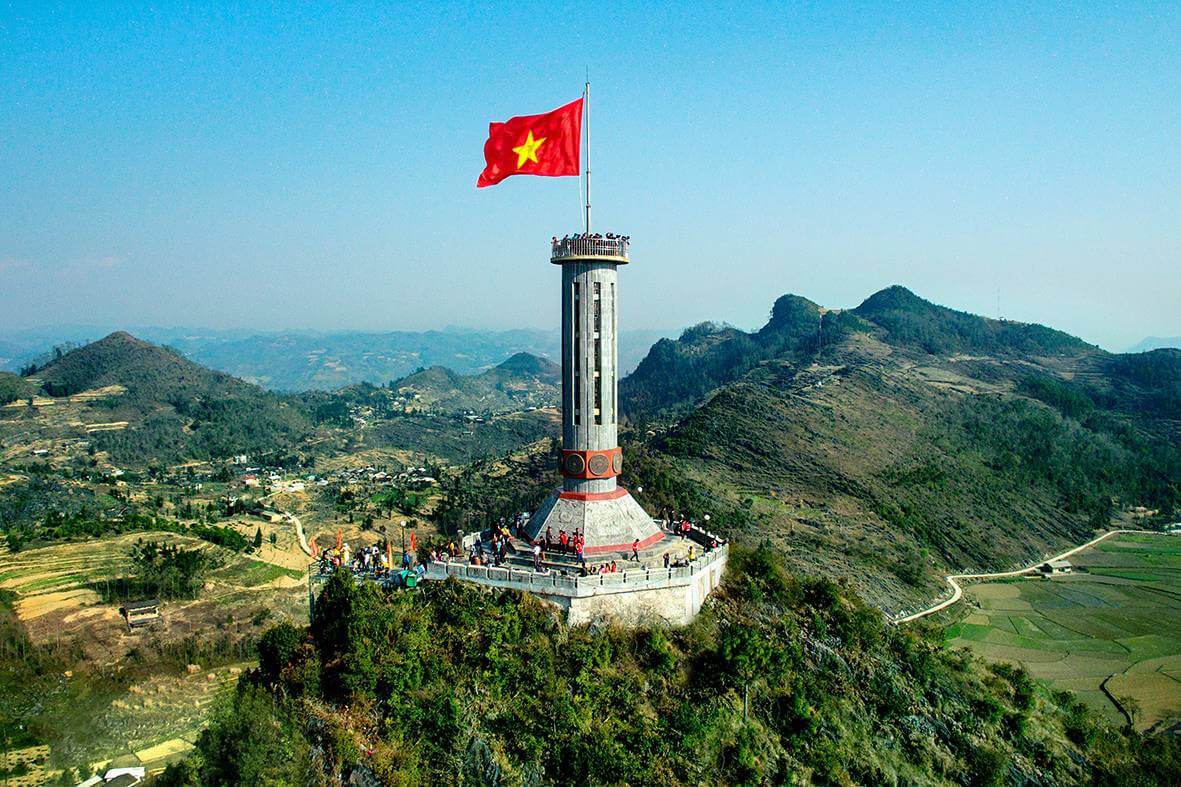
Mai Chau Viewpoint overlooking the valley from Thung Khe Pass (Source: Collected)
What Is Mai Chau Viewpoint?
Mai Chau Viewpoint is the elevated viewpoint near the flagpole on Thung Khe Pass, where travelers often stop before entering Mai Chau Valley. The place is simple, but the view is powerful because the valley opens suddenly after a long mountain road. From this point, you can see rice fields, village roofs and layers of mountains stretching across the landscape.
The viewpoint is not a large tourist complex, and that is part of its charm. It feels more like a natural pause in the journey than a destination that requires tickets, queues or a fixed itinerary. Many travelers remember it because it gives them their first full impression of Mai Chau before they arrive in the villages below.
You may see different names for the same area when researching online. Some guides call it Mai Chau Viewpoint, some call it Mai Chau Flagpole, while others mention Thung Khe Pass or White Rock Pass. These names are connected, so do not worry if your driver, map app or travel guide uses a slightly different phrase.
|
Name you may see
|
What it usually means
|
|
Mai Chau Viewpoint
|
The scenic viewpoint overlooking Mai Chau Valley
|
|
Mai Chau Flagpole
|
The flagpole area where travelers take photos
|
|
Thung Khe Pass
|
The mountain pass where the viewpoint is located
|
|
White Rock Pass
|
Another common name for Thung Khe Pass
|
Where Is Mai Chau Viewpoint Located?
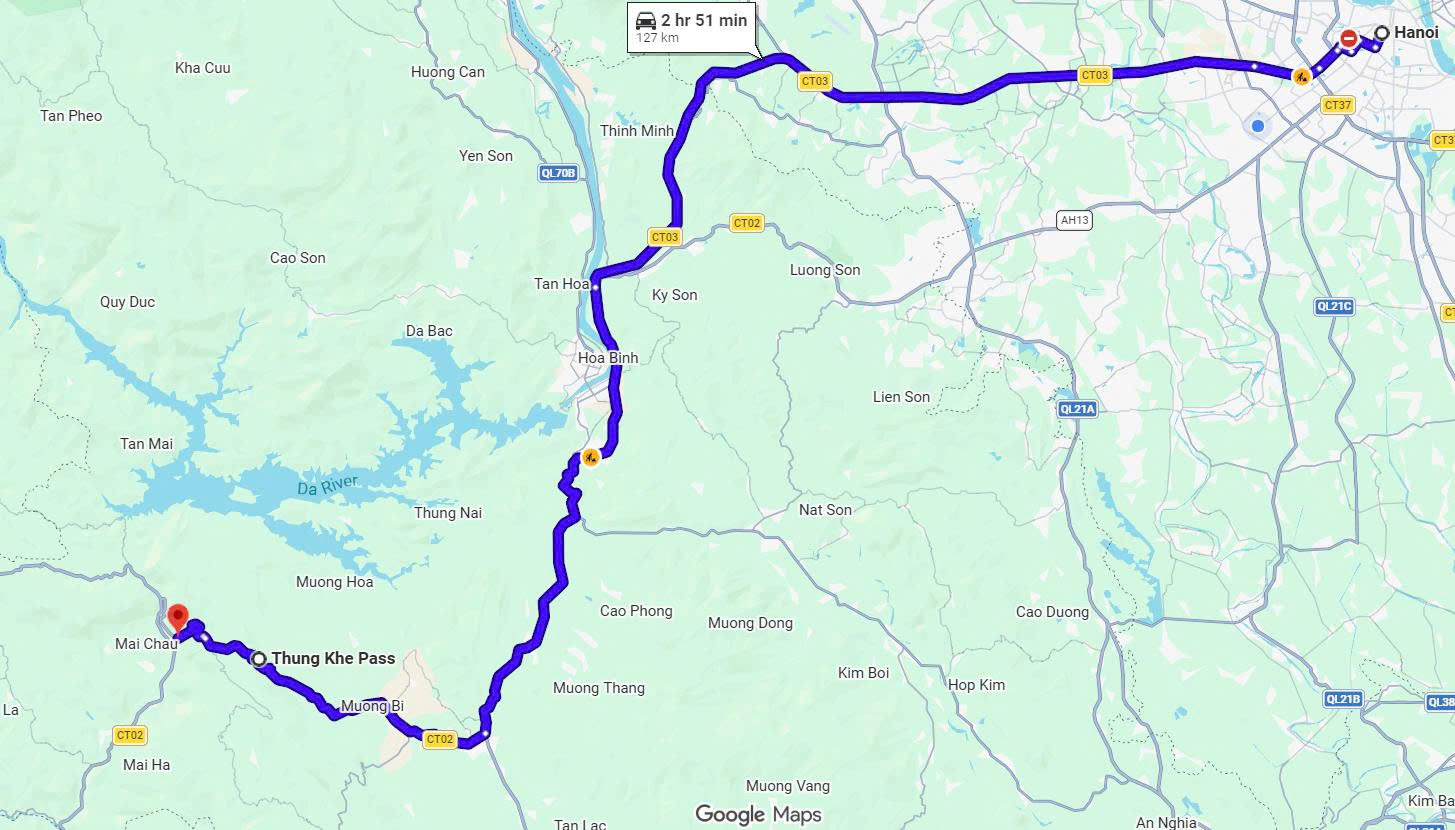
The viewpoint is a natural stop on the Hanoi to Mai Chau route
Mai Chau Viewpoint is located on the mountain road around Thung Khe Pass, along the route between Hanoi and Mai Chau. If you are coming from Hanoi, you usually reach this viewpoint before descending into the valley. This makes it a natural stop before continuing to Ban Lac, Pom Coong or your hotel in Mai Chau.
Many older travel articles still describe Mai Chau as part of Hoa Binh Province, and travelers will continue to search for “Mai Chau Hoa Binh” for a long time. Since Vietnam’s 2025 administrative reorganization, Hoa Binh has been merged with Phu Tho and Vinh Phuc into the new Phu Tho Province, so a 2026 travel article should mention both the familiar old search term and the updated administrative context. (Source: Vietnam+ (VietnamPlus))
The most practical way to describe the location for international readers is this: Mai Chau Viewpoint is on Thung Khe Pass, on the Hanoi–Mai Chau route, shortly before the road drops into Mai Chau Valley. This avoids confusing travelers with administrative boundaries while still helping Google, AI search and map-based queries understand the entity relationship. It also allows the article to rank for related phrases such as “Mai Chau Flagpole”, “Thung Khe Pass viewpoint” and “White Rock Pass Mai Chau”.
Is Mai Chau Viewpoint Worth Visiting?
Yes, Mai Chau Viewpoint is worth visiting if it is already on your route to Mai Chau. It gives you one of the clearest high-angle views of Mai Chau Valley without requiring a hike. The stop is short, easy and especially useful for first-time visitors who want to understand the landscape before exploring the valley on foot or by bicycle.
It is less worth visiting as a separate trip if the weather is rainy, foggy or unstable. Fog is common on Thung Khe Pass, and there are days when the valley view can be partly or completely hidden by clouds. If your main purpose is photography, check the weather before leaving Hanoi or ask your driver whether the pass is clear that day.
The best way to enjoy Mai Chau Viewpoint is to treat it as part of the journey, not the whole journey. Stop for photos, take in the valley, maybe have a small local snack, then continue down to the villages or the lake. This rhythm keeps the experience light and prevents the viewpoint from feeling overhyped.
|
Visit Mai Chau Viewpoint if…
|
Skip or shorten the stop if…
|
|
You are driving from Hanoi to Mai Chau
|
The pass is covered in thick fog
|
|
You want a quick panoramic photo
|
It is raining heavily
|
|
You enjoy mountain-road scenery
|
You are traveling with someone prone to carsickness
|
|
You want to understand the valley layout
|
Your schedule is already too tight
|
Best Time to Visit Mai Chau Viewpoint
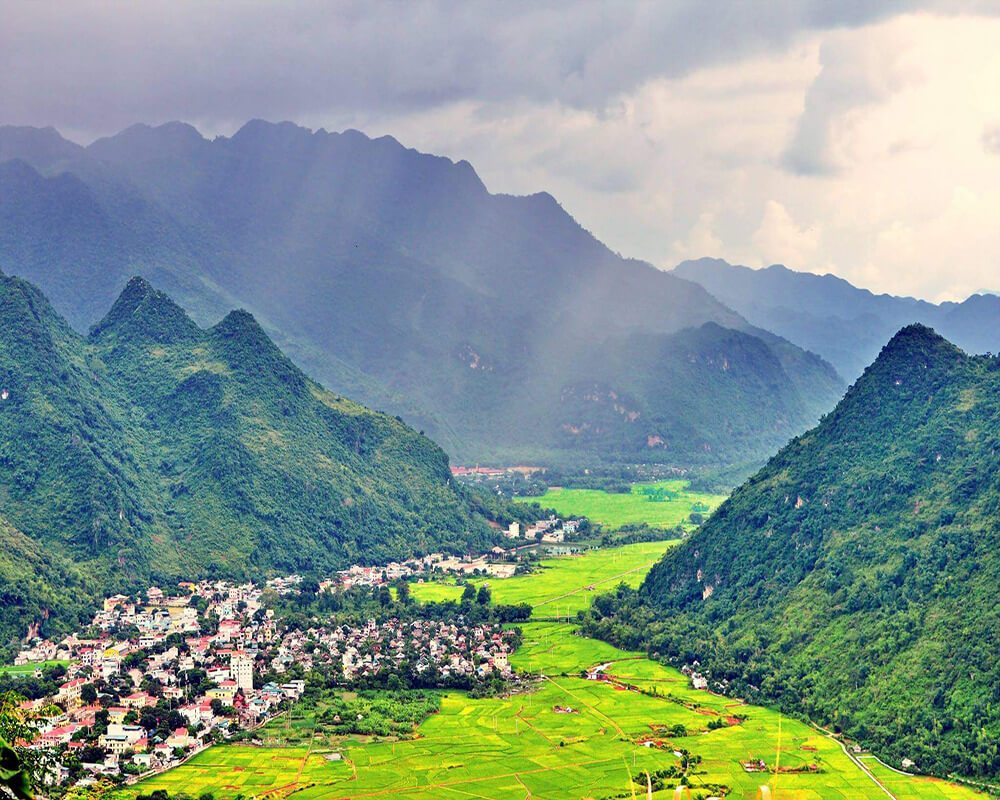
Morning mist and soft light can change the mood of Mai Chau Viewpoint (Source: Collected)
The best months for Mai Chau Viewpoint are usually spring and autumn. Spring often brings fresh greenery, clearer skies and soft mountain light. Autumn is attractive because the rice fields around Mai Chau can turn golden before harvest, creating a stronger contrast between the valley floor and the surrounding mountains.
For photography, time of day matters as much as season. Early mornings can be beautiful if you like mist and cloud layers, but it can also block the view if the fog is too thick. Late afternoon is often easier for warm light, especially when the valley is visible and the mountains catch the last sun.
The rainy months can still look dramatic, but they require more caution. The road may be slippery, visibility may change quickly and roadside stops can feel less comfortable. If you visit during the wet season, keep your stop short, wear shoes with grip and avoid stepping too close to the roadside edge.
Photo timing table
|
Time
|
What it feels like
|
Best for
|
|
Early morning
|
Misty, cool, sometimes foggy
|
Cloud photos, atmospheric shots
|
|
Late morning
|
Brighter, clearer if fog lifts
|
Valley panorama
|
|
Afternoon
|
Warmer light, easier visibility
|
Travel photos, wide shots
|
|
Sunset period
|
Golden but shorter shooting window
|
Moodier landscape photos
|
|
Rainy/foggy days
|
Dramatic but unpredictable
|
Quick stop only
|
How to Get to Mai Chau Viewpoint from Hanoi and Mai Chau
From Hanoi, the most comfortable way to reach Mai Chau Viewpoint is by private car or a booked transfer to Mai Chau. The drive follows the mountain route toward Mai Chau, and the viewpoint usually appears before the final descent into the valley. A private driver is useful because you can ask for a short stop at the flagpole instead of only passing by.
Motorbike travelers can also stop here, but they should be more careful. Thung Khe Pass has curves, changing weather and mixed traffic, including buses and trucks. If you ride a motorbike, avoid sudden stops, park only where it is safe and do not stand in the traffic lane to take photos.
If you take a bus or limousine, the stop depends on the operator. Some vehicles may stop near Thung Khe Pass for a short break, while others may continue directly to Mai Chau town or the village area. If this viewpoint is important to you, ask the provider before booking or choose a private transfer that allows flexible photo stops.
Suggested route flow: Hanoi → Thung Khe Pass → Mai Chau Viewpoint → Ban Lac / Pom Coong → Hoa Binh Lake / Mai Chau Hideaway
This route works well because the viewpoint comes naturally before the main Mai Chau experience. It lets travelers see the valley from above first, then enter the villages and rice fields at ground level. If your final stay is by Hoa Binh Lake, you can continue from the valley area toward a quieter lakeside setting after the viewpoint stop.
What to See and Do at Mai Chau Viewpoint
The main reason to stop at Mai Chau Viewpoint is the valley panorama. On a clear day, the view opens across rice fields, village clusters and green mountains that frame the floor of Mai Chau Valley. The flagpole gives the scene a recognizable focal point, which is why many travelers use it as their main photo spot.
The second thing to do is simply slow down after the mountain road. Thung Khe Pass is known as a scenic road stop, and travelers often pause here for fresh air, photos and small local snacks. Depending on the day, you may find simple food stalls around the pass area selling items such as boiled corn, grilled snacks or local mountain food.
The third thing to do is observe how quickly the weather changes. The view can shift from clear to misty within a short time, which makes the stop feel different from ordinary roadside viewpoints. If clouds move across the valley, wait a few minutes before leaving because the landscape may open again.
Local experience note: Do not rush your first photo. Take one wide shot when you arrive, then step back and look at how the road, flagpole, valley and mountains line up together. The best photo is often not the closest shot of the flag, but the wider frame that shows why this viewpoint matters.
Nearby Places to Combine with Mai Chau Viewpoint
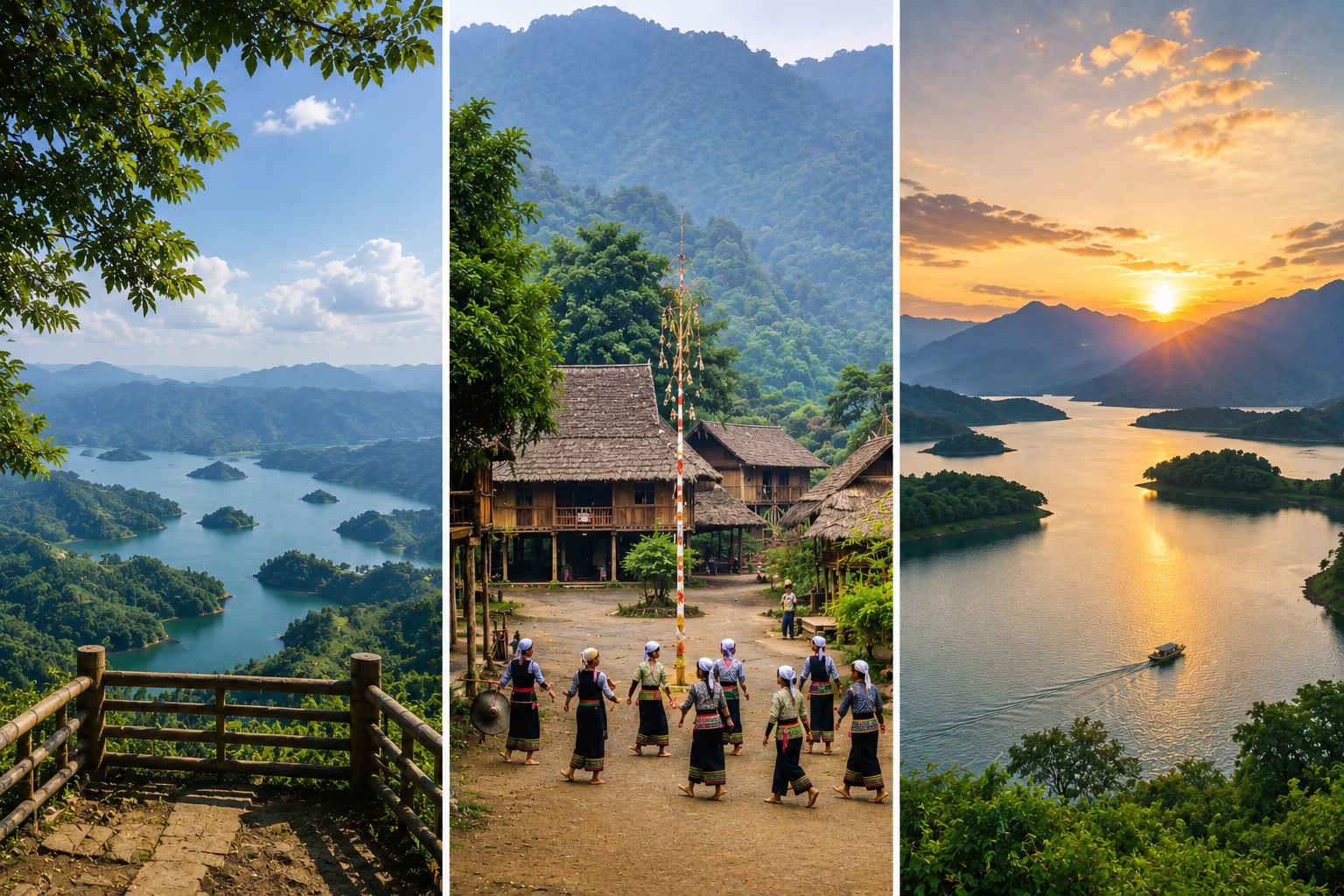
Combine the viewpoint with Mai Chau Valley and Hoa Binh Lake for a fuller trip (Source: Collected)
The easiest place to combine with Mai Chau Viewpoint is Thung Khe Pass itself. Even if you only stop once, the whole mountain-road section shapes the journey into Mai Chau. The white limestone scenery, roadside stalls and changing mist are part of what makes this route memorable for visitors.
After the viewpoint, continue to Ban Lac or Pom Coong if you want the classic Mai Chau Valley experience. These village areas are known for stilt houses, rice fields, walking routes and a calmer rural atmosphere. They are better for slow exploration than the viewpoint, which is mainly a short scenic stop.
If you want a more nature-focused route, combine the viewpoint with Chieu Cave, Go Lao Waterfall or Hoa Binh Lake. This creates a fuller day because you experience Mai Chau from above, inside the valley and beside the water. It also gives the article a stronger topical map by connecting viewpoint intent with broader Mai Chau travel planning.
Suggested combinations
|
Trip style
|
Route idea
|
|
First-time Mai Chau
|
Viewpoint → Ban Lac → Pom Coong → local dinner
|
|
Photo-focused trip
|
Viewpoint → rice fields → sunset by the lake
|
|
Soft adventure
|
Viewpoint → Chieu Cave → cycling in the valley
|
|
Nature escape
|
Viewpoint → Go Lao Waterfall → Hoa Binh Lake
|
|
Resort-based stay
|
Viewpoint on arrival → check-in → lake sunset
|
Read more: What to see and do in Mai Chau - 5 experiences you can't miss
Local Tips for a Safer and Better Visit
The most important tip is to stop only where it is safe. Mai Chau Viewpoint is close to a mountain road, so you should watch for passing vehicles and avoid standing in the road for photos. If your driver says a certain spot is unsafe, listen to them because local drivers understand the traffic flow better than visitors.
Bring a light jacket even if Hanoi feels warm. Thung Khe Pass can feel cooler because of elevation, wind and fog, especially in the morning or late afternoon. Shoes with grip are also useful if the ground is wet after rain.
Keep your expectations flexible because the view depends heavily on weather. A clear day can give you a postcard-like panorama, while a foggy day may turn the stop into a moody mountain scene instead. Both can be beautiful, but only if you do not arrive expecting the same photo every time.
|
Check before departure
|
Why it matters
|
|
Weather forecast
|
Fog and rain can block the valley view
|
|
Driver stop plan
|
Not every transfer stops at the viewpoint
|
|
Camera battery
|
The stop is short, so be ready
|
|
Light jacket
|
The pass can be cooler than the valley
|
|
Small cash
|
Useful for snacks or drinks
|
|
Shoes with grip
|
Helpful on wet or uneven ground
|
Where to Stay After Visiting Mai Chau Viewpoint
After visiting Mai Chau Viewpoint, many travelers continue into the valley for village walks, cycling and local meals. That is a good choice if your main interest is rural culture and rice-field scenery. The viewpoint gives you the landscape from above, while the villages let you feel it at ground level.
If you prefer a quieter stay after the road journey, a lakeside base can create a softer ending to the day. Mai Chau Hideaway Lake Resort works well for travelers who want to combine Mai Chau Valley with Hoa Binh Lake, especially if they prefer mountain and water views over a busy village center.
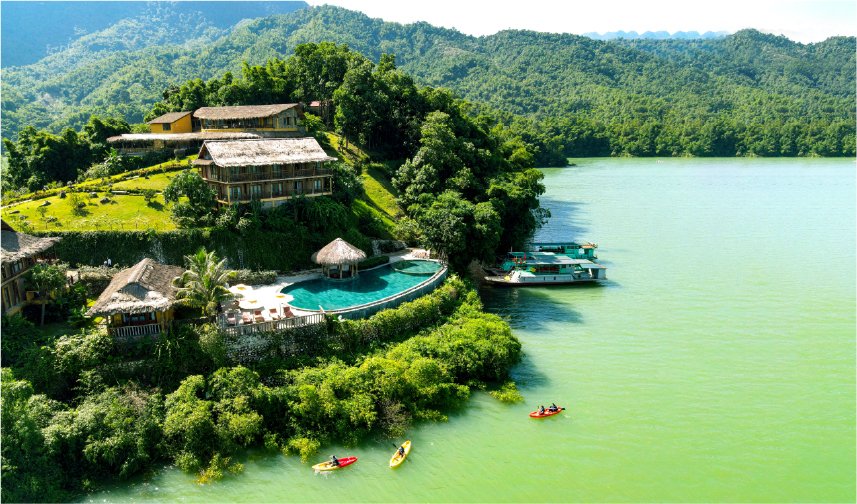
A lakeside stay adds a quieter ending after the mountain viewpoint
A good itinerary is to stop at Mai Chau Viewpoint on the way in, explore Ban Lac or Pom Coong in the afternoon, then continue toward the lake for sunset and overnight rest. This gives you three layers of the destination in one trip: the viewpoint, the valley and the lakeside retreat. It also helps travelers understand why Mai Chau is not only a quick photo stop, but a place that rewards slower travel.
After a short stop at Mai Chau Viewpoint, continue your journey toward Hoa Binh Lake and spend the night surrounded by mountains, water and fresh air. Mai Chau Hideaway Lake Resort is a good base for travelers who want to enjoy Mai Chau’s scenery at a slower pace, with easy access to both valley routes and lakeside views.
Read more: Hidden Resort in Northern Vietnam: 6 Quiet Escape Beyond the Usual Route
FAQs About Mai Chau Viewpoint
Is Mai Chau Viewpoint the same as Mai Chau Flagpole?
→ Yes, in most travel contexts, Mai Chau Viewpoint refers to the flagpole viewpoint on Thung Khe Pass. Some maps and guides may use different names, but they usually point to the same scenic stop. Search for Mai Chau Flagpole or Thung Khe Pass if “Mai Chau Viewpoint” does not appear clearly.
Do I need to pay an entrance fee?
→ Mai Chau Viewpoint is generally treated as a roadside viewpoint rather than a formal attraction. Travelers usually stop briefly for photos and views. Fees, parking practices or small local charges can change, so check with your driver or local guide on the day of travel.
How long should I spend at Mai Chau Viewpoint?
→ Most travelers need around 10 to 20 minutes. That is enough time to take photos, enjoy the valley view and rest briefly after the mountain road. If you want snacks, coffee or more photos, allow around 30 minutes.
Is Mai Chau Viewpoint safe?
→ It is safe if you stop carefully and stay away from moving traffic. The main risks are fog, wet ground, passing vehicles and careless roadside photography. Avoid standing in the road, especially on curves or during low visibility.
Can I visit Mai Chau Viewpoint on a day trip from Hanoi?
→ Yes, but it will be a long day. The viewpoint works best as part of a Hanoi to Mai Chau day trip or overnight trip. If your schedule allows, staying one night gives you more time for villages, rice fields and lake scenery.
Should You Add Mai Chau Viewpoint to Your Trip?
Mai Chau Viewpoint is not a place where you spend half a day. It is a short stop that gives your trip a strong opening scene. If the sky is clear, it helps you understand the shape of Mai Chau Valley before you enter the villages below.
The viewpoint is most valuable when it is connected to the rest of your route. Stop for the panorama, continue to Ban Lac or Pom Coong, then slow down by the lake if you want a calmer overnight stay. This way, Mai Chau becomes more than a photo from above; it becomes a full landscape that you experience from road, valley and water.
For travelers staying at Mai Chau Hideaway, the viewpoint can be a simple and rewarding stop on the arrival journey. It adds context to the mountains and valleys you will see throughout the trip. By the time you reach the lakeside, the scenery feels less like a destination on a map and more like a place you have gradually entered.