Xoe Dance is a cherished part of Thai culture in Mai Chau, bringing people together through music, rhythmic movements, and shared participation. More than a traditional dance, it reflects the values, customs, and social bonds that shape Thai village life. For travelers, watching or joining a Xoe performance offers a closer look at the living heritage of the Thai people in Mai Chau.
What is Xoe Dance?
Xoe Dance is a traditional form of communal dancing practiced by the Thai people in Northwestern Vietnam. It is best known for its circular formation, in which participants join hands and move together to the rhythm of local music. The coordinated steps create a lively atmosphere while emphasizing togetherness rather than individual performance. In many cultural gatherings, visitors can also join the circle, allowing them to experience this tradition instead of simply watching from the outside.
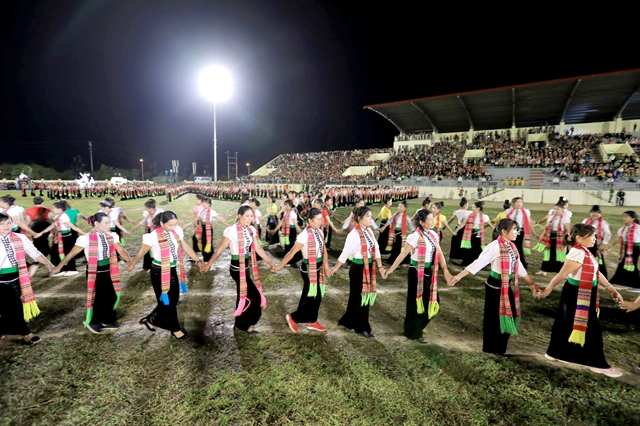
Xoe dance performed in a large circular formation during a festival (Source: Vietnamnews)
The practice has been passed down through generations and commonly appears at festivals, weddings, New Year celebrations, welcoming ceremonies, and other important gatherings. Various forms of Xoe have developed over time, each featuring distinctive movements, rhythms, and cultural meanings. In 2021, UNESCO inscribed Xoe Thai on the Representative List of the Intangible Cultural Heritage of Humanity, recognizing its importance to the cultural identity and social life of Thai communities.
What does Xoe dance symbolize?
Xoe dance symbolizes the happiness, unity, prosperity, and cultural identity of the Thai people. Its movements and communal spirit express important values that have been preserved through generations and continue to shape Thai community life today.
Xoe as a symbol of joy and spiritual life
For the Thai people, Xoe is more than a dance; it is an important part of their spiritual and social life. In Mai Chau, it is performed at festivals, weddings, New Year celebrations, welcoming ceremonies, and other occasions when villagers come together. These gatherings create opportunities to celebrate, strengthen relationships, and share meaningful moments with family, friends, and neighbors.
Xoe dance represents happiness, prosperity, love, and cultural identity. Beyond its graceful movements, it expresses values and aspirations that have been passed down through generations. As Ha Thi Lieu, Deputy Head of the Mai Chau District Department of Culture and Information, explains, “Xoe is an indispensable source of spiritual joy for the Thai people”, deeply rooted in the songs and melodies that resonate through the mountains of Northwest Vietnam: “No Xoe, no joy; no Xoe, the corn will not grow ears; no Xoe, the rice will not blossom; no Xoe, flowers will wither; no Xoe, young men and women will not become couples” (Source: vietnamtourism). The saying highlights the belief that Xoe is associated with a joyful life, abundant harvests, flourishing relationships, and the well-being of future generations.
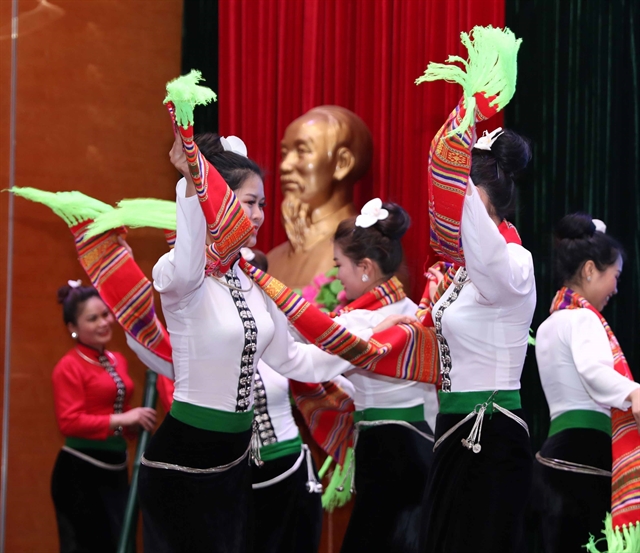
Thai ethnic women performing Xoe dance with decorative props (Source: Vietnamnews)
The circular formation of Xoe further conveys unity, equality, and belonging. Participants move together in a circle, creating a shared space where the distinction between performers and spectators becomes less pronounced. People of different ages and backgrounds can join the circle, making Xoe an inclusive activity that brings everyone together rather than a performance reserved for a select group.
Xoe as a way to preserve Thai cultural identity
Xoe serves as a living expression of Thai heritage, carrying elements of local culture from one generation to the next. Its melodies, costumes, movements, and communal setting are all tied to the traditions of Thai villages. Rather than existing as an isolated art form, Xoe remains part of occasions where cultural practices are shared and experienced collectively.
Its continuity is also supported by everyday participation. Older villagers can introduce younger people to the dance during celebrations and community events, allowing cultural knowledge to be learned through observation and practice. This informal transmission helps younger generations understand not only how Xoe is performed but also why it holds a meaningful place in Thai village life.
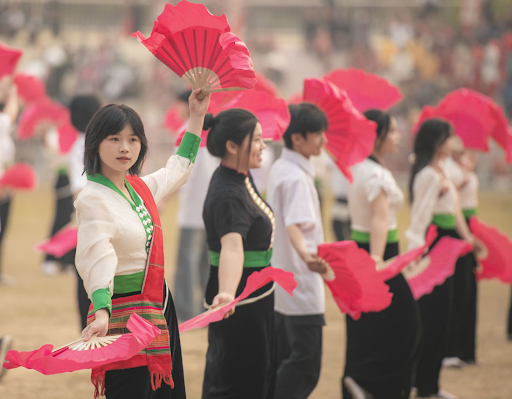
Xoe dance performance with bright red fans (Source: VietnamTourism)
Xoe has also found a place in Mai Chau's cultural tourism. Performances allow visitors to encounter Thai heritage through music, movement, and interaction with local residents. For the community, sharing Xoe with travelers provides a way to showcase local culture while keeping the practice active and relevant in today's cultural landscape.
Read more: Mai Chau Cultural Travel Guide
What happens during a Xoe dance performance?
A Xoe dance performance brings people together in a lively circle, where dancers move in harmony to traditional music and rhythmic clapping. From the graceful hand movements to the shared steps and festive atmosphere, each part of the performance reflects the communal spirit and cultural traditions of the Thai people.
The circular formation at the heart of Xoe dance
A Xoe performance is built around a large circle in which dancers move together in a continuous formation. Performers usually stand side by side, holding hands or placing one hand on the shoulder of the person next to them. As the music begins, the circle starts to move slowly and evenly, with everyone following the same rhythm. The formation can include a small group of dancers or expand as more people join, making the circle increasingly lively.
The steps are generally gentle and coordinated rather than fast or highly technical. Dancers take small steps to the side, shift their weight from one foot to the other, and sway their bodies naturally with the beat. Their arms move in harmony with the rhythm, creating a soft, flowing effect around the circle. Because each person follows the movement of those beside them, the performance depends on coordination rather than individual skill.
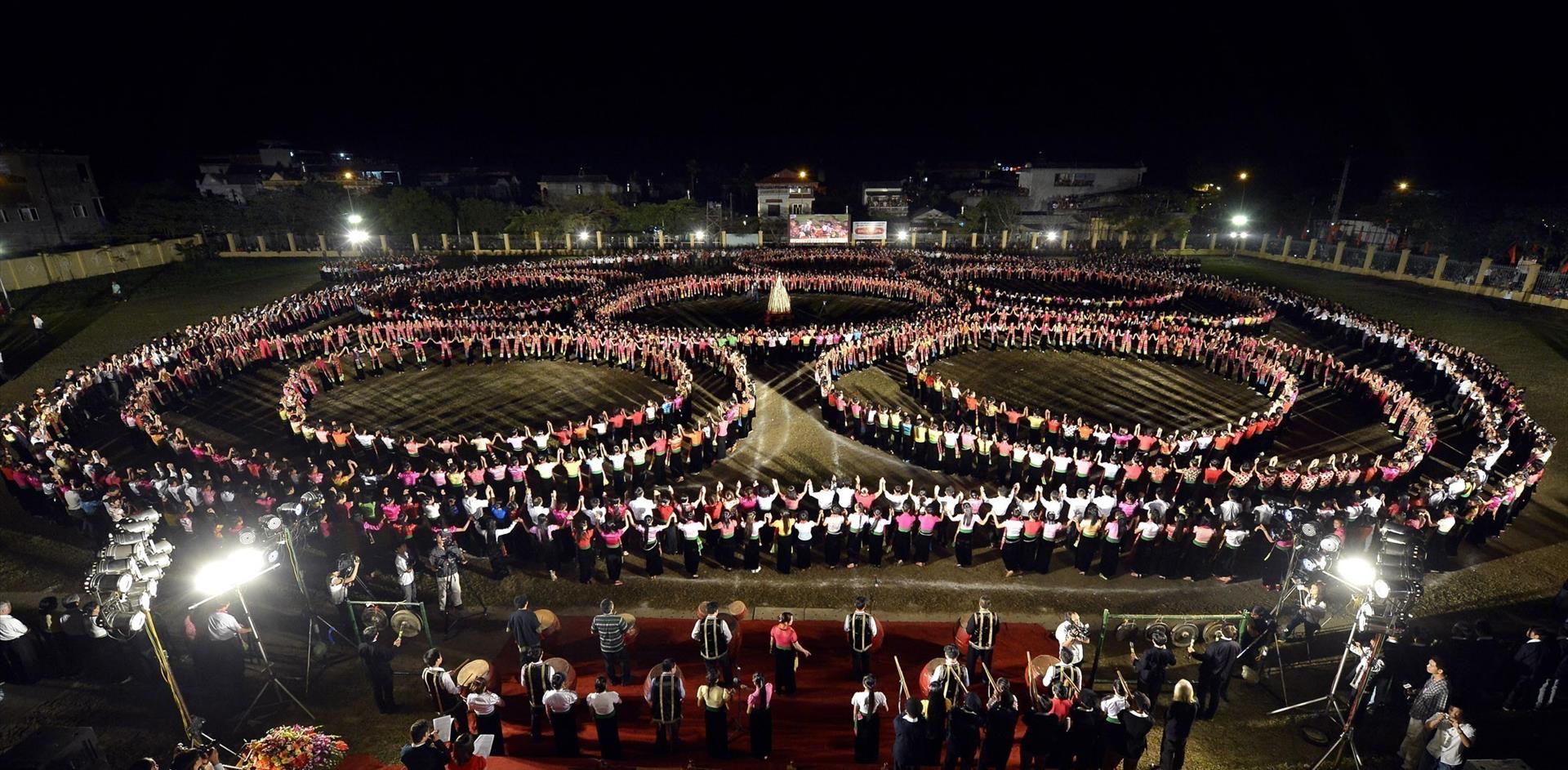
A large performance of ancient Xoe dance (Source: Vietnamnet)
One of the most distinctive features is the continuity of the circle. There is no fixed front, center performer, or single person receiving all the attention. Instead, everyone contributes to the same sequence of movements. When a new participant enters, they can simply take a place in the circle and follow the people nearby. This makes Xoe relatively accessible even to those who have never tried the dance before.
The sounds, costumes, and rhythms of a Xoe performance
Music largely determines the rhythm and mood of a Xoe performance. Drums and other local instruments provide the beat for the dancers, while singing may add a lively vocal element. Depending on the occasion, the tempo can remain slow and gentle or gradually become more energetic as the celebration develops.
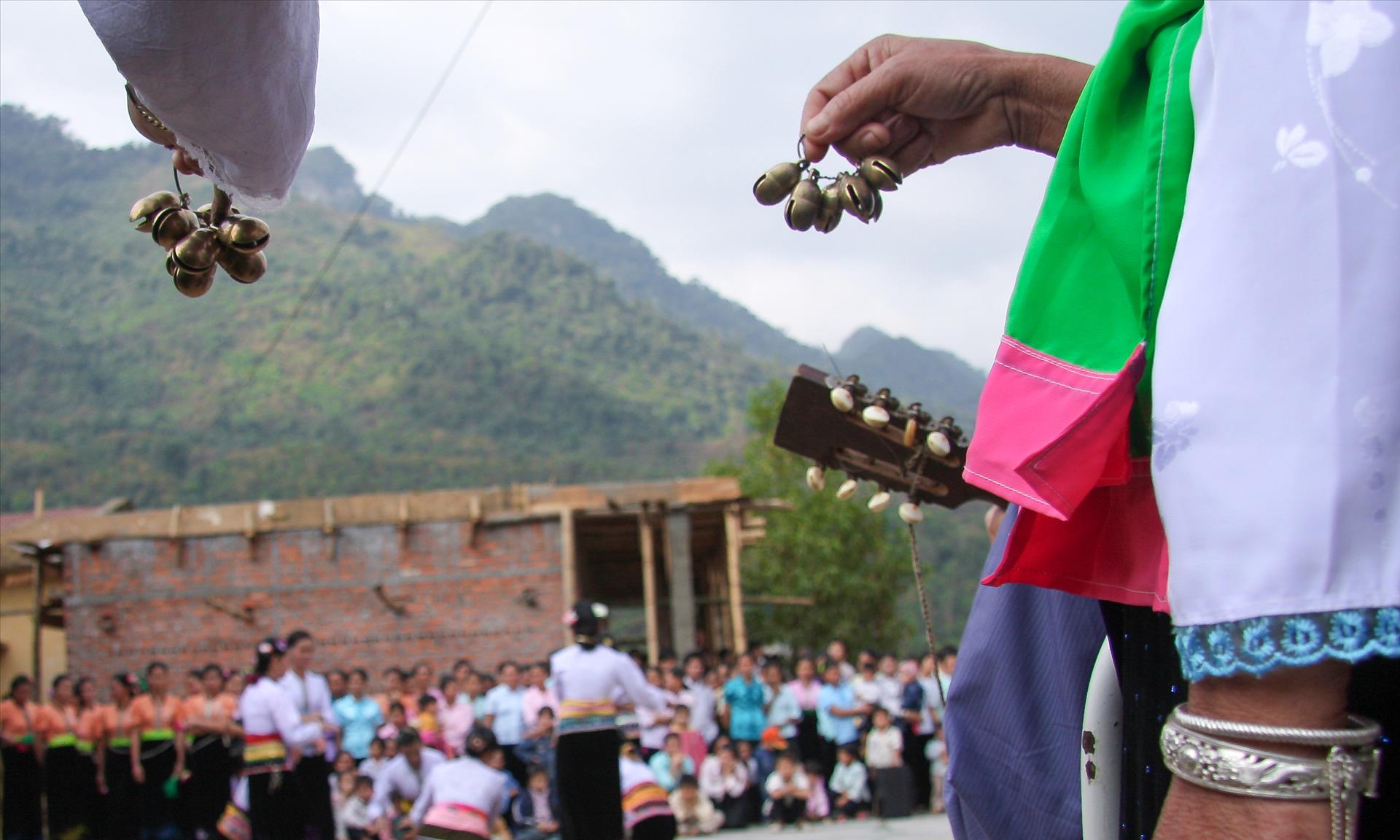
Bell, drum and bamboo sticks are used as instruments for Xoe dances (Source: Vietnamnet)
The movements respond naturally to the music. With a slower melody, dancers tend to take calm steps and sway gently, while faster rhythms encourage more energetic and expressive movement. The colorful costumes worn by Thai performers add another visual element, becoming especially striking as the entire circle moves together during cultural evenings.
For this reason, Xoe is not simply a performance to watch from the sidelines but an interactive cultural experience. Visitors can listen to the music, observe how participants coordinate their movements, and eventually step into the circle themselves. Taking part offers a more direct understanding of the openness and communal spirit that give Xoe its distinctive character in Mai Chau.
Can tourists join the Xoe dance?
Yes. Tourists can usually do more than simply watch a Xoe performance in Mai Chau. During cultural evenings, local dancers may invite visitors to step into the circle, hold hands with other participants, and follow a few basic movements. The steps are generally simple and repetitive, so beginners can join without knowing the dance beforehand. Visitors can sway to the rhythm, move around the circle, listen to local music, and enjoy the lively atmosphere alongside local dancers.
This experience is also shared by a French visitor staying in Na Phon Village, Mai Chau: “We had dinner and watched a cultural performance in a traditional Thai stilt house. When the final performance was the Xoe dance, we were truly delighted and filled with a sense of joy and togetherness as we joined the Xoe circle”. (Source: vietnamtourism)
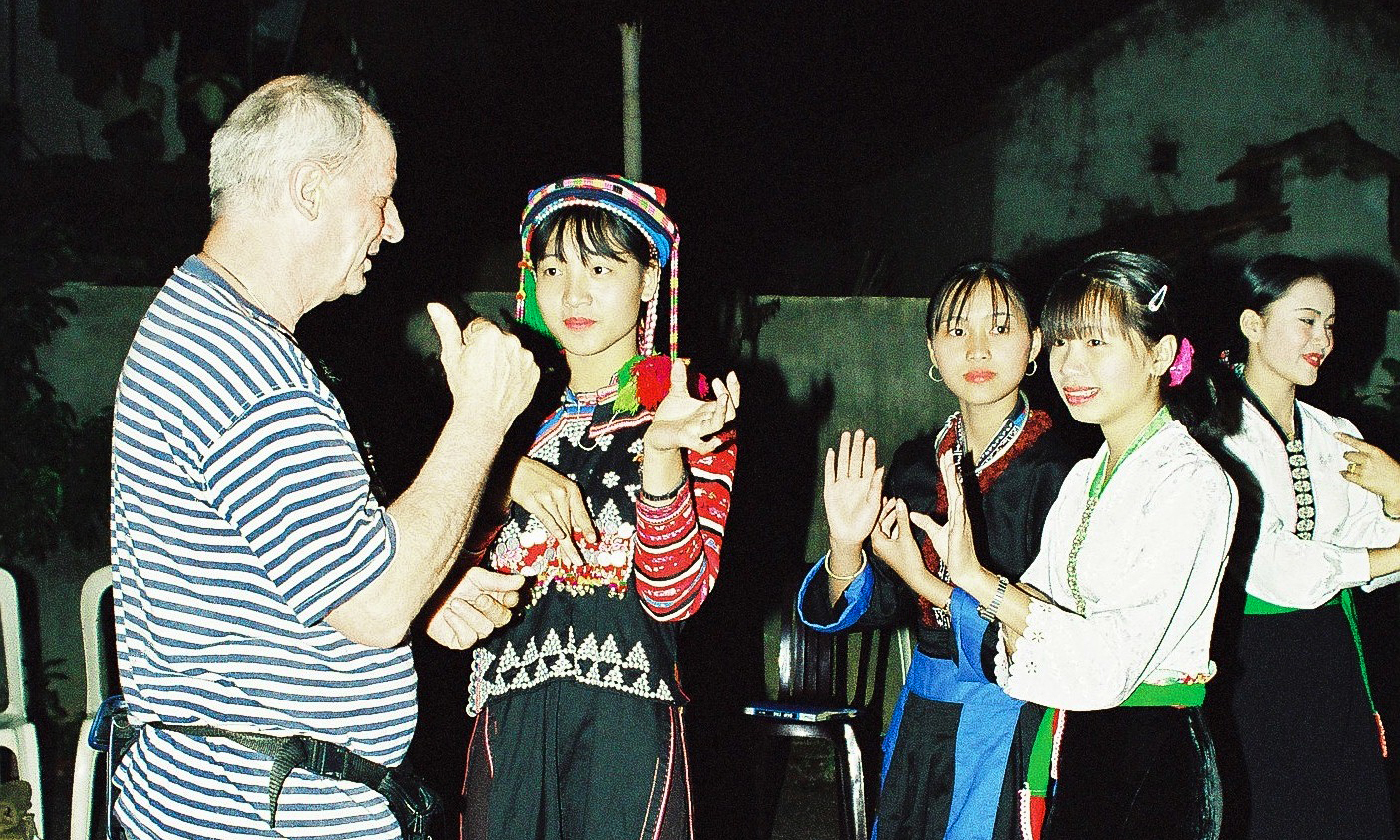
A traveler joining and learning traditional dance steps with local dancers (Source: Vietnamnet)
Joining the dance also offers a more personal way to experience Thai culture. Rather than observing from a distance, visitors become part of the gathering and can interact with local people through movement, music, and celebration. Depending on the program, a cultural evening may also include singing, musical performances, local food, and other Thai customs, allowing travelers to discover several aspects of village life in one setting.
Read more: Top 5 exciting outdoor activities at Mai Chau Hideaway
Where to experience Xoe dance in Mai Chau?
If you want to see Xoe beyond a formal stage performance, Mai Chau offers several settings where the dance can be experienced alongside local music, village life, and Thai hospitality. Lac Village and Pom Coong Village are well-known places to explore Thai culture, while Mai Chau Hideaway Lake Resort can provide a comfortable base for combining cultural activities with a relaxing stay.
Lac Village: a lively setting for Thai cultural performances
Lac Village is one of the most familiar destinations in Mai Chau for travelers interested in Thai culture. The village is known for its stilt houses, homestays, handicrafts, and evening cultural activities. After sunset, visitors may have the opportunity to watch local performers present Xoe alongside traditional music and singing.
A typical cultural evening can feel more like a community celebration than a formal theater show. Dancers form a circle and move together to the rhythm while musicians provide the accompaniment. Once the performance is underway, visitors may be invited to join the circle, follow basic steps, and move alongside local residents.
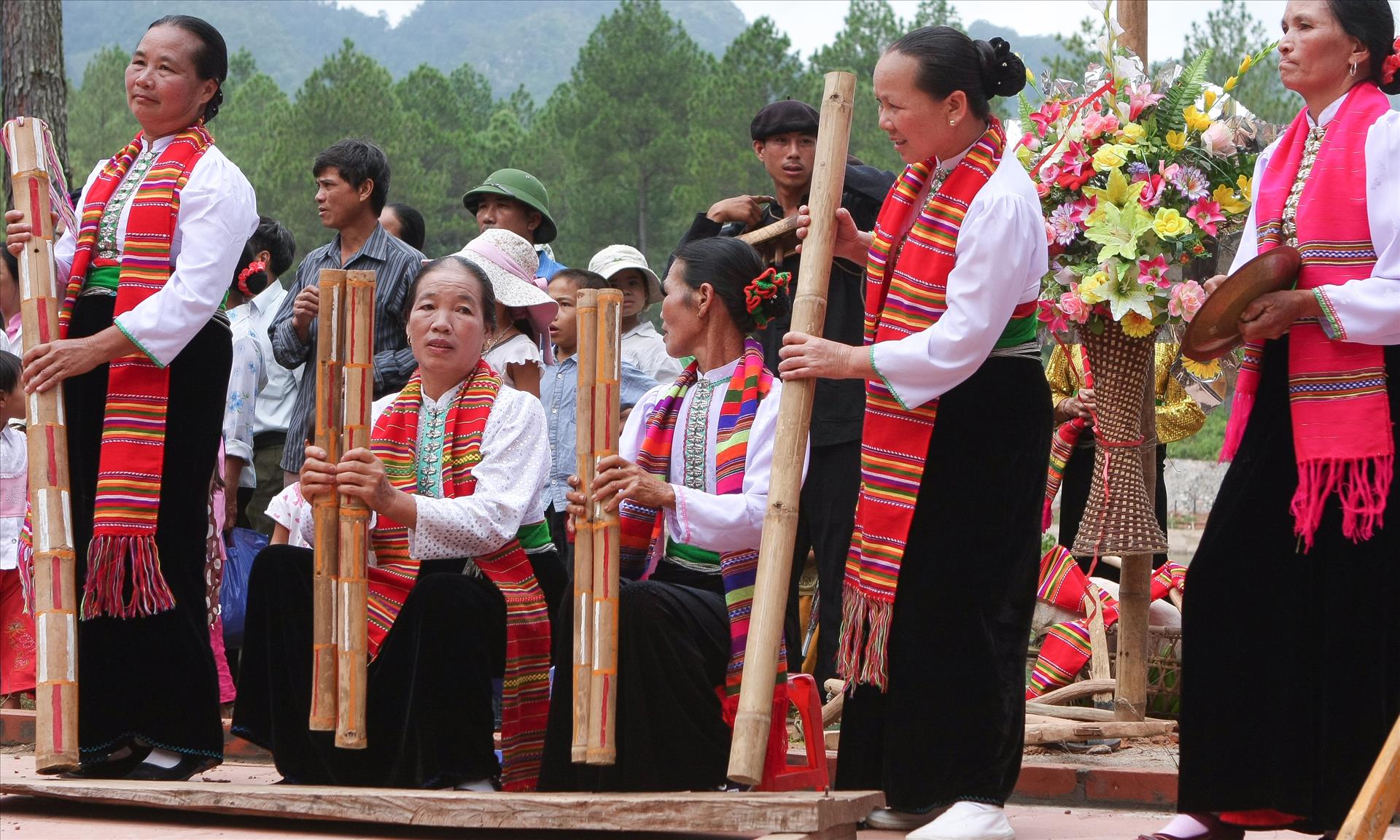
A Xoe dance performance in Lac village (Source: Vietnamnet)
The surrounding village setting adds another dimension to the experience. Traditional houses, narrow paths, and local homes create a backdrop that allows visitors to connect the dance with the wider cultural environment of the Thai people. Travelers staying overnight in Lac Village can also combine the evening performance with a walk around the village, local meals, and a stay in a stilt house.
Read more: Lac Village, Mai Chau: Immerse yourself in Thai culture, nature & cuisine
Pom Coong Village: experience Xoe in a quieter village setting
Pom Coong Village is another place to explore Thai heritage in Mai Chau. Compared with simply attending a standalone performance, visiting the village allows travelers to place Xoe within a broader picture of local life. Cultural programs may include traditional music, singing, and dance, with Xoe forming one of the highlights when performances are arranged.
Visitors can watch the dancers move in a circle before being invited to participate. Because the movements are relatively simple and repetitive, newcomers can usually pick up the basic rhythm by observing the people beside them. This makes the activity suitable for travelers who want an informal introduction to Thai dance without needing any previous experience.
A visit to Pom Coong can also be combined with exploring the village and seeing traditional stilt houses. Walking through the settlement before or after a cultural program gives visitors a chance to observe the surroundings at a slower pace and understand how traditional customs fit into village life.
Mai Chau Hideaway Lake Resort: enjoy cultural activities alongside a relaxing stay
For travelers who want to experience Thai culture while enjoying the comfort of a resort, Mai Chau Hideaway Lake Resort offers a convenient base for exploring Mai Chau. Located beside Hoa Binh Lake, the resort provides comfortable rooms and bungalows with modern amenities, private spaces, and scenic views, making it suitable for couples, families, and groups.
Beyond accommodation, guests can enjoy a range of outdoor and sightseeing activities, including kayaking, bamboo rafting, cycling, and visits to nearby attractions such as Go Lao Waterfall. The resort also offers tour options that combine Mai Chau with destinations such as Pu Luong and Ninh Binh, allowing visitors to explore local villages, landscapes, and cultural sites as part of a wider itinerary.
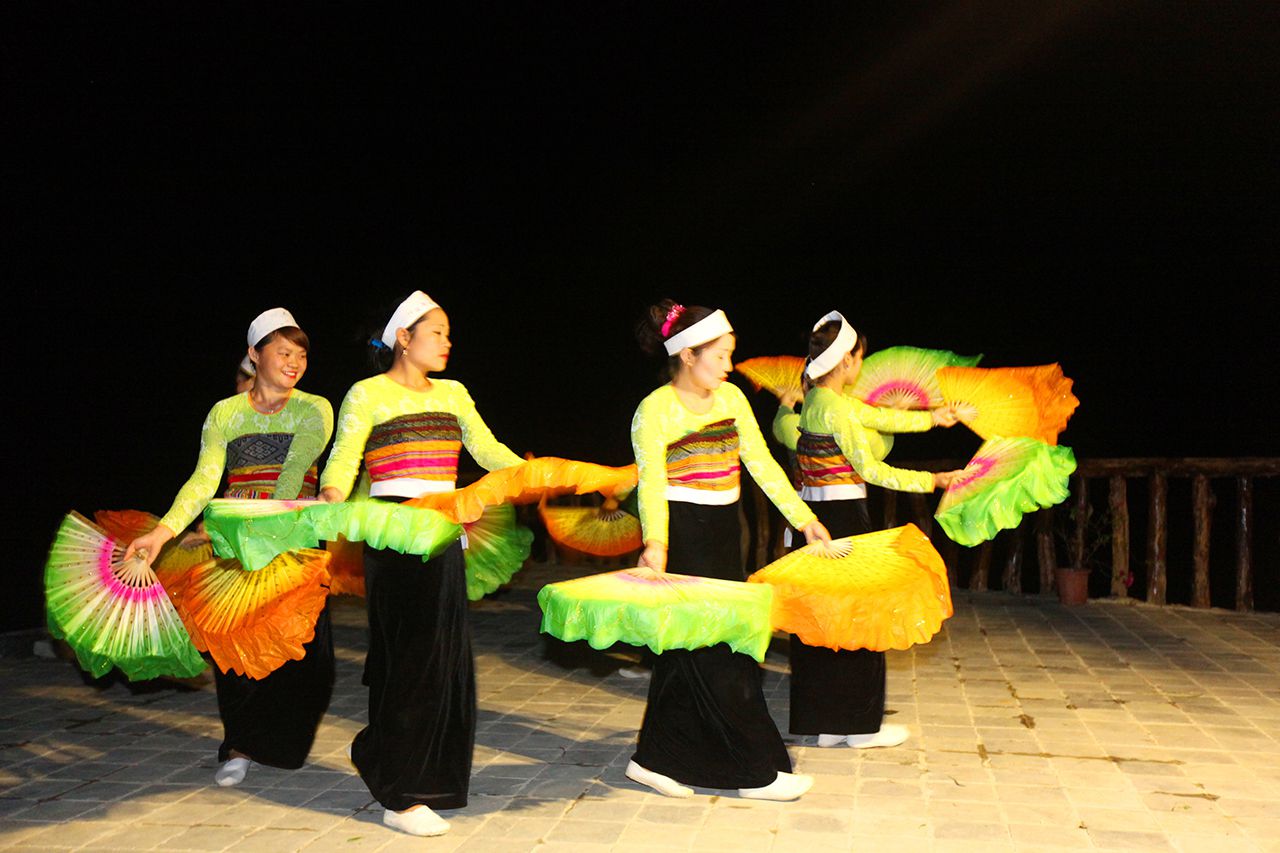
An evening Xoe fan dance performance hosted at Mai Chau Hideaway
Cultural experiences are another highlight of a stay at Mai Chau Hideaway. Guests can enjoy traditional Thai performances and activities, including Xoe Dance, fan dancing, scarf dancing, circle dancing, and bamboo pole dancing. These experiences provide an opportunity to discover local performing arts while staying in a comfortable resort setting
FAQs
Is Xoe dance suitable for older travelers or people with limited mobility?
Yes. The movements are gentle and can be adapted to your comfort level. You can also watch without joining the circle.
Do I need to book a Xoe performance in advance?
It is recommended, especially for private cultural programs or during peak travel periods.
What time do Xoe dance performances usually start?
Most cultural performances take place in the evening, often after dinner. Check the schedule with your accommodation or tour provider.
Are Xoe performances available during the rainy season?
Yes. Performances can still take place during the rainy season, particularly when they are held indoors or under covered spaces.
Is Xoe dance performed in private events or only during public cultural programs?
Both. Xoe can be part of public cultural events as well as private celebrations, weddings, and programs arranged for visitors.
Can solo travelers join a Xoe dance without booking a group tour?
Yes. Solo travelers can join when the performance is open to visitors. Ask the venue or local host about upcoming programs.